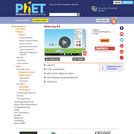
How do strong and weak acids differ? Use lab tools on your computer to find out! Dip the paper or the probe into solution to measure the pH, or put in the electrodes to measure the conductivity. Then see how concentration and strength affect pH. Can a weak acid solution have the same pH as a strong acid solution?
Subject:
Mathematics and Statistics, Science and Technology
You can access the problems below via the Load Homework dialogue in the File menu of the Virtual Lab. They have been organized by concept and ranked by difficulty (A ranking of 1 denotes an easier problem; 5 is more challenging). Word files for these problems are provided so that you may edit and distribute the assignments in your classroom. The following types of problems can be found:Strong and Weak Acid and Base Problems, Determination of the pH Scale by the Method of Successive Dilutions, Standardization of NaOH: Acid Base Titration, Determining the pKa and concentration ratio of a protein in solution, Unknown Acid and Base problem, Creating a Buffer Solution, DNA - Dye Binding: Equilibrium and Buffer Solutions.
This introductory course in "Modern Biology" covers topics found in the fields of cellular biology, molecular biology, biochemistry, and genetics. It does not cover organismal biology or taxonomy. This course is a requirement for biology majors at Carnegie Mellon University. The course is carefully planned to provide the background biology students will need for advanced biology classes. Non-biology majors will also find this course useful as it explains many of the concepts and techniques currently discussed in the popular press. Plans for a complete on-line Biology course are under development. This Modern Biology course is built around six Key Concepts that provide unifying explanations for how and why structures are formed and processes occur throughout your study of biology. Because it is not possible to cover the breadth of modern molecular biology in one semester, an understanding of these Key Concepts will provide a basis for extension of your knowledge to biological systems beyond the specifics covered in this course. One of the major goals of the course therefore is for you to not only learn the definitions of the concepts but also learn to recognize when they are operating the process being studied. The Key Concepts are: Bioselectivity, Energy, Equilibrium, Ionic State, Rate Control, Solubility.
This course aims to connect the principles, concepts, and laws/postulates of classical and statistical thermodynamics to applications that require quantitative knowledge of thermodynamic properties from a macroscopic to a molecular level. It covers their basic postulates of classical thermodynamics and their application to transient open and closed systems, criteria of stability and equilibria, as well as constitutive property models of pure materials and mixtures emphasizing molecular-level effects using the formalism of statistical mechanics. Phase and chemical equilibria of multicomponent systems are covered. Applications are emphasized through extensive problem work relating to practical cases.
Introduces the design of chemical reactors via synthesis of chemical kinetics, transport phenomena, and mass and energy balances. Topics: reaction mechanisms and chemical/biochemical pathways; transition-state theory; batch, plug flow and well-stirred reactors; heterogeneous and enzymatic catalysis; heat and mass transport in reactors, including diffusion to and within catalyst particles and cells or immobilized enzymes.
Integrates psychological insights into economic models of behavior. Discusses the limitations of standard economic models and surveys the ways in which psychological experiments have been used to learn about preferences, cognition, and behavior. Topics include trust, vengence, fairness, impatience, impulsivity, bounded rationality, learning, reinforcement, classical conditioning, loss-aversion, over-confidence, self-serving biases, cognitive dissonance, altruism, subjective well-being, and hedonic adaptation. Economic concepts such as equilibrium, rational choice, utility maximization, Bayesian beliefs, game theory, and behavior under uncertainty are discussed in light of these phenomena.
The EJS TPT Ladder Demonstration model displays the statics and dynamics of a ladder leaning against a wall. The standard (textbook) statement of this problem assumes that there is no frictional force between the wall and the ladder, but a frictional force between the ground and the ladder. In the simulation you can set the initial lean angle and the coefficients of static and kinetic friction between the floor and the ladder.
This course covers the major topics of mechanics, including momentum and energy conservation, kinematics, Newton’s laws and equilibrium. The major emphasis is to develop critical analysis, problem solving and scientific reasoning skills by considering numerous different systems and interactions, solving problems and discussion. It uses a systematic approach based on modeling systems by application of basic physics principles, making assumptions, utilizing multiple representations (not just mathematical) in order to become proficient at problem solving. Lab work is required and is designed to help students develop a questioning approach to physical situations, distinguishing the significant behaviors from the less significant behaviors of a system under study.
Login: guest_ocl Password: ocl
Subject:
Mathematics and Statistics, Science and Technology
Students explore the biosphere and its associated environments and ecosystems in the context of creating a model ecosystem, learning along the way about the animals and resources. Students investigate different types of ecosystems, learn new vocabulary, and consider why a solid understanding of one's environment and the interdependence of an ecosystem can inform the choices we make and the way we engineer our communities. This lesson is part of a series of six lessons in which students use their growing understanding of various environments and the engineering design process, to design and create their own model biodome ecosystems.
Subject:
Mathematics and Statistics, Science and Technology
This is a continuation of Freshman Organic Chemistry I (CHEM 125a), the introductory course on current theories of structure and mechanism in organic chemistry for students with excellent preparation in chemistry and physics. This semester treats simple and complex reaction mechanisms, spectroscopy, organic synthesis, and some molecules of nature.
This second-semester course will cover several of the tools needed to study chemistry at a more advanced level. We will identify the factors that affect the speed of a reaction, learn how an atom bomb works on a chemical level, and discover how chemistry powers a light bulb. We will end with discussion of organic chemistry, a topic that is as important to biology as it is to chemistry. (Chemistry 102; See also: Biology 106)
Basic theory of consumer behavior, production and costs, partial equilibrium analysis of pricing in competitive and monopolistic markets, general equilibrium, welfare, and externalities.Recommended for students planning to apply to graduate school in economics, accounting, or finance.
This course is designed to extend the student's knowledge of the basic microeconomic principles that will provide the foundation for their future work in economics and give them insight into how economic models can help us think about important real world phenomena. Topics include supply and demand interaction, utility maximization, profit maximization, elasticity, perfect competition, monopoly power, imperfect competition, and game theory. Upon successful completion of this course, the student will be able to: Explain the standard theory in microeconomics at an intermediate level; Explain and use the basic tools of microeconomic theory, and apply them to help address problems in public policy; Analyze the role of markets in allocating scarce resources; Explain both competitive markets, for which basic models of supply and demand are most appropriate, and markets in which agents act strategically, for which game theory is the more appropriate tool; Synthesize the impact of government intervention in the market; Develop quantitative skills in doing economic cost and consumer analysis using calculus; Compare and contrast arguments concerning business and politics, and make good conjectures regarding the possible solutions; Analyze the economic behavior of individuals and firms, and explore how they respond to changes in the opportunities and constraints that they face and how they interact in markets; Apply basic tools that are used in many fields of economics, including household economics, labor economics, production theory, international economics, natural resource economics, public finance, and capital markets. (Economics 201)
Mechanics studies how forces affect bodies in motion--how, for example, a bullet is fired from a gun, or a top is set in motion by the flick of a wrist. This course will introduce the student to the core concepts of mechanics as applied to design, testing, and manufacture of safe and reliable products. Upon successful completion of this course, the student will be able to: Identify and use units, notations, and vectors used in mechanics; Identify and explain the concepts of forces, couples, and moments; Use the concept of forces and moments to compute resultants and equivalent systems in mechanics; Analyze mechanics of rigid bodies, such as trusses, frames, and machines; Identify and explain the concepts of friction and internal forces; Compute material properties of solid bodies, such as moments of inertia and mass moments of inertia; Compute strain and stress and understand the relationship of stress and strain for both elastic and plastic bodies; Compute stresses and strain in bodies subjected to tension and torsion; Compute stresses and strain in pressure vessels and composites; Identify and explain the concept of stress tensor and the constitutive relationship between strain and stress; Compute stresses and strain in simple and composite beams due to bending; Explain how stress is computed experimentally or using finite element formulations; Identify and explain material failure scenarios, such as fracture, fatigue, creep, and buckling. (Mechanical Engineering 102)
Introduction to statics and the mechanics of deformable solids. Emphasis on the three basic principles of equilibrium, geometric compatibility, and material behavior. Stress and its relation to force and moment; strain and its relation to displacement; linear elasticity with thermal expansion. Failure modes. Application to simple engineering structures such as rods, shafts, beams, and trusses. Application to design. Introduction to material selection. This course provides an introduction to the mechanics of solids with applications to science and engineering. We emphasize the three essential features of all mechanics analyses, namely: (a) the geometry of the motion and/or deformation of the structure, and conditions of geometric fit, (b) the forces on and within structures and assemblages; and (c) the physical aspects of the structural system (including material properties) which quantify relations between the forces and motions/deformation.
Introduction to statics and the mechanics of deformable solids. Emphasis on the three basic principles of equilibrium, geometric compatibility, and material behavior. Stress and its relation to force and moment; strain and its relation to displacement; linear elasticity with thermal expansion. Failure modes. Application to simple engineering structures such as rods, shafts, beams, and trusses. Application to design. Introduction to material selection. From the course home page: Application to biomechanics of natural materials and structures.
Students explore the concepts of center of mass and static equilibrium by seeing how non-symmetrical objects balance. Using a paper cut-out shape of a parrot sitting on a wire coat hanger, they learn that their parrot exists in stable equilibrium it returns to its balancing point after being disturbed. The weight of its tail makes the parrot balance upright. Give the parrot a push, and she knocks off balance, but swings back and forth until coming to rest in balance again.
Subject:
Mathematics and Statistics, Science and Technology
In this course, the student will learn about the three laws of thermodynamics, thermodynamic principles, ideal and real gases, phases of matter, equations of state, and state changes. The student will also take a look at chemical kinetics--a branch of study concerned with the rates of reactions and other processes--as well as kinetic molecular theory and statistical mechanics, which relate the atomic-level motion of a large number of particles to the average thermodynamic behavior of the system as a whole. Upon successful completion of this course, the student will be able to: State and use laws of thermodynamics; Perform calculations with ideal and real gases; Design practical engines by using thermodynamic cycles; Predict chemical equilibrium and spontaneity of reactions by using thermodynamic principles; Describe the thermodynamic properties of ideal and real solutions; Define the phases of matter, describe phase changes, and interpret/construct phase diagrams; Relate macroscopic thermodynamic properties to microscopic states by using the principles of statistical thermodynamics; Describe reaction rates and then do calculations to determine them; Relate reaction kinetics to potential reaction mechanism; Calculate the temperature dependence of rate constants and relate that to activation energy; Describe a variety of complex reactions; Describe catalysis; Describe enzymatic catalysis. (Chemistry 105)
No restrictions on your remixing, redistributing, or making derivative works.
Give credit to the author, as required.
Your remixing, redistributing, or making derivatives works comes with some
restrictions, including how it is shared.
Your redistributing comes with some restrictions. Do not remix or make
derivative works.
Copyrighted materials, available under Fair Use and the TEACH Act for US-based
educators, or other custom arrangements. Go to the resource provider to see
their individual restrictions.