How do strong and weak acids differ? Use lab tools on your …
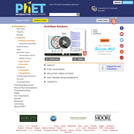
How do strong and weak acids differ? Use lab tools on your computer to find out! Dip the paper or the probe into solution to measure the pH, or put in the electrodes to measure the conductivity. Then see how concentration and strength affect pH. Can a weak acid solution have the same pH as a strong acid solution?
Learn about acids, bases and alkalis through engaging, bitesize animated videos. They …
Learn about acids, bases and alkalis through engaging, bitesize animated videos. They are organised into these chapters: acids and bases, acid reactions, soluble salts, insoluble salts and uses of salts.
This is a pdf of a presentation. It can be used to …
This is a pdf of a presentation. It can be used to expand upon or introduce the topic of Acids and Bases within chemistry. It primarily goes over the basics but could be used at any point.
This is a review of information that should have been learned regarding …
This is a review of information that should have been learned regarding acids, bases, and pH. It is a series of questions followed by answers and explanations.
In this section we will be talking about the basics of acids …
In this section we will be talking about the basics of acids and bases and how acid-base chemistry is related to chemical equilibrium. We will cover acid and base definitions, pH, acid-base equilibria, acid-base properties of salts, and the pH of salt solutions.
We can combine our knowledge of acids and bases, equilibrium, and neutralization …
We can combine our knowledge of acids and bases, equilibrium, and neutralization reactions to understand buffers and titrations. Solubility equilibria will build on concepts from solubility, precipitation, and equilibrium.
How can we conduct scientific research so that we have evidence to …
How can we conduct scientific research so that we have evidence to support a claim?Students in this problem-based learning module are invited to design a testable question to guide Scientific Research, Evaluate the pH of various solutions, Identify Variables, Conduct a Scientific Investigation, and Analyze/Communicate results. How can we conduct scientific research so that we have evidence to support a claim? Antacid tablets are a multi-billion dollar industry. Claims are made regularly by certain brands that their extra strength tablets contain “DOUBLE the acid neutralizing power per tablet of regular strength antacids.” How effective are antacids? Are double-strength antacids twice as effective as regular strength antacids? Have you ever noticed a parent/guardian/family member take an antacid tablet? Stomach chemistry is about acids and bases. When the pH of a stomach is too acidic then it might make the person have a stomach ache. In some cases “heartburn” or “acid reflux” are used as terms to describe the problems some people face. Antacids are usually basic which, when taken, might help raise the pH level in a stomach thus making a person feel better.You are invited to design an investigation with a partner, or a team of 4 students, to test your own idea about the effectiveness of antacids. The challenge? Have a driving question, clear variable identification, and an analysis of your results. Materials for your test will be provided to you by your teacher. At the culmination of your investigation your design team will make a 30-second pitch on your phone to show at your family Thanksgiving meal to explain the benefits (or negatives) of using antacids, and how antacids work.
In this video, Jonathan examines the biology of coral reefs and their …
In this video, Jonathan examines the biology of coral reefs and their importance to the marine ecosystem. Please see the accompanying lesson plan that discusses pH and ocean acidification for educational objectives, discussion points and classroom activities.
Under the "The Science Behind Harry Potter" theme, a succession of diverse …
Under the "The Science Behind Harry Potter" theme, a succession of diverse complex scientific topics are presented to students through direct immersive interaction. Student interest is piqued by the incorporation of popular culture into the classroom via a series of interactive, hands-on Harry Potter/movie-themed lessons and activities. They learn about the basics of acid/base chemistry (invisible ink), genetics and trait prediction (parseltongue trait in families), and force and projectile motion (motion of the thrown remembrall). In each lesson and activity, students are also made aware of the engineering connections to these fields of scientific study.
This is a continuation of Freshman Organic Chemistry I (CHEM 125a), the …
This is a continuation of Freshman Organic Chemistry I (CHEM 125a), the introductory course on current theories of structure and mechanism in organic chemistry for students with excellent preparation in chemistry and physics. This semester treats simple and complex reaction mechanisms, spectroscopy, organic synthesis, and some molecules of nature.
In this course, we will explore what makes things in the world …
In this course, we will explore what makes things in the world the way they are and why, to understand the science and consider the engineering. We learn not only why the physical world behaves the way it does, but also how to think with chemical intuition, which can’t be gained simply by observing the macroscopic world. This 2018 version of 3.091 by Jeffrey Grossman and the 2010 OCW version by Don Sadoway cover similar topics and both provide complete learning materials. This 2018 version also includes Jeffrey Grossman’s innovative Goodie Bags, Why This Matters, and CHEMATLAS content, as well as additional practice problems, quizzes, and exams.
This unit helps you understand the properties of nucleotides and how they …
This unit helps you understand the properties of nucleotides and how they contribute to secondary and tertiary structures of nucleic acids at the molecular level. You will learn about the different composition and roles of nucleic acids in the cell, their interactions with each other and the use of ribozymes, aptamers, antisense and hybridization as tools in molecular research. The unit covers the function of DNA packaging within the cell, the interactions between the DNA double helix and the nucleosome and it helps you understand the various chromatin states within the interphase nucleus.
This 12-minute video lesson discusses acetic acid to acetyl chloride mechanism. They …
This 12-minute video lesson discusses acetic acid to acetyl chloride mechanism. They can be generalized to forming any acid halide from a carboxylic acid. [Organic Chemistry playlist: Lesson 69 of 73].
An intensive survey of structure, reactions and synthesis of the main classes …
An intensive survey of structure, reactions and synthesis of the main classes of organic compounds. Laboratory illustrates the preparation, purification and identification of organic compounds by classical and instrumental methods.
The content on this pages is intented for grade 12 learners from …
The content on this pages is intented for grade 12 learners from South Africa. The curriculum standards used are those of the Curriculum Assessments Policy Standards which is a the Curriculum document used in South Africa.
This guided inquiry learning activity is designed to be used in a …
This guided inquiry learning activity is designed to be used in a large introductory chemistry course. By working in small groups to discuss the presented information and question prompts, students will engage in cycles of exploring and analyzing data, inventing new conceptual understandings, and applying those concepts. Students should be tasked with working together to complete the prompts in each section by a set time limit. After each section is completed, the entire class can share their answers via a personal response system, and the instructor can review and explain the correct responses, using the accompanying slide deck, which translates the problems into multiple-choice prompts.Instructional resources include 1) the learning activity (.docx and .pdf) 2) the learning objects (.docx and .pdf) and 3) the slide deck (.pptx).- Atomic Orbitals- Chemical Fuels- Gas Laws- Intermolecular Forces- pKa Trends- VSEPR
Test the pH of things like coffee, spit, and soap to determine …
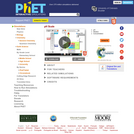
Test the pH of things like coffee, spit, and soap to determine whether each is acidic, basic, or neutral. Visualize the relative number of hydroxide ions and hydronium ions in solution. Switch between logarithmic and linear scales. Investigate whether changing the volume or diluting with water affects the pH. Or you can design your own liquid!
No restrictions on your remixing, redistributing, or making derivative works. Give credit to the author, as required.
Your remixing, redistributing, or making derivatives works comes with some restrictions, including how it is shared.
Your redistributing comes with some restrictions. Do not remix or make derivative works.
Most restrictive license type. Prohibits most uses, sharing, and any changes.
Copyrighted materials, available under Fair Use and the TEACH Act for US-based educators, or other custom arrangements. Go to the resource provider to see their individual restrictions.