Volumes in Writing Spaces: Readings on Writing offer multiple perspectives on a …
Volumes in Writing Spaces: Readings on Writing offer multiple perspectives on a wide-range of topics about writing, much like the model made famous by Wendy Bishop’s “The Subject Is . . .” series. In each chapter, authors present their unique views, insights, and strategies for writing by addressing the undergraduate reader directly. Drawing on their own experiences, these teachers-as-writers invite students to join in the larger conversation about developing nearly every aspect of the craft of writing. Consequently, each essay functions as a standalone text that can easily complement other selected readings in writing or writing-intensive courses across the disciplines at any level.
Volumes in Writing Spaces: Readings on Writing offer multiple perspectives on a …
Volumes in Writing Spaces: Readings on Writing offer multiple perspectives on a wide-range of topics about writing. In each chapter, authors present their unique views, insights, and strategies for writing by addressing the undergraduate reader directly. Drawing on their own experiences, these teachers-as-writers invite students to join in the larger conversation about the craft of writing. Consequently, each essay functions as a standalone text that can easily complement other selected readings in writing or writing-intensive courses across the disciplines at any level.
In this lesson, students read informational pieces about whether or not schools …
In this lesson, students read informational pieces about whether or not schools should teach cursive writing. They will evaluate the arguments presented and then choose a side of the issue. Finally, they will write their own arguments expressing their points of view.
Read, Think, Write provides instruction in writing, reading, critical thinking, research, and …
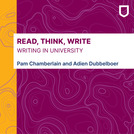
Read, Think, Write provides instruction in writing, reading, critical thinking, research, and study skills. Through an easy-to-follow, step-by-step approach, it leads students from a wide range of levels and abilities to success in writing the essays required in most university disciplines. With an emphasis on process, this textbook encourages students to develop their own individual methods that will allow them to tackle writing tasks with confidence. Concepts are illustrated through relevant examples and thoughtful applications. Skills are reinforced through exercises and questions. Read, Think, Write is adapted from Writing for Success by Scott McLean and Writing for Success: 1st Canadian Edition by Tara Horkoff.
This is a course focused on the literary genre of the essay, …
This is a course focused on the literary genre of the essay, that wide-ranging, elastic, and currently very popular form that attracts not only nonfiction writers but also fiction writers, poets, scientists, physicians, and others to write in the form, and readers of every stripe to read it. Some say we are living in era in which the essay is enjoying a renaissance; certainly essays, both short and long, are at present easier to get published than are short stories or novels, and essays are featured regularly and prominently in the mainstream press (both magazines and newspapers) and on the New York Times bestseller books list. But the essay has a history, too, a long one, which goes back at least to the sixteenth-century French writer Montaigne, generally considered the progenitor of the form. It will be our task, and I hope our pleasure, to investigate the possibilities of the essay together this semester, both by reading and by writing.
This lesson uses tall tale read alouds to reinforce the common elements, …
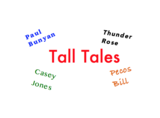
This lesson uses tall tale read alouds to reinforce the common elements, or text structure, of tall tales. As the text is read aloud, students examine the elements of the book that are characteristic of tall tales. Then using what they've learned, they write and perform tall tales of their own.
Word Count: 151965 (Note: This resource's metadata has been created automatically by …
Word Count: 151965
(Note: This resource's metadata has been created automatically by reformatting and/or combining the information that the author initially provided as part of a bulk import process.)
This booklet is a collection of opinions of nearly 50 important poets …
This booklet is a collection of opinions of nearly 50 important poets from 25 countries in 5 continents on the best ways to present poetry to secondary school pupils. It is mainly intended for use in teacher training programmes, to bring to methods of teaching poetry two important dimensions: the creative perspective of poets themselves, as well as the perspective of different cultures regarding the reading and writing of poetry.
CRW 111 students gain practice in applying effective strategies for understanding college …
CRW 111 students gain practice in applying effective strategies for understanding college material by relating generalization to supporting ideas and identifying the patterns into which ideas are structured. Students use computers to develop analytical capabilities in the course's computer lab component. CRW 111 carries 3 credits and meets 3 hours per week.
The reading and writing in this course will focus on the art …
The reading and writing in this course will focus on the art of self-narrative or autobiographical writing. Such writing can be crafted in the form of a longer autobiography or of separate, shorter autobiographically-inspired essays. The various forms of autobiographical narrative can both reflect on personal experience and comment on larger issues in society. This course explores, through reading and writing, what it means to construct a sense of self-and a life narrative-in relation to the larger social world of family and friends, education, media, work, and community. What does it mean to see ourselves as embodying particular ethical values or belonging to a certain ethnic, racial, national or religious group(s)? How do we imagine ourselves within larger "family narrative(s)" and friendship groups? In what ways do we view our identities as connected to and expressed by our educational and work experiences, including experiences at MIT? How do we see ourselves as shaping and shaped by the popular media culture of our society? How do we think about our ethical and social responsibility to our friends, families and communities (large and small)? Readings will include autobiographically-inspired nonfiction and fiction.
This course is an examination of the formal structural and textual variety …
This course is an examination of the formal structural and textual variety in poetry. Students engage in extensive practice in the making of poems and the analysis of both students' manuscripts and 20th-century poetry. The course attempts to make relevant the traditional elements of poetry and their contemporary alternatives. There are weekly writing assignments, including some exercises in prosody.
Basic Reading and Writing builds a solid foundation around core aspects of …
Basic Reading and Writing builds a solid foundation around core aspects of the writing process: critical reading; methodical writing; research and documentation; practical grammar and punctuation. An optional module introduces core principles for college success that help students understand and develop good habits to improve their performance in this and other college courses. As the first in a three-course sequence that culminates in Composition I (college-level composition), Basic Reading and Writing focuses on helping students identify and apply foundational concepts and skills in reading and writing. Course content may be used for standard instruction or diagnostically to discover and address gaps in student understanding/skill.
Long Description: Volumes in Writing Spaces: Readings on Writing offer multiple perspectives …
Long Description: Volumes in Writing Spaces: Readings on Writing offer multiple perspectives on a wide-range of topics about writing. In each chapter, authors present their unique views, insights, and strategies for writing by addressing the undergraduate reader directly. Drawing on their own experiences, these teachers-as-writers invite students to join in the larger conversation about the craft of writing. Consequently, each essay functions as a standalone text that can easily complement other selected readings in writing or writing-intensive courses across the disciplines at any level.
Word Count: 124045
ISBN: 978-1-60235-185-1
(Note: This resource's metadata has been created automatically by reformatting and/or combining the information that the author initially provided as part of a bulk import process.)
This course is an introduction to the short story. Students will write …
This course is an introduction to the short story. Students will write stories and short descriptive sketches. Students will read great short stories and participate in class discussions of students' writing and the assigned stories in their historical and social contexts.
As the course title suggests, this class is meant to acquaint you …
As the course title suggests, this class is meant to acquaint you with the literary and rhetorical tradition of the essay, a genre which has been described by one scholar as "the meeting ground between art and philosophy," and by another as "the place where the self finds a pattern in the world, and the world finds a pattern in the self". Though the essay is part of a tradition of prose which stretches back to antiquity, it is also a thoroughly modern and popular form of writing, found in print media and on the web.
Long Description: Volumes in Writing Spaces: Readings on Writing offer multiple perspectives …
Long Description: Volumes in Writing Spaces: Readings on Writing offer multiple perspectives on a wide-range of topics about writing, much like the model made famous by Wendy Bishop’s “The Subject Is . . .” series. In each chapter, authors present their unique views, insights, and strategies for writing by addressing the undergraduate reader directly. Drawing on their own experiences, these teachers-as-writers invite students to join in the larger conversation about developing nearly every aspect of the craft of writing. Consequently, each essay functions as a standalone text that can easily complement other selected readings in writing or writing-intensive courses across the disciplines at any level.
Word Count: 90082
(Note: This resource's metadata has been created automatically by reformatting and/or combining the information that the author initially provided as part of a bulk import process.)
Long Description: Writing Spaces: Readings on Writing, Volume 4, is a collection …
Long Description: Writing Spaces: Readings on Writing, Volume 4, is a collection of Creative Commons licensed essays for use in the first year writing classroom, all written by writing teachers for students.
Volume 4 updates and adds to previous volumes by offering essays on topics such as linguistic diversity, digital privacy, feedback, online source evaluation, grading criteria, social media, racial literacy, public writing, primary data analysis, digital collaboration, writing workflows, genre theory, knowledge transfer, archival research, and accessibility.
Word Count: 119715
ISBN: 978-1-60235-185-1
(Note: This resource's metadata has been created automatically by reformatting and/or combining the information that the author initially provided as part of a bulk import process.)
This lesson uses tall tale read alouds to reinforce the common elements, …
This lesson uses tall tale read alouds to reinforce the common elements, or text structure, of tall tales. As the text is read aloud, students examine the elements of the book that are characteristic of tall tales. Then using what they've learned, they write and perform tall tales of their own.
Short Description: An interactive, multimedia text that introduces students to reading and …
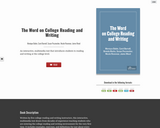
Short Description: An interactive, multimedia text that introduces students to reading and writing at the college level. Order a print copy: http://www.lulu.com/content/paperback-book/the-word-on-college-reading-and-writing/23481664
Long Description: Written by five college reading and writing instructors, this interactive, multimedia text draws from decades of experience teaching students who are entering the college reading and writing environment for the first time. It includes examples, exercises, and definitions for just about every reading- and writing-related topic students will encounter in their college courses.
Order a print copy: http://www.lulu.com/content/paperback-book/the-word-on-college-reading-and-writing/23481664
Word Count: 61868
ISBN: 978-1-63635-027-1
(Note: This resource's metadata has been created automatically by reformatting and/or combining the information that the author initially provided as part of a bulk import process.)
The Commons: Tools for Reading, Writing, and Rhetoric gives instructors and students …
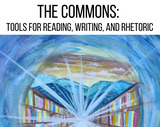
The Commons: Tools for Reading, Writing, and Rhetoric gives instructors and students of college writing courses a single source for information on metacognitive critical reading, rhetorical awareness, and MLA formatting basics as well as interesting and relevant reading and viewing content. Its approach is interdisciplinary, bringing in material from ecology, sociology, psychology, technology, popular culture, political science, cultural studies, and literature. Each essay, website, video, infographic, and poem has been carefully chosen to speak to the Eastern Kentucky University community, but everyone can find something that speaks to our common human experience and our need to communicate and connect with one another.
No restrictions on your remixing, redistributing, or making derivative works. Give credit to the author, as required.
Your remixing, redistributing, or making derivatives works comes with some restrictions, including how it is shared.
Your redistributing comes with some restrictions. Do not remix or make derivative works.
Most restrictive license type. Prohibits most uses, sharing, and any changes.
Copyrighted materials, available under Fair Use and the TEACH Act for US-based educators, or other custom arrangements. Go to the resource provider to see their individual restrictions.