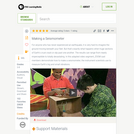
In this video segment adapted from ZOOM, two cast members demonstrate what …
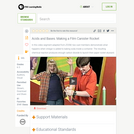
In this video segment adapted from ZOOM, two cast members demonstrate what happens when vinegar is added to baking soda inside a container. The resulting chemical reaction produces enough carbon dioxide to launch their paper rocket skyward. Recommended for: Grades K-5
In this video segment adapted from ZOOM, cast members make their own …
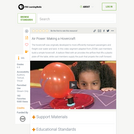
In this video segment adapted from ZOOM, cast members make their own hovercraft and demonstrate how the air leaking out of a balloon can make a plastic plate hover above a table.
In this video segment adapted from ZOOM, the cast shows how the …
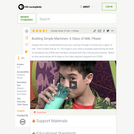
In this video segment adapted from ZOOM, the cast shows how the 34 steps in their Rube Goldberg invention use everything from gravity to carbon dioxide gas in order to accomplish one simple task: pouring a glass of milk.
This site presents challenges faced by NASA engineers who are developing the …
This site presents challenges faced by NASA engineers who are developing the next generation of aerospace vehicles. The challenges: thermal protection systems, spacecraft structures, electrodynamic propulsion systems, propellers, and personal satellite assistants. Students design, build, test, re-design, and re-build models that meet specified design criteria, using the same analytical skills as engineers.
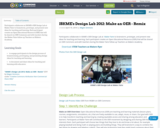
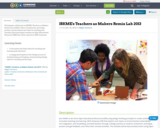
Participants collaborate in ISKME's OER Design Lab at Maker Faire to brainstorm, …
Participants collaborate in ISKME's OER Design Lab at Maker Faire to brainstorm, prototype, and present new ideas for teaching and learning. Each participant creates an Open Educational Resource (OER) that will be shared on OER Commons and with teachers during the Maker Faire follow up Teachers as Makers Academy.
Maker Faire participants collaborate in ISKME's Design Lab, using digital stories and …
Maker Faire participants collaborate in ISKME's Design Lab, using digital stories and salvaged materials to design an innovative school of the future. The Design Lab features Makers Mauro ffortisimo Di Nucci's deconstructed piano and INKA Biospheric Systems' Vertical Garden; as well as Student and Teacher project examples that integrate art, science, sustainability, and green design inspire the creation of shareable open-source learning resources. This wiki page showcases photos and video from the Design Lab, open educational resources for teachers, and a step by step guide through the design process.
Activities, resources, photos and videos from ISKME's two day professional development teacher …
Activities, resources, photos and videos from ISKME's two day professional development teacher training that explores Open Educational Resources (OER) and Maker-Teacher collaborations to facilitate innovation in the classroom. The Makers’ projects are points of inspiration for Teachers while they engage in design-thinking activities to create, remix, and share OER Projects with online collaborative tools.
Activities, resources, photos and videos from ISKME's two day professional development teacher …
Activities, resources, photos and videos from ISKME's two day professional development teacher training that explores Open Educational Resources (OER) and Maker-Teacher collaborations to facilitate innovation in the classroom. The Makers’ projects are points of inspiration for Teachers while they engage in design-thinking activities to create, remix, and share OER Projects with online collaborative tools.
Participants collaborate in ISKME's Teachers as Makers Remix Lab at Maker Faire …
Participants collaborate in ISKME's Teachers as Makers Remix Lab at Maker Faire to brainstorm, prototype, present, and document new ideas for teaching and learning. Each participant remixes an Open Educational Resource (OER) that will be shared on OER Commons.
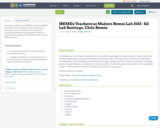
Participants collaborate in ISKME's Teachers as Makers Remix Lab at Ed Lab …
Participants collaborate in ISKME's Teachers as Makers Remix Lab at Ed Lab Santiago, Chile to brainstorm, prototype, present, and document new ideas for teaching and learning. Each participant remixes an Open Educational Resource (OER) that will be shared on OER Commons.
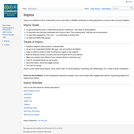
This wiki page describes the goals and tenents of improv, as well …
This wiki page describes the goals and tenents of improv, as well as four different improv activities (Name Gesture Circle, Yellow Ball, Vacations, and Thank You) used in ISKME's Professional Development Teacher Academy: Teachers as Makers June 15-16 2010 at San Mateo County Office of Education.
In this field exploration, student teams (consisting of 3 students) will investigate …
In this field exploration, student teams (consisting of 3 students) will investigate whetherincandescent, fluorescent or a no light situation will attract the most nocturnal insects.
Watch the rubber bands vibrate on homemade guitars in this video segment …
Watch the rubber bands vibrate on homemade guitars in this video segment adapted from ZOOM as cast members talk about pitch and demonstrate how to make a cereal box instrument.
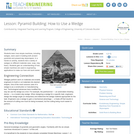
Students learn how simple machines, including wedges, were used in building both …
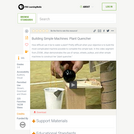
Students learn how simple machines, including wedges, were used in building both ancient pyramids and present-day skyscrapers. In a hands-on activity, students test a variety of wedges on different materials (wax, soap, clay, foam). Students gain an understanding of how simple machines are used in engineering applications to make our lives and work easier.
No restrictions on your remixing, redistributing, or making derivative works. Give credit to the author, as required.
Your remixing, redistributing, or making derivatives works comes with some restrictions, including how it is shared.
Your redistributing comes with some restrictions. Do not remix or make derivative works.
Most restrictive license type. Prohibits most uses, sharing, and any changes.
Copyrighted materials, available under Fair Use and the TEACH Act for US-based educators, or other custom arrangements. Go to the resource provider to see their individual restrictions.