Only Sharing Permitted
CC BY-NC-ND
This document provides educators with tips for protecting student data.
This document provides educators with tips for protecting student data.
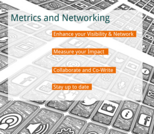
Being active in social media, like in Twitter and Blogs, is one way to reach a larger audience and to enhance a researcher’s impact. Other researchers will learn about their findings through these additional channels and in addition the public, policy makers, and the press. The toolkit shows several ways of how to get in touch with other researchers and discuss findings at an early stage in research networks, conferences, and in social media. It presents open tools for co-writing, online meetings, reference- and project management.
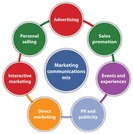
Integrated Marketing Communications (IMC) remain an integral component of marketing. Therefore, understanding how companies effectively communicate and interact with customers (including potential customers) creates the foundation you (student) need to have a firm understanding of how marketing communication manifest in practice which is key to the development of effective marketing skills. Such an understanding will help you succeed in your marketing career. Henceforth, this course is designed to help you start your journey towards your desired entry into marketing careers.

This lesson plans helps students prepare for the agricultural industry and storytelling through social media. Students will learn how impactful social media can be and learn about those in the industry already paving the way to advocate for our industry.

This resource is a video abstract of a research paper created by Research Square on behalf of its authors. It provides a synopsis that's easy to understand, and can be used to introduce the topics it covers to students, researchers, and the general public. The video's transcript is also provided in full, with a portion provided below for preview:
"Citation rates and journal impact factor are the most widely used measures of influence in the academic world. But true impact extends well beyond the sphere of research. While quantifying this influence has remained incredibly challenging, social media and the alternative metrics its supplies are beginning to change that. In a new study reported in The American Journal of Sports Medicine, researchers looked at how these “altmetrics” correlate with traditional measures of impact in the field of orthopedics. Their findings point to the types of studies and publication venues that attain the greatest reach. The authors of the study analyzed 496 articles published across five high-impact journals in 2016: The Journal of Bone and Joint Surgery; Clinical Orthopaedics and Related Research; Acta Orthopaedica; Knee Surgery, Sports Traumatology, Arthroscopy; and The American Journal of Sports Medicine..."
The rest of the transcript, along with a link to the research itself, is available on the resource itself.
This course examines the birth and international expansion of an American industry of political marketing. It focuses attention on the cultural processes, sociopolitical contexts and moral utopias that shape the practice of political marketing in the U.S. and in different countries. By looking at the debates and expert practices at the core of the business of politics, the course explores how the "universal" concept of democracy is interpreted and reworked through space and time, while examining how different cultural groups experimenting with political marketing understand the role of citizens in a democracy.
Students will consider the difference what is shared online and what might be going unshared. What you see is not always what is real. This lesson is part of a media unit curated at our Digital Citizenship website, "Who Am I Online?".
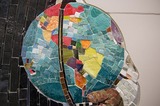
This unit explores the various ways information and ideas about climate change are presented through a variety of media. This includes the evaluation of social media posts, research into climate change issues, and an exploration of contemporary art and artists. This was designed and taught in an honors 9th grade English Language Arts Classroom by Dr. Tavia Quaid in response to student interest in climate change and to reinforce key information literacy skills.
This unit explores the various ways information and ideas about climate change are presented through a variety of media. This includes the evaluation of social media posts, research into climate change issues, and an exploration of contemporary art and artists.
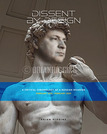
DISSENT BY DESIGN is a book that was produced during 2022-2023 in response to the Russian invasion of Ukraine on February 24, 2022. It was on this date that I began a social media campaign on LinkedIn that directly addressed the invasion of a Sovereign country by a rogue super power. As a Graphic Designer I felt it was my obligation to do all I can to bring attention to this atrocity and bring the narrative to the forefront of the conversation so that we help end this conflict in all theways we can. This book is a call to action, in the form of 'social media' posts throughout a one year period of time in our collective past, it is a documentation in chronological order of what happened, when and who was to blame and how many sufferred. FInally, this book illustrates how Graphic Designers can use their knowledge as storytellers to forward a conversation about the most important things in our lives and how to preserve them. We can be a vehicle of change and/or social engagement, to help people understand all the complex problems we face and to begin the process of solving those problems. This is a way forus to bring past narratives to light once again, to rejoin the conversations that have been lost, and to further discuss and provide solutions through dialogue and change.

This book is part of the college course BUS 105 Social Media Marketing currently offered at Saddleback College in Mission Viejo, CA and taught by Dr. Scot Trodick. This book can be viewed along with original social media marketing content which can be accessed by enrolling in BUS 105 Social Media Marketing offered at Saddleback College in Mission Viejo, CA and taught by Dr. Scot Trodick. Material from this course is not included in this open educational resource. Enrolling in the course BUS 105 Social Media Marketing at Saddleback College will provide full access to all materials or the content can be obtained directly from Bishop Publishing.
MIT researcher Deb Roy wanted to understand how his infant son learned language -- so he wired up his house with videocameras to catch every moment (with exceptions) of his son's life, then parsed 90,000 hours of home video to watch "gaaaa" slowly turn into "water." Astonishing, data-rich research with deep implications for how we learn. Deb Roy studies how children learn language, and designs machines that learn to communicate in human-like ways. On sabbatical from MIT Media Lab, he's working with the AI company Bluefin Labs. A quiz, thought provoking question, and links for further study are provided to create a lesson around the 20-minute video. Educators may use the platform to easily "Flip" or create their own lesson for use with their students of any age or level.
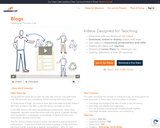
A short introduction to blogs - how they work and why they matter.
This resource is designed to help high school students build a positive online presence. Students will explore ways to use social media in professionally responsible ways, create an online portfolio, and review the legal and privacy issues surrounding an online presence.

This book is part of the college course CIMW 207 Social Media and Web Fundamentals currently offered at Saddleback College in Mission Viejo, CA and taught by Dr. Scot Trodick. This book can be viewed along with original social media and web fundamentals content which can be accessed by enrolling in CIMW 207 Social Media and Web Fundamentals offered at Saddleback College in Mission Viejo, CA and taught by Dr. Scot Trodick. Material from this course is not included in this open educational resource. Enrolling in the course CIMW 207 Social Media and Web Fundamentals at Saddleback College will provide full access to all materials or the content can be obtained directly from Bishop Publishing.
This computer skills curriculum is designed for teaching computer skills, MS programs, and Social Media awareness to adult learners. The curriculum uses visual aids, practical application and performance based assessments making it appropriate for ESOL learners as well as native English speakers. Each module aligns with the corresponding Northstar Digital Literacy Assessment. Teacher notes, vocabulary lists, and additional resources are included in each module.
En este REA se muestra toda la documentación audiovisual y pdfs, creada en el marco del proyecto Comunicación y diseminación científica, en materia educativa en España, a través de las redes sociales (FCT-20-15761), ejecutado con la colaboración de la Fundación Española para la Ciencia y la Tecnología – Ministerio de Ciencia e Innovación. Este proyecto estuvo destinado a medir el impacto de las estrategias de comunicación y diseminación científica en las redes sociales, en las labores a cargo de los profesionales dedicados a la educación obligatoria en España
Many teens today who use the Internet are actively involved in participatory cultures—joining online communities (Facebook, message boards, game clans), producing creative work in new forms (digital sampling, modding, fan videomaking, fan fiction), working in teams to complete tasks and develop new knowledge (as in Wikipedia), and shaping the flow of media (as in blogging or podcasting). A growing body of scholarship suggests potential benefits of these activities, including opportunities for peer-to-peer learning, development of skills useful in the modern workplace, and a more empowered conception of citizenship. Some argue that young people pick up these key skills and competencies on their own by interacting with popular culture; but the problems of unequal access, lack of media transparency, and the breakdown of traditional forms of socialization and professional training suggest a role for policy and pedagogical intervention. This report aims to shift the conversation about the "digital divide" from questions about access to technology to questions about access to opportunities for involvement in participatory culture and how to provide all young people with the chance to develop the cultural competencies and social skills needed. Fostering these skills, the authors argue, requires a systemic approach to media education; schools, afterschool programs, and parents all have distinctive roles to play.
Academic artist Enrique Legaspi grew up singing, skateboarding, and creating. As a teacher, one day he realized, "I'm doing everything I can, I'm staying up late, but I'm producing the same results. What's going on?" Now that he's begun to modify and adapt his teaching to his students' interests, Enrique's students are creating, curating and sharing their work using video and social media -- and it's made all the difference.
This course is intended for people who aspire to know all about how to think smart, get logical, improve decision making skills and use social networking efficiently. The learner needs to have basic knowledge of computers and the Internet.