Author: Daniel Shogan, Danville Museum of Fine Arts and History Students will learn …
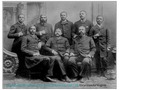
Author: Daniel Shogan, Danville Museum of Fine Arts and History Students will learn about the 1883 Massacre in Danville, Virginia as an example of racist mob violence against African Americans. Within the context of the massacre, they will be shown primary documents from the event. These documents will provide the students with not only a lens into the Danville of the nineteenth century, but also provide them with an opportunity to think critically about the biases present in some of the documents. After careful discussion of the events and outcomes of the massacre, the students will be given vocabulary worksheets that help to define and underline the most important elements of the narrative.
This course is a continuation of 24.951. This semester the course topics …
This course is a continuation of 24.951. This semester the course topics of interest include movement, phrase structure, and the architecture of the grammar.
The purpose of this course is to examine the African American experience …
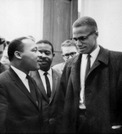
The purpose of this course is to examine the African American experience in the United States from 1863 to the present. Prominent themes include the end of the Civil War and the beginning of Reconstruction; African Americans' urbanization experiences; the development of the modern civil rights movement and its aftermath; and the thought and leadership of Booker T. Washington, Ida B. Wells-Barnett, W.E.B. Du Bois, Marcus Garvey, Martin Luther King Jr., and Malcolm X. WARNING: Some of the lectures in this course contain graphic content and/or adult language that some users may find disturbing.
"African American Perspectives" gives a panoramic and eclectic review of African American …
"African American Perspectives" gives a panoramic and eclectic review of African American history and culture and is primarily comprised of two collections in the Rare Book and Special Collections Division: the African American Pamphlet Collection and the Daniel A.P. Murray Collection with a date range of 1822 through 1909. Most were written by African-American authors, though some were written by others on topics of particular importance in African-American history. Among the authors represented are Frederick Douglass, Ida B. Wells-Barnett, Benjamin W. Arnett, Alexander Crummel, Emanuel Love, Lydia Maria Child, Kelly Miller, Charles Sumner, Mary Church Terrell, and Booker T. Washington, among others.
The 800 + titles in the collection include sermons on racial pride and political activism; annual reports of charitable, educational, and political organizations; and college catalogs and graduation orations from the Hampton Institute, Morgan College, and Wilberforce University. Also included are biographies, slave narratives, speeches by members of Congress, legal documents, poetry, playbills, dramas, and librettos. Other materials focus on segregation, voting rights, violence against African Americans, the colonization of Africa by freed slaves, anti-slavery organizations and investigative reports. Several of the items are illustrated with portraits of the authors.
In this lesson students learn about the Reconstruction Amendments (13th, 14th and …
In this lesson students learn about the Reconstruction Amendments (13th, 14th and 15th) that abolished slavery, guaranteed African American citizenship and secured men the right to vote.
American Government is designed to meet the scope and sequence requirements of …
American Government is designed to meet the scope and sequence requirements of the single-semester American government course. This title includes innovative features designed to enhance student learning, including Insider Perspective features and a Get Connected Module that shows students how they can get engaged in the political process. The book provides an important opportunity for students to learn the core concepts of American government and understand how those concepts apply to their lives and the world around them. American Government includes updated information on the 2016 presidential election.Senior Contributing AuthorsGlen Krutz (Content Lead), University of OklahomaSylvie Waskiewicz, PhD (Lead Editor)
This course examines the social, cultural, political, and economic history of the …
This course examines the social, cultural, political, and economic history of the United States, from the Civil War to the present. It uses secondary analysis and primary documents, such as court cases, personal accounts, photographs, and films, to examine some of the key issues in the shaping of modern America, including industrialization and urbanization, immigration, the rise of a mass consumer society, the emergence of the US as a global power, and the development of civil rights activism and other major social movements.
In this learning experience, the students will complete a primary source inquiry …
In this learning experience, the students will complete a primary source inquiry into the impacts of Reconstruction on Black experiences in Virginia and the South. The students will use the Claim-Evidence-Reasoning structure to defend one of two claims.Students will analyze sources that depict/detail Black experiences and perspectives before, during, and after the Reconstruction. This learning experience will be most effective after students have been introduced to the what and when of Reconstruction.
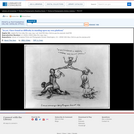
A puzzling caricature, probably dealing with Reconstruction under Andrew Johnson's administration. The …
A puzzling caricature, probably dealing with Reconstruction under Andrew Johnson's administration. The work is quite crudely drawn. An acrobat, with mustache and sideburns and wearing a jester's cap, holds in each hand a mask, one grinning and one frowning. His legs stretch from the head of Pennsylvania congressman Thaddeus Stevens, who holds a paper labeled "Committee of 15" and is seated on a black man, who crawls on all fours, to the head of an unidentified man (probably Johnson) who holds the U.S. Constitution. The latter's back is turned to the viewer and several geese, some alive and some dead, appear at his feet. Stevens, an abolitionist, was one of the most prominent members of the Joint Committee on Reconstruction, composed of fifteen members of Congress. The fool remarks, "As yet, I have found no difficulty in standing upon my own platform."|Entered according to Act of Congress June 8th 1866.|Title appears as it is written on the item.|Weitenkampf, p. 153.|Forms part of: American cartoon print filing series (Library of Congress)|Published in: American political prints, 1766-1876 / Bernard F. Reilly. Boston : G.K. Hall, 1991, entry 1866-3.
This curriculum unit of three lessons examines the social, political and economic …
This curriculum unit of three lessons examines the social, political and economic conditions of the southern states in the aftermath of the Civil War and shows how these factors helped to shape the Reconstruction debate as well as the subsequent history of American race relations.
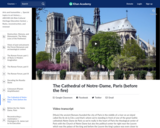
The Cathedral of Notre-Dame, Paris, begun 1163 (recorded before the fire). speakers: …
The Cathedral of Notre-Dame, Paris, begun 1163 (recorded before the fire). speakers: Dr. Beth Harris and Dr. Steven Zucker. Created by Beth Harris and Steven Zucker.
Whether it be called the Civil War, the War between the States, …
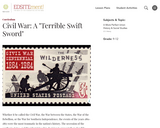
Whether it be called the Civil War, the War between the States, the War of the Rebellion, or the War for Southern Independence, the events of the years 1861-1865 were the most traumatic in the nation's history. This curriculum unit will introduce students to several important questions pertaining to the war.
No restrictions on your remixing, redistributing, or making derivative works. Give credit to the author, as required.
Your remixing, redistributing, or making derivatives works comes with some restrictions, including how it is shared.
Your redistributing comes with some restrictions. Do not remix or make derivative works.
Most restrictive license type. Prohibits most uses, sharing, and any changes.
Copyrighted materials, available under Fair Use and the TEACH Act for US-based educators, or other custom arrangements. Go to the resource provider to see their individual restrictions.