Students learn how nanoparticles can be creatively used for medical diagnostic purposes. …
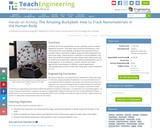
Students learn how nanoparticles can be creatively used for medical diagnostic purposes. They learn about buckminsterfullerenes, more commonly known as buckyballs, and about the potential for these complex carbon molecules to deliver drugs and other treatments into the human body. They brainstorm methods to track buckyballs in the body, then build a buckyball from pipe cleaners with a fluorescent tag to model how nanoparticles might be labeled and detected for use in a living organism. As an extension, students research and select appropriate radioisotopes for different medical applications.
This course is an introduction to the cross-cultural study of biomedical ethics, …
This course is an introduction to the cross-cultural study of biomedical ethics, examining moral foundations of the science and practice of Western biomedicine through case studies of abortion, contraception, cloning, organ transplantation and other issues. It evaluates challenges that new medical technologies pose to the practice and availability of medical services around the globe, and to cross-cultural ideas of kinship and personhood. Also discussed are critiques of the biomedical tradition from anthropological, feminist, legal, religious, and cross-cultural theorists.
In the course we will use a feminist interdisciplinary lens and invite …
In the course we will use a feminist interdisciplinary lens and invite students to look critically at how practices like privatization, shrinking public "safety nets", de-regulation, and the commodification of health services intersect inevitably with gender, race and class, for both men and women. We will draw on a blend of empirical studies, policy materials, films and guest speakers to examine specific health issues like menstrual health, corporate obstetrics, abortion, obesity, intersex, harassment and other forms of gendered violence, mental health and stress, parent-child attachment, as well as ethics and pharmaceuticals. The Graduate Consortium in Women's Studies (GCWS) This course is part of the Graduate Consortium in Women's Studies. The GCWS at MIT brings together scholars and teachers at nine degree-granting institutions in the Boston area who are devoted to graduate teaching and research in Women's Studies and to advancing interdisciplinary Women's Studies scholarship. Learn more about the GCWS.
This resource is a video abstract of a research paper created by …
This resource is a video abstract of a research paper created by Research Square on behalf of its authors. It provides a synopsis that's easy to understand, and can be used to introduce the topics it covers to students, researchers, and the general public. The video's transcript is also provided in full, with a portion provided below for preview:
"G protein-coupled receptors, or GPCRs, are cell membrane receptors that bind to various molecules. Upon binding, GPCRs are known to undergo structural changes, which activates them for signaling between cells, but only recently have researchers begun to understand the functions and pathways of GPCRs in animals. Extensive evidence suggests that animal steroids, including estrogen, activate GPCRs. The receptor GPER1, for example, facilitates estrogen signaling but may also play a neuroprotective role, making it an attractive drug target. In insects, the hormone 20E binds to GPCRs to signal molting and metamorphosis. Understanding how to disrupt this signaling could lead to precision chemicals that control pest insects. Much work remains to map out the numerous hormone pathways orchestrated by GPCRs. Future and ongoing studies could help scientists develop pharmaceuticals that tap into these pathways to improve human health and productivity..."
The rest of the transcript, along with a link to the research itself, is available on the resource itself.
New understanding of human genetics will not only make it easier to …
New understanding of human genetics will not only make it easier to diagnose diseases, it will also change how diseases are treated. Scientists and drug companies are using knowledge from the Human Genome Project to find cures for everything from cancer to obesity (see chapter 1: Mapping the Human Genome). This new medicine is called "genomic" medicine. Medicine is changing at a rapid rate as a result of the new knowledge of the human genome. It is important for students to know how drugs and treatments are changing and will continue to change.
This resource is a video abstract of a research paper created by …
This resource is a video abstract of a research paper created by Research Square on behalf of its authors. It provides a synopsis that's easy to understand, and can be used to introduce the topics it covers to students, researchers, and the general public. The video's transcript is also provided in full, with a portion provided below for preview:
"Horizontal gene transfer helps shape bacterial communities and drives the spread of antibiotic resistance. Of the three horizontal gene transfer pathways, conjugation has been studied the most in the context of antibiotic resistance. Antibiotics themselves can trigger these transfers, but the impact of other types of pharmaceuticals in natural environments remains to be explored. To close this gap, researchers examined several common non-antibiotic pharmaceuticals in a model of wastewater treatment plant activated sludge. The tested compounds covered multiple drug classes including an anticonvulsant, a lipid-lowering drug, a β-blocker, and nonsteroidal anti-inflammatory drugs. Environmentally relevant concentrations of the compounds promoted conjugative transfer of IncP1-α, a plasmid that carries antibiotic resistance. Exposure to these compounds spread IncP1-α across entire microbial communities..."
The rest of the transcript, along with a link to the research itself, is available on the resource itself.
Explore the discovery and understanding of marine symbionts that may provide novel …
Explore the discovery and understanding of marine symbionts that may provide novel sources of new drugs with Scripps Institutions' Margo Haygood. (27 minutes)
Join Scripps' Bill Gerwick in an exploration of the potential uses of …
Join Scripps' Bill Gerwick in an exploration of the potential uses of one of the most ancient of all life forms - blue-green algae - as a source for new pharmaceuticals with used ranging from anticancer compounds to drug screening. (54 minutes)
No restrictions on your remixing, redistributing, or making derivative works. Give credit to the author, as required.
Your remixing, redistributing, or making derivatives works comes with some restrictions, including how it is shared.
Your redistributing comes with some restrictions. Do not remix or make derivative works.
Most restrictive license type. Prohibits most uses, sharing, and any changes.
Copyrighted materials, available under Fair Use and the TEACH Act for US-based educators, or other custom arrangements. Go to the resource provider to see their individual restrictions.