Students use the model of the infamous Bill and Ted from the …
Students use the model of the infamous Bill and Ted from the feature film "Bill and Ted's Excellent Adventure" to "go back in time" to learn about deities in the ancient world. After researching, studying, and viewing reproductions of artworks that depict gods and goddesses, students transport their chosen deities to the modern world as characters they write about in a mock television talk-show script, which they enact for the class.
Students will analyze scenes from the Trojan War that are visually depicted …
Students will analyze scenes from the Trojan War that are visually depicted in an ancient object and an 18th-century painting. They will research an epic poem inspired by the Trojan War and write a literary response analyzing how themes and values in the poem reflect the historical context in which they were made. Finally, they will work in teams to reframe a tale from the Trojan War in a contemporary context -- visually and in poetry -- and recite the tale in a poetry slam.
This is a collection of 900 boldly colored and graphically diverse posters …
This is a collection of 900 boldly colored and graphically diverse posters produced as part of FDR's New Deal. These striking silkscreens, lithographs, and woodcuts were created to publicize health and safety programs; cultural programs including art exhibitions, theatrical, and musical performances; travel and tourism; educational programs; and community activities.
After reading "The Tempest" or any other play by William Shakespeare, students …
After reading "The Tempest" or any other play by William Shakespeare, students work in small groups to plan, compose, and perform a choral reading based on a character or theme.
Lights, camera, action, and a bit of mystery! In this lesson, students …
Lights, camera, action, and a bit of mystery! In this lesson, students use mystery props in a skit bag to create and perform in short, impromptu skits.
Classical - Neoclassical Forms Word Count: 140348 (Note: This resource's metadata has …
Classical - Neoclassical Forms
Word Count: 140348
(Note: This resource's metadata has been created automatically by reformatting and/or combining the information that the author initially provided as part of a bulk import process.)
Classical - Neoclassical Forms Word Count: 161902 (Note: This resource's metadata has …
Classical - Neoclassical Forms
Word Count: 161902
(Note: This resource's metadata has been created automatically by reformatting and/or combining the information that the author initially provided as part of a bulk import process.)
This video "Diaghilev and the Ballets Russes, 1909Ä1929: When Art Danced with …
This video "Diaghilev and the Ballets Russes, 1909Ä1929: When Art Danced with Music" celebrates one of the most dazzling cultural enterprises of the twentieth century. The Ballets Russes, established in 1909 by the indefatigable impresario Serge Diaghilev, revolutionized the art of ballet. Combining Russian and Western traditions with a healthy dose of modernism, the company thrilled and shocked audiences with its powerful fusion of choreography, music, design and dance. Though it was based in Paris, the company toured throughout Europe, the United States and South America. Its influence continues to be felt today. A 28-minute video is available to watch online. A 58-minute version is available to borrow.
Students will observe the painting "The Abduction of Europa" by Rembrandt Harmensz. …
Students will observe the painting "The Abduction of Europa" by Rembrandt Harmensz. Van Rijn. They will then form groups to create a "tableau vivant" (living picture) inspired by Rembrandt's "The Abduction of Europa." Students will choose a character in the painting and create a scenario about what they think happened and what the character said before and after the scene. Each group will then collaborate and perform their tableau vivant for the class.
Nikki Giovanni's poem 'The Funeral of Martin Luther King, Jr.' is paired …
Nikki Giovanni's poem 'The Funeral of Martin Luther King, Jr.' is paired with Dr. King's "I Have a Dream" speech, taking students on a quest through time to the Civil Rights movement.
The forces of fate and free pull at Romeo and Juliet’s relationship …
The forces of fate and free pull at Romeo and Juliet’s relationship throughout the play, and it is up for debate whether fate or free will plays a larger role in the tragic events that unfold in their story. Examine the balcony scene to see how these forces are already at play from the very beginning of their relationship in this video from Great Performances: Romeo and Juliet.
Global Citizens in Action is a civic engagement curriculum that focuses on …
Global Citizens in Action is a civic engagement curriculum that focuses on cultural exchange, media literacy, and global citizenship. Through exploring the driving question, “How do we, as youth, engage our communities to create positive social change?”
This collection uses primary sources to explore the golden age of musical …
This collection uses primary sources to explore the golden age of musical theatre on Broadway. Digital Public Library of America Primary Source Sets are designed to help students develop their critical thinking skills and draw diverse material from libraries, archives, and museums across the United States. Each set includes an overview, ten to fifteen primary sources, links to related resources, and a teaching guide. These sets were created and reviewed by the teachers on the DPLA's Education Advisory Committee.
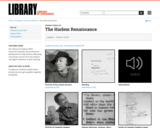
A selection of Library of Congress primary sources exploring the Harlem Renaissance. …
A selection of Library of Congress primary sources exploring the Harlem Renaissance. This set also includes a Teacher's Guide with historical context and teaching suggestions.
Let the power of imagination and inference serve as a ńtime machineî …
Let the power of imagination and inference serve as a ńtime machineî to bring Benjamin Franklin into the classroom! History and science come to life in a dialogue with Franklin the inventor, developed through lesson activities that incorporate research, imagination, writing, visual arts, and drama.
Drama combines the literary arts of storytelling and poetry with the world …
Drama combines the literary arts of storytelling and poetry with the world of live performance. As a form of ritual as well as entertainment, drama has served to unite communities and challenge social norms, to vitalize and disturb its audiences. In order to understand this rich art form more fully, we will study and discuss a sampling of plays that exemplify different kinds of dramatic structure; class members will also participate in, attend, and review dramatic performances.
In this video from the American Masters film Ralph Ellison: An American …
In this video from the American Masters film Ralph Ellison: An American Journey, scholars discuss the author’s ideas about jazz music. Ellison recognized jazz as an art form that represented the complexity of America’s multicultural democratic society. This resource may be used alongside Ellison’s Invisible Man, but is also well suited for use in a lesson, unit, or course on African American literature.
Sensitive: This resource contains material that may be sensitive for some students. Teachers should exercise discretion in evaluating whether this resource is suitable for their class.
No restrictions on your remixing, redistributing, or making derivative works. Give credit to the author, as required.
Your remixing, redistributing, or making derivatives works comes with some restrictions, including how it is shared.
Your redistributing comes with some restrictions. Do not remix or make derivative works.
Most restrictive license type. Prohibits most uses, sharing, and any changes.
Copyrighted materials, available under Fair Use and the TEACH Act for US-based educators, or other custom arrangements. Go to the resource provider to see their individual restrictions.