In this course, you will learn the principles of genetics with application …
In this course, you will learn the principles of genetics with application to the study of biological function at the level of molecules, cells, and multicellular organisms, including humans. We will cover structure and function of genes, chromosomes, and genomes; biological variation resulting from recombination, mutation, and selection; population genetics; and the use of genetic methods to modify genes and genomes and analyze protein function, gene regulation, and inherited disease. This course, based on the MIT course 7.03 Genetics taken by enrolled MIT students, was organized as a three-part series on edX by MIT’s Department of Biology (Note: The third part of the course is not available yet). It is self-paced and free as long as you enroll in the Audit Track option, which you can select after creating a free account on edX.
In this course, you will engage in the biology of cells of …
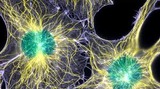
In this course, you will engage in the biology of cells of higher organisms. You will study the structure, function, and biosynthesis of cellular membranes and organelles; cell growth and oncogenic transformation; transport, receptors, and cell signaling; the cytoskeleton, the extracellular matrix, and cell movements; cell division and cell cycle; functions of specialized cell types. This course emphasizes the current molecular knowledge of cell biological processes as well as the genetic, biochemical, and other experimental approaches that resulted in these discoveries. This course, based on the MIT course 7.06 Cell Biology taken by enrolled MIT students, was organized as a three-part series on edX by MIT’s Department of Biology. It is self-paced and free as long as you enroll in the Audit Track option, which you can select after creating a free account on edX.
This course is an in-depth adventure through the molecular mechanisms that control …
This course is an in-depth adventure through the molecular mechanisms that control the maintenance, expression, and evolution of prokaryotic and eukaryotic genomes. Through lectures and readings of relevant literature, students will explore gene regulation, DNA replication, genetic recombination, transcription, and mRNA translation. The quizzes are designed to build students' experimental design and data analysis skills. This course, based on the MIT course 7.28/7.58 Molecular Biology taken by enrolled MIT students, was organized as a three-part series on edX by MIT’s Department of Biology. It is self-paced and free as long as you enroll in the Audit Track option, which you can select after creating a free account on edX.
This course applies the tools of anthropology to examine biology in the …
This course applies the tools of anthropology to examine biology in the age of genomics, biotechnological enterprise, biodiversity conservation, pharmaceutical bioprospecting, and synthetic biology. It examines such social concerns such as bioterrorism, genetic modification, and cloning. It offers an anthropological inquiry into how the substances and explanations of biology—ecological, organismic, cellular, molecular, genetic, informatic—are changing. It examines such artifacts as cell lines, biodiversity databases, and artificial life models, and using primary sources in biology, social studies of the life sciences, and literary and cinematic materials, and asks how we might answer Erwin Schrodinger’s 1944 question, “What Is Life?” today.
This resource is a video abstract of a research paper created by …
This resource is a video abstract of a research paper created by Research Square on behalf of its authors. It provides a synopsis that's easy to understand, and can be used to introduce the topics it covers to students, researchers, and the general public. The video's transcript is also provided in full, with a portion provided below for preview:
"It’s a feared moment for every scientist: the discovery that years of painstaking research has led to results that can't be repeated. Many think that poorly characterized antibodies have contributed to this reproducibility crisis more than any other laboratory tool. A new study published in Molecular Cell supports this hypothesis, at least in the context of chromatin immunoprecipitation. Although accurate ChIP interpretation depends on near-perfect antibody specificity, the report shows that many of these reagents are far less capable than their advertising suggests, which calls into question several widely accepted paradigms on genomic regulation. The study focused on histone post-translational modifications; specifically all three methylation states of lysine 4 on histone H3. Through ChIP experiments, H3K4 methylation has been strongly linked to transcriptional control..."
The rest of the transcript, along with a link to the research itself, is available on the resource itself.
Word Count: 6578 (Note: This resource's metadata has been created automatically by …
Word Count: 6578
(Note: This resource's metadata has been created automatically by reformatting and/or combining the information that the author initially provided as part of a bulk import process.)
Word Count: 6578 (Note: This resource's metadata has been created automatically by …
Word Count: 6578
(Note: This resource's metadata has been created automatically by reformatting and/or combining the information that the author initially provided as part of a bulk import process.)
A grasp of the logic and practice of science is essential to …
A grasp of the logic and practice of science is essential to understand the rest of the world around us. To that end, the CMB4e iText (like earlier editions) remains focused on experimental support for what we know about cell and molecular biology, and on showing students the relationship of cell structure and function. Rather than trying to be a comprehensive reference book, CMB4e selectively details investigative questions, methods and experiments that lead to our understanding of cell biology. This focus is nowhere more obvious than in the chapter learning objectives and in external links to supplementary material. The Basic CMB3e version of the iText includes links to external web-sources as well as the author’s short, just-in-time YouTube VOPs (with edited, optional closed captions), all embedded in or near relevant text. Each video is identified with a descriptive title and video play and QR bar codes.
BioNook is Whitehead Institute's online biology resource, offering exciting learning enrichment for …
BioNook is Whitehead Institute's online biology resource, offering exciting learning enrichment for students, parents and teachers. Find videos, podcasts and stories on Whitehead Institute Science, as well as virtual workshop opportunities through BioNook’s After School Science Club, and ideas for nature-based activities. Explore free materials on biology and research—from deep explorations of how science is done, to stories following the lives of scientists, to suggestions for fun outside activities and hands-on citizen science projects.
Biology is designed for multi-semester biology courses for science majors. It is …
Biology is designed for multi-semester biology courses for science majors. It is grounded on an evolutionary basis and includes exciting features that highlight careers in the biological sciences and everyday applications of the concepts at hand. To meet the needs of today’s instructors and students, some content has been strategically condensed while maintaining the overall scope and coverage of traditional texts for this course. Instructors can customize the book, adapting it to the approach that works best in their classroom. Biology also includes an innovative art program that incorporates critical thinking and clicker questions to help students understand—and apply—key concepts.
By the end of this section, you will be able to:Interpret the …
By the end of this section, you will be able to:Interpret the metazoan phylogenetic treeDescribe the types of data that scientists use to construct and revise animal phylogenyList some of the relationships within the modern phylogenetic tree that have been discovered as a result of modern molecular data
By the end of this section, you will be able to:Identify and …
By the end of this section, you will be able to:Identify and describe the properties of lifeDescribe the levels of organization among living thingsRecognize and interpret a phylogenetic treeList examples of different sub disciplines in biology
By the end of this section, you will be able to:Identify and …
By the end of this section, you will be able to:Identify and describe the properties of lifeDescribe the levels of organization among living thingsRecognize and interpret a phylogenetic treeList examples of different sub disciplines in biology
This course teaches the design of contemporary information systems for biological and …
This course teaches the design of contemporary information systems for biological and medical data. Examples are chosen from biology and medicine to illustrate complete life cycle information systems, beginning with data acquisition, following to data storage and finally to retrieval and analysis. Design of appropriate databases, client-server strategies, data interchange protocols, and computational modeling architectures. Students are expected to have some familiarity with scientific application software and a basic understanding of at least one contemporary programming language (e.g. C, C++, Java, Lisp, Perl, Python). A major term project is required of all students. This subject is open to motivated seniors having a strong interest in biomedical engineering and information system design with the ability to carry out a significant independent project. This course was offered as part of the Singapore-MIT Alliance (SMA) program as course number SMA 5304.
This is a hands-on activity to assess the students understanding of peptide …
This is a hands-on activity to assess the students understanding of peptide and disulfide bonds formed during protein synthesis. Students demonstrate the process of dehydration synthesis by combining amino acids through peptide bonds creating molecules of water, and one protein amino acid strand. It can also be used to assess students understanding of the process of translation.
There is growing body of evidence to support that students who directly …
There is growing body of evidence to support that students who directly experience authentic scientific research are more likely to continue onto advanced degrees and careers in Science, Technology, Engineering and Mathematics (STEM). In an effort to introduce more students to the benefits of scientific research we have drawn on an ongoing research project aimed at understanding how Corals Respond to the Environment (CRE) to develop an interdisciplinary laboratory course based on Authentic Research Experiences (ARE). A small cohort of undergraduate students enrolled in a semester-long course, entitled CREARE, perform biochemical experiments in the laboratory, analyze environmental data by R statistical software and prepared a report modeled after a research manuscript to present their work. The impact of CREARE on student learning gains and attitudes towards science is being measured, as is the impact of CREARE on participants' career choices and retention in STEM. This multidisciplinary research program addresses the impact of climate change on the health of a critically endangered coral species, ultimately leading to a better stewardship of this invaluable resource. Furthermore, CREARE offers a unique experience for students, one that may serve as a model for the development of more research-based courses, leading to improved retention in our STEM departments.
(Note: this resource was added to OER Commons as part of a batch upload of over 2,200 records. If you notice an issue with the quality of the metadata, please let us know by using the 'report' button and we will flag it for consideration.)
A grasp of the logic and practice of science is essential to …
A grasp of the logic and practice of science is essential to understand the rest of the world around us. To that end, the CMB3e iText (like earlier editions) remains focused on experimental support for what we know about cell and molecular biology, and on showing students the relationship of cell structure and function. Rather than trying to be a comprehensive reference book, CMB3e selectively details investigative questions, methods and experiments that lead to our understanding of cell biology. This focus is nowhere more obvious than in the chapter learning objectives and in external links to supplementary material. In the freely available Basic CMB3e, the latter include the author’s short just-in-time YouTube VOPs, embedded near relevant text.
No restrictions on your remixing, redistributing, or making derivative works. Give credit to the author, as required.
Your remixing, redistributing, or making derivatives works comes with some restrictions, including how it is shared.
Your redistributing comes with some restrictions. Do not remix or make derivative works.
Most restrictive license type. Prohibits most uses, sharing, and any changes.
Copyrighted materials, available under Fair Use and the TEACH Act for US-based educators, or other custom arrangements. Go to the resource provider to see their individual restrictions.