This collection uses primary sources to explore The Absolutely True Diary of …
This collection uses primary sources to explore The Absolutely True Diary of a Part-Time Indian by Sherman Alexie. Digital Public Library of America Primary Source Sets are designed to help students develop their critical thinking skills and draw diverse material from libraries, archives, and museums across the United States. Each set includes an overview, ten to fifteen primary sources, links to related resources, and a teaching guide. These sets were created and reviewed by the teachers on the DPLA's Education Advisory Committee.
This course provides the opportunity to discuss, orally and in writing, cultural, …
This course provides the opportunity to discuss, orally and in writing, cultural, ethical, and social issues on a stylistically sophisticated level. It explores representative and influential works from the nineteenth century to the present, through literary texts (prose, drama, poetry), radio plays, art, film, and architecture, as well as investigates topics such as the human and the machine, science and ethics, representation of memory, and issues of good and evil. Taught in German.
This interdisciplinary course surveys modern European culture to disclose the alignment of …
This interdisciplinary course surveys modern European culture to disclose the alignment of literature, opposition, and revolution. Reaching back to the foundational representations of anarchism in nineteenth-century Europe (Kleist, Conrad) the curriculum extends through the literary and media representations of militant organizations in the 1970s and 80s (Italy's Red Brigade, Germany's Red Army Faction, and the Real Irish Republican Army). In the middle of the term students will have the opportunity to hear a lecture by Margarethe von Trotta, one of the most important filmmakers who has worked on terrorism. The course concludes with a critical examination of the ways that certain segments of European popular media have returned to the "radical chic" that many perceive to have exhausted itself more than two decades ago.
This collection uses primary sources to explore The Adventures of Huckleberry Finn …
This collection uses primary sources to explore The Adventures of Huckleberry Finn by Mark Twain. Digital Public Library of America Primary Source Sets are designed to help students develop their critical thinking skills and draw diverse material from libraries, archives, and museums across the United States. Each set includes an overview, ten to fifteen primary sources, links to related resources, and a teaching guide. These sets were created and reviewed by the teachers on the DPLA's Education Advisory Committee.
In this unit, students will become familiar with fables and trickster tales …
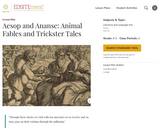
In this unit, students will become familiar with fables and trickster tales from different cultural traditions and will see how stories change when transferred orally between generations and cultures. They will learn how both types of folktales employ various animals in different ways to portray human strengths and weaknesses and to pass down wisdom from one generation to the next. Use the following lessons to introduce students to world folklore and to explore how folktales convey the perspectives of different world cultures.
The Open for Antiracism (OFAR) Program – co-led by CCCOER and College …
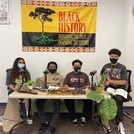
The Open for Antiracism (OFAR) Program – co-led by CCCOER and College of the Canyons – emerged as a response to the growing awareness of structural racism in our educational systems and the realization that adoption of open educational resources (OER) and open pedagogy could be transformative at institutions seeking to improve. The program is designed to give participants a workshop experience where they can better understand anti-racist teaching and how the use of OER and open pedagogy can empower them to involve students in the co-creation of an anti-racist classroom. The capstone project involves developing an action plan for incorporating OER and open pedagogy into a course being taught in the spring semester. OFAR participants are invited to remix this template to design and share their projects and plans for moving this work forward.
Sometime after 1492, the concept of the New World or America came …
Sometime after 1492, the concept of the New World or America came into being, and this concept appeared differently - as an experience or an idea - for different people and in different places. This semester, we will read three groups of texts: first, participant accounts of contact between native Americans and French or English speaking Europeans, both in North America and in the Caribbean and Brazil; second, transformations of these documents into literary works by contemporaries; third, modern texts which take these earlier materials as a point of departure for rethinking the experience and aftermath of contact. The reading will allow us to compare perspectives across time and space, across the cultural geographies of religion, nation and ethnicity, and finally across a range of genres - reports, captivity narratives, essays, novels, poetry, drama, and film. Some of the earlier authors we will read are Michel Montaigne, William Shakespeare, Jean de Léry, Daniel Defoe and Mary Rowlandson; more recent authors include Derek Walcott, and J. M. Coetzee.
Al-Bab is a portal website designed to introduce non-Arabs to Arab culture …
Al-Bab is a portal website designed to introduce non-Arabs to Arab culture by providing links to news sources, country profiles, articles, and a blog on Middle East current events. There are also specific links related to learning Arabic: dictionaries, language classes, textbooks, and other information pertaining to the study of Arabic. A free e-book, The Birth of Modern Yemen, is available for download.
The Folger Shakespeare Library provides the full searchable text of "All's Well …
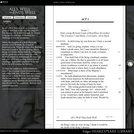
The Folger Shakespeare Library provides the full searchable text of "All's Well That Ends Well" to read online or download as a PDF. All of the lines are numbered sequentially to make it easier and more convenient to find any line.
Historians learn about the past in many ways. Political and legal documents, …
Historians learn about the past in many ways. Political and legal documents, economic statistics, film and video footage of events, material items such as tools and clothing, literature, songs, movies: all of these leftovers from previous eras help historians piece together the different ways that societies change over time. This interactive textbook is designed to help students understand America in the twentieth century through examination of the media produced in that era. Such explorations into the past are called cultural history, which has been defined by the Yale University Department of History as “an effort to inhabit the minds of the people of different worlds.”
In this unit students gain an understanding of the elements of gothic …
In this unit students gain an understanding of the elements of gothic literature as evidenced in four short stories: The Raven (Poe), The Masque of the Red Death (Poe), The Yellow Wallpaper (Gilman), and the Lottery (Jackson). Vocabulary is included for each story. Lessons focus on using text evidence to support analysis for tone, diction, inferencing, character analysis, author's purpose, and irony. Lessons include both independent and small group work, shorter writing tasks, small and large group discussion, and other opportunities for instructors to differentiate the lesson to suit classroom needs.
This course studies the national literature of the United States since the …
This course studies the national literature of the United States since the early 19th century. It considers a range of texts - including, novels, essays, and poetry - and their efforts to define the notion of American identity. Readings usually include works by such authors as Nathaniel Hawthorne, Henry David Thoreau, Frederick Douglass, Emily Dickinson, and Toni Morrison.
This course covers works by major American novelists, beginning with the late …
This course covers works by major American novelists, beginning with the late 18th century and concluding with a contemporary novelist. The class places major emphasis on reading novels as literary texts, but attention is paid to historical, intellectual, and political contexts as well. The syllabus varies from term to term, but many of the following writers are represented: Rowson, Hawthorne, Melville, Twain, Wharton, James, and Toni Morrison. Previously taught topics include The American Revolution and Makeovers (i.e. adaptations and reinterpretation of novels traditionally considered as American "Classics"). May be repeated for credit with instructor's permission so long as the content differs.
This collective of videos provides quick prompts for literature responses to springboard …
This collective of videos provides quick prompts for literature responses to springboard students into analytical thinking so they can avoid merely summarizing the material. This approach involves breaking down aspects of the readings through the points of civics, science, and culture to better understand how each piece of literature might affect readers and the world around them. Videos were included in courses on Literary Heritage and British Literature.
Angles is an annual online magazine of exemplary writing by MIT students. …
Angles is an annual online magazine of exemplary writing by MIT students. All of the works published in Angles since its first edition in 2008 were written by students in the introductory writing courses. These courses, designated as CI-HW (Communications-Intensive Humanities Writing) subjects, bring together students who love to write, students who struggle with writing, students who thrive in seminar-style classes, and students who just want a chance to develop their English skills. These students prosper together and produce some remarkable work. Angles has provided them with a public outlet for that work. It also provides the CI-HW instructors with material that inspires and guides their current students. In these classes, students learn to read more critically, to address specific audiences for particular purposes, to construct effective arguments and narratives, and to use and cite source material properly. Students in these courses write a great deal; they prewrite, write, revise, and edit their work for content, clarity, tone, and grammar and receive detailed feedback from instructors and classmates. Assigned readings are related to the thematic focus of each course, and are used as demonstrations of writing techniques. The pieces in Angles may be used as teaching tools and practical examples for other students and self-learners to emulate. You can find Angles Online.
This course examines traditional performances of the Arabic-speaking populations of the Middle …
This course examines traditional performances of the Arabic-speaking populations of the Middle East and North Africa. Starting with the history of the ways in which the West has discovered, translated and written about the Orient, we will consider how power and politics play roles in the production of culture, narrative and performance. This approach assumes that performance, verbal art, and oral literature lend themselves to spontaneous adaptation and to oblique expression of ideas and opinions whose utterance would otherwise be censorable or disruptive. In particular we will be concerned with the way traditional performance practices are affected by and respond to the consequences of modernization. Topics include oral epic performance, sacred narrative, Koranic chant performance, the folktale, solo performance, cultural production and resistance.
The Folger Shakespeare Library provides the full searchable text of "As You …
The Folger Shakespeare Library provides the full searchable text of "As You Like It" to read online or download as a PDF. All of the lines are numbered sequentially to make it easier and more convenient to find any line.
The course examines the earliest emergence of stories about King Arthur and …
The course examines the earliest emergence of stories about King Arthur and the Knights of the Round Table in the context of the first wave of British Imperialism and the expanded powers of the Catholic Church during the twelfth and thirteenth centuries. The morphology of Arthurian romance will be set off against original historical documents and chronicle sources for the English conquests in Brittany, Wales, Scotland, and Ireland to understand the ways in which these new attitudes towards Empire were being mythologized. Authors will include Bede, Geoffrey of Monmouth, Chrétien de Troyes, Marie de France, Gerald of Wales, together with some lesser known works like the Perilous Graveyard, the Knight with the Sword, and Perlesvaus, or the High History of the Holy Graal. Special attention will be paid to how the narrative material of the story gets transformed according to the particular religious and political agendas of each new author.
The Folger Shakespeare Library provides the full searchable text of "All's Well …
The Folger Shakespeare Library provides the full searchable text of "All's Well That Ends Well" to read online or download as a PDF. All of the lines are numbered sequentially to make it easier and more convenient to find any line.
In this video from August Wilson: The Ground on Which I Stand …
In this video from August Wilson: The Ground on Which I Stand the playwright discusses the influence that the blues has had on his writing. The clip also features a performance from Ma Rainey’s Black Bottom and commentary from several theater scholars.
No restrictions on your remixing, redistributing, or making derivative works. Give credit to the author, as required.
Your remixing, redistributing, or making derivatives works comes with some restrictions, including how it is shared.
Your redistributing comes with some restrictions. Do not remix or make derivative works.
Most restrictive license type. Prohibits most uses, sharing, and any changes.
Copyrighted materials, available under Fair Use and the TEACH Act for US-based educators, or other custom arrangements. Go to the resource provider to see their individual restrictions.