This pop-up book was designed for K-4 students to introduce them to remote sensing. By following Echo's journey through Arizona they become more familiar with map use and remote sensing images. After completing this book, children ages 5-6 should be able to distinguish between what a satellite sees and what Echo sees, be able to identify patterns and color in the satellite image and compare these to what Echo sees, and begin to extend the concept that texture is not only how something feels but is also how something looks. Older children (ages 7-9) should begin to describe what the satellite is seeing by just looking at the satellite view and they should also be able to describe the location of patterns and colors (i.e., square patterns of irrigated crops are near rivers and green forests are on top of mountains) and make more elaborate observations about texture in the satellite images. A set of activities reinforce the four basic themes or concepts fundamental to interpreting satellite imagery: perspective, shape and pattern, color, and texture.
" This is the second undergraduate design studio. It introduces a full range of architectural ideas and issues through drawing exercises, analyses of precedents, and explored design methods. Students will develop design skills by conceptualizing and representing architectural ideas and making aesthetic judgments about building design. Discussions regarding architecture's role in mediating culture, nature and technology will help develop the students' architectural vocabulary."
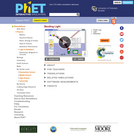
Explore bending of light between two media with different indices of refraction. See how changing from air to water to glass changes the bending angle. Play with prisms of different shapes and make rainbows.
Subject:
Mathematics and Statistics, Science and Technology
How does the blackbody spectrum of the sun compare to visible light? Learn about the blackbody spectrum of the sun, a light bulb, an oven, and the earth. Adjust the temperature to see the wavelength and intensity of the spectrum change. View the color of the peak of the spectral curve.
Subject:
Mathematics and Statistics, Science and Technology
Students create and decorate their own spectrographs using simple materials and holographic diffraction gratings. A holographic diffraction grating acts like a prism, showing the visual components of light. After building the spectrographs, students observe the spectra of different light sources as homework.
Subject:
Mathematics and Statistics, Science and Technology
In 2001, the Mars Odyssey spacecraft discovered significant amounts of water ice buried in the high latitude regions of Mars. This exciting discovery, based upon data from the Mars Gamma Ray Spectrometer, helped motivate the development of the Mars Phoenix Lander mission, which will arrive in the Martian arctic in 2008 to investigate this buried water ice. The product includes five classroom activities related to the discovery of water ice. These field-tested activities involve both guided and open inquiry activities using real data to investigate and learn about processes occurring on Mars. Each lesson includes a teacher guide and student guide. In addition, some of the lessons are accompanied by PowerPoint presentations and one extension activity utilizes an educational Flash animation.
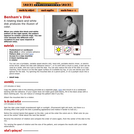
Before photography was invented there was the camera obscura, useful for studying the sun, as an aid to artists, and for general entertainment. What is a camera obscura and how does it work ???
This unit explores the issue of energy production as a pressing global issue and how nanoscience could enable important breakthroughs in energy generation and conversion. In particular, traditional and newer "nano" solar technologies are introduced and explored. Upon completing this unit, students will understand: Clean alternative energy technologies must be developed to provide sufficient energy to meet growing global demand, and must be sustainable both environmentally and economically; Nanoscience could enable important breakthroughs in solar energy technology through low cost, novel energy conversion mechanisms; Surface area to volume ratio is a function of particle size and shape. Increasing surface area normally increases the rate of reaction because there are more sites available for simultaneous reaction; Energy is neither created nor destroyed--it can only be converted into different forms. Length: 2 lessons, up to 3 50-minute classroom periods if all lessons are used. Not all lessons are required. Use the lessons most appropriate for your students.
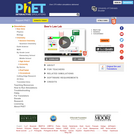
Make a whole rainbow by mixing red, green, and blue light. Change the wavelength of a monochromatic beam or filter white light. View the light as a solid beam, or see the individual photons.
Subject:
Mathematics and Statistics, Science and Technology
This educator's guide was developed with the Cosmic Questions national traveling exhibit. It contains activities relating to the exhibit's theme, our place in space and time-and information about the exhibit. Although the guide complements a museum visit, activities can be used independently from the exhibit.
Students explore the many different ways that engineers provide natural lighting to interior spaces. They analyze various methods of daylighting by constructing model houses from foam core board and simulating the sun with a desk lamp. Teams design a daylighting system for their model houses based on their observations and calculations of the optimal use of available sunlight to their structure.
Subject:
Mathematics and Statistics, Science and Technology
Students find and calculate the angle that light is transmitted through a holographic diffraction grating using trigonometry. After finding this angle, student teams design and build their own spectrographs, researching and designing a ground- or space-based mission using their creation. At project end, teams present their findings to the class, as if they were making an engineering conference presentation. Student must have completed the associated Building a Fancy Spectrograph activity before attempting this activity. This activity is best completed over four 60-minutes sessions.
Subject:
Mathematics and Statistics, Science and Technology
Students test whether the color of a material affects how much heat it absorbs. Students will place an ice cube in a box made of colored paper (one box per color; white, yellow, red and black), which they will place in the sun. The students will make prediction as to which color will melt the ice cube first. They will record the order and time required for the ice cubes to melt.
Subject:
Mathematics and Statistics, Science and Technology
Students use simple materials to design an open spectrograph so they can calculate the angle light is bent when it passes through a holographic diffraction grating. A holographic diffraction grating acts like a prism, showing the visual components of light. After finding the desired angles, students use what they have learned to design their own spectrograph enclosure.
Subject:
Mathematics and Statistics, Science and Technology
No restrictions on your remixing, redistributing, or making derivative works.
Give credit to the author, as required.
Your remixing, redistributing, or making derivatives works comes with some
restrictions, including how it is shared.
Your redistributing comes with some restrictions. Do not remix or make
derivative works.
Copyrighted materials, available under Fair Use and the TEACH Act for US-based
educators, or other custom arrangements. Go to the resource provider to see
their individual restrictions.