Jason Allen offers a comparative discussion of two important Caribbean poets and …
Jason Allen offers a comparative discussion of two important Caribbean poets and playwrights, Aime Cesaire and Derek Walcott, to emphasize the impact of Caribbean literature upon the postcolonial world. By using biographical and historical detail to support his analysis of some of Cesaire and Walcott's key texts, Allen offers insight into what it means to be a Caribbean writer - looking back to a colonial past, and forward to a global future. This audio recording is part the Interviews on Great Writers series presented by Oxford University Podcasts.
This lesson extends over several class periods. Students analyze the claim, grounds, …
This lesson extends over several class periods. Students analyze the claim, grounds, warrants, qualifiers and counterclaims in three articles about the American Dream. Students conduct research and find two additional articles about the American Dream. Students then analyze the argument in those articles. Finally, students write their own argument essay about the current state of the American Dream.
In this class we will practice skills in reading, analyzing, and writing …
In this class we will practice skills in reading, analyzing, and writing about fiction, poetry and drama from a select sampling of 20th Century American Literature. Through class discussion, close reading, and extensive writing practice, this course seeks to develop critical and analytical skills, preparing students for more advanced academic work.
This module on Colonial Literature explore the essential questions: 1) How does …
This module on Colonial Literature explore the essential questions: 1) How does the literature in early Colonial America reflect the customs and beliefs of the Native Americans and Puritans? 2)What kind of literary styles did the earliest writers contribute to American Literature? and 3) How did history have an effect on the types of literature being written? There are audio and visual activities as well as readings.
Dime novels written by women were once enormously popular with their readers, …
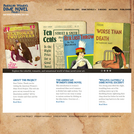
Dime novels written by women were once enormously popular with their readers, but the genre has been neglected for most of its history by scholars, collectors, and libraries. The genre suffers from the double burden of being both popular and written for working-class women. This project hopes to overcome the history of oversight to both the form and its readers by providing information about the novels themselves, the authors, the readers, and nineteenth century public reaction. This site is a source of information about women’s dime novels and includes primary sources on dime novels, biographies for lesser-known authors, lists of relevant archival collections and cover art.
Professor Paul Eggert, University of New South Wales, gives the 17th Annual …
Professor Paul Eggert, University of New South Wales, gives the 17th Annual D.F. McKenzie lecture on the subject of books and gives a case study of Henry Lawson, Australian author of Where the Billy Boils. This podcast is part of the Literature, Art and Oxford series from Oxford University.
Welcome to the CIRCLE OF STORIES lesson plans. These lessons will allow …
Welcome to the CIRCLE OF STORIES lesson plans. These lessons will allow students to examine the complex and rich oral tradition of Native American storytelling, create their own stories to share, explore indigenous and Native American cultures and the issues which face them today, and research and explore their own cultural heritage by recording their unique family stories and heritage. These lessons are directed toward grades 6 through 12, for use in the following subject areas: language arts, theater, history, social studies, multicultural studies, technology, and life science.
Making Evidence-Based Claims ELA/Literacy Units empower students with a critical reading and …
Making Evidence-Based Claims ELA/Literacy Units empower students with a critical reading and writing skill at the heart of the Common Core: making evidence-based claims about complex texts. These units are part of the Developing Core Proficiencies Program. This unit develops students' abilities to make evidence-based claims through activities based on a close reading of the Nobel Peace Prize Speeches of Rev. Dr. Martin Luther King, Jr. and President Barack Obama.
The Skills Strand teaches the mechanics of reading. Students are taught systematic …
The Skills Strand teaches the mechanics of reading. Students are taught systematic and explicit phonics instruction as their primary tool for decoding written English. By the end of grade 2, students have learned all of the sound spelling correspondences in the English language and are able to decode written material they encounter. In addition to phonics, students also are taught spelling, grammar, and writing during the Skills Strand. A downloadable story "Kits Hats" with illustrations is provided for instruction.
Find the rest of the EngageNY ELA resources at https://archive.org/details/engageny-ela-archive .
The goal of the Listening and Learning Strand is for students to …
The goal of the Listening and Learning Strand is for students to acquire language competence through listening, specifically building a rich vocabulary, and broad knowledge in history and science by being exposed to carefully selected, sequenced, and coherent read_alouds. The 9 units (or domains) provide lessons (including images and texts), as well as instructional objectives, core vocabulary, and assessment materials. The domain topics include: Nursery Rhymes and Fables; Five Senses; Stories; Plants; Farms; Kings and Queens; Seasons and Weather; Colonial Towns; and Taking Care of the Earth.
Find the rest of the EngageNY ELA resources at https://archive.org/details/engageny-ela-archive .
The Skills Strand teaches the mechanics of reading. Students are taught systematic …
The Skills Strand teaches the mechanics of reading. Students are taught systematic and explicit phonics instruction as their primary tool for decoding written English. By the end of grade 2, students have learned all of the sound spelling correspondences in the English language and are able to decode written material they encounter. In addition to phonics, students also are taught spelling, grammar, and writing during the Skills Strand. A downloadable story "Kits Hats" with illustrations is provided for instruction.
Find the rest of the EngageNY ELA resources at https://archive.org/details/engageny-ela-archive .
Students discuss and compare differing versions of Little Red Riding Hood and …
Students discuss and compare differing versions of Little Red Riding Hood and other tales about wolves in cumulative read-aloud sessions and text set explorations.
FreeReading is an open source instructional program that helps educators teach early …
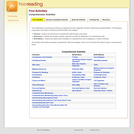
FreeReading is an open source instructional program that helps educators teach early literacy. Because it is open source, it represents the collective wisdom of a wide community of teachers and researchers. FreeReading contains Comprehension Activities, a page of activities to address important comprehension skills and strategies.
Using books by Ezra Jack Keats as inspiration, students explore problems and …
Using books by Ezra Jack Keats as inspiration, students explore problems and solutions through read-alouds, discussion, and an interactive bulletin board.
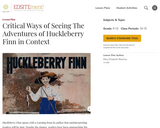
Huckleberry Finn opens with a warning from its author that misinterpreting readers …
Huckleberry Finn opens with a warning from its author that misinterpreting readers will be shot. Despite the danger, readers have been approaching the novel from such diverse critical perspectives for 120 years that it is both commonly taught and frequently banned, for a variety of reasons. Studying both the novel and its critics with an emphasis on cultural context will help students develop analytical tools essential for navigating this work and other American controversies. This lesson asks students to combine internet historical research with critical reading. Then students will produce several writing assignments exploring what readers see in Huckleberry Finn and why they see it that way.
No restrictions on your remixing, redistributing, or making derivative works. Give credit to the author, as required.
Your remixing, redistributing, or making derivatives works comes with some restrictions, including how it is shared.
Your redistributing comes with some restrictions. Do not remix or make derivative works.
Most restrictive license type. Prohibits most uses, sharing, and any changes.
Copyrighted materials, available under Fair Use and the TEACH Act for US-based educators, or other custom arrangements. Go to the resource provider to see their individual restrictions.