Biology is designed for multi-semester biology courses for science majors. It is …
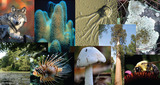
Biology is designed for multi-semester biology courses for science majors. It is grounded on an evolutionary basis and includes exciting features that highlight careers in the biological sciences and everyday applications of the concepts at hand. To meet the needs of today’s instructors and students, some content has been strategically condensed while maintaining the overall scope and coverage of traditional texts for this course. Instructors can customize the book, adapting it to the approach that works best in their classroom. Biology also includes an innovative art program that incorporates critical thinking and clicker questions to help students understand—and apply—key concepts.
By the end of this section, you will be able to:Define population …
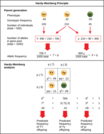
By the end of this section, you will be able to:Define population genetics and describe how population genetics is used in the study of the evolution of populationsDefine the Hardy-Weinberg principle and discuss its importance
A Hardy-Weinberg based population genetics simulator. This program assumes a single gene …
A Hardy-Weinberg based population genetics simulator. This program assumes a single gene and two alleles. Simulation of allele frequency changes similar to Felsenstein's Simul8 or PopG. Simulates changes in allele frequency based on violations of assumptions of Hardy Weinberg. User may vary starting allele frequency, population size, genotypic fitness, mutation and migration rates and bottleneck population size. Allele frequencies for p and q are graphed for up to 5 populations. When a single population is simulated both allele frequency and genotype frequencies are graphed.
No restrictions on your remixing, redistributing, or making derivative works. Give credit to the author, as required.
Your remixing, redistributing, or making derivatives works comes with some restrictions, including how it is shared.
Your redistributing comes with some restrictions. Do not remix or make derivative works.
Most restrictive license type. Prohibits most uses, sharing, and any changes.
Copyrighted materials, available under Fair Use and the TEACH Act for US-based educators, or other custom arrangements. Go to the resource provider to see their individual restrictions.