The focus of this lesson is to provide an opportunity for children …
The focus of this lesson is to provide an opportunity for children to develop oral language skills and to record their oral language to share with others.
Academic Interactions 140 is an intermediate course in academic oral communication based …
Academic Interactions 140 is an intermediate course in academic oral communication based on the 9th UN Sustainable Development Goal, Industry, Innovation and Infrastructure. This course prepares individuals to comprehend and produce oral English for a variety of academic encounters. Students identify and explain content and communication strategies from lectures, academic discussions, and other academic interactions. Feedback on content, pronunciation and pragmatics is a fundamental component of the course, and opportunity is given for speaking practice in a variety of genres. The final capstone project for the course requires students to prepare and deliver a 3- to 5- minute group presentation with one or two classmates about your engagement with an assigned challenge.
This is a great lesson to use with pre-intermediate students. Though parts …
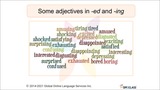
This is a great lesson to use with pre-intermediate students. Though parts of it can be used with beginner students and as a review for more advanced students. The point of this lesson is to give students the ability to differentiate between similar-looking adjectives in English. When teaching adjectives ending in –ed and –ing you will cover words like boring and bored which tend to confuse new speakers. So if you find that one of your students is struggling with adjectives this is the right lesson to teach.If you want additional lesson plans and support, including teachers’ notes, be sure to register for a free Off2Class account.
Lesson 1 introduces words that are commonly used when speaking and writing. Students …
Lesson 1 introduces words that are commonly used when speaking and writing. Students will learn basic adjectives old/new and young/old.If you want additional lesson plans and support, including teachers’ notes, be sure to register for a free Off2Class account.
Secondly, lesson 2 introduces more complex adjectives like wide/narrow and fresh/stale. Students will have a chance to put …
Secondly, lesson 2 introduces more complex adjectives like wide/narrow and fresh/stale. Students will have a chance to put the adjectives into use through various activities.If you want additional lesson plans and support, including teachers’ notes, be sure to register for a free Off2Class account.
Lastly, lesson 3 focuses on more complex adjectives like dull/smart. Though these adjectives aren’t as …
Lastly, lesson 3 focuses on more complex adjectives like dull/smart. Though these adjectives aren’t as common, they are still important for English learners to know.If you want additional lesson plans and support, including teachers’ notes, be sure to register for a free Off2Class account.
This phonics program was developed to serve students with diverse educational backgrounds, …
This phonics program was developed to serve students with diverse educational backgrounds, with a specific focus on refugees. One of the challenges in working with refugees is that, unlike international students, they come to English classes with huge variation in educational experience. Some students may have finished high school or have a college degree, while others may not have ever picked up a pencil before. The goal of this program is to provide a bridge for those students with limited literacy skills so that they are able to move on to a more traditional beginning ESL class. There are a number of assumptions about academic skills made in most English language classrooms, even at a beginning level. As a result, teachers and students alike become frustrated when those expectations are confounded.
This textbook was created for an advanced academic grammar course for ESL …
This textbook was created for an advanced academic grammar course for ESL students. By the end of the course, students will recognize and demonstrate the appropriate use of advanced grammar structures. To meet these outcomes, students will listen to aural language that includes the target structures, identify and edit grammar errors in written language, read and analyze texts that include the target grammar structures, and demonstrate the correct and appropriate use of target structures in written and spoken language.
This book has been created to provide a framework for building your …
This book has been created to provide a framework for building your skills in writing and critical thinking. It provides access to published samples from professional authors along with essay drafts from ESL students who have polished their skills in their respective writing courses.
The themes in the readings will give you a variety of topics to discuss with your classmates, which may inspire your own deeper thinking and writing. Overall, we hope that as you proceed through these chapters, you will build confidence and develop your voice in the classroom and beyond.
This is an advanced ESL lesson that is designed to introduce vocabulary …
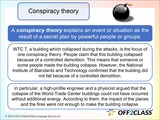
This is an advanced ESL lesson that is designed to introduce vocabulary about conspiracy theories. This lesson plan on conspiracy theories promotes fluency in speaking as it includes controlled and free tasks. Also please keep in mind the conversational nature of this topic. I strongly advise you to review this lesson on conspiracy theories before teaching it. In any case, you will have so much fun teaching this lesson as it covers so many interesting and conversational topics. If you want additional lesson plans and support, including teachers’ notes, be sure to register for a free Off2Class account.
Lesson 2 allows students to practice what they learned prior. With your …
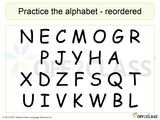
Lesson 2 allows students to practice what they learned prior. With your help, students can work on recognizing letters out of sequential order while learning additional vocabulary.If you want additional lesson plans and support, including teachers’ notes, be sure to register for a free Off2Class account.
Lesson 3 introduces spelling exercises to challenge your student’s existing knowledge of …
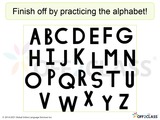
Lesson 3 introduces spelling exercises to challenge your student’s existing knowledge of each letter. It can also be used as a review lesson for more intermediate students.If you want additional lesson plans and support, including teachers’ notes, be sure to register for a free Off2Class account.
American English Sounds is a web resource that allows English as a …
American English Sounds is a web resource that allows English as a Second Language (ESL) students to practice perceiving and producing the sounds of American English in order to improve their pronunciation.
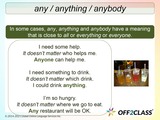
Our new ESL Lesson Plan teaches about the use of two important pronouns – …
Our new ESL Lesson Plan teaches about the use of two important pronouns – Anybody Nobody. A robust lesson plan with clear description, examples and practice opportunities, this is an engaging lesson that will help your students understand the use of these pronouns. The lesson is designed for Level B1 (pre-intermediate).If you want additional lesson plans and support, including teachers’ notes, be sure to register for a free Off2Class account.
This lesson is part of the Digital Literacy curriculum and is taken …
This lesson is part of the Digital Literacy curriculum and is taken from the Northstar Digital Literacy standards for Basic Computer Knowledge. The teaching and quiz are designed for ESL Level 1 and 2 students but could be delivered at any level with some modifications. The quiz can be delivered in printed form, particularly with Pre-Lit students.
The book is titled "Basic English for Teaching Korean," and its primary …
The book is titled "Basic English for Teaching Korean," and its primary audience consists of Korean teachers whose native language is not English and who plan to work in an English-speaking country. Given the increasing global demand for learning the Korean language, many individuals aspire to become Korean instructors. Among these future Korean educators, there are those who lack confidence in their English speaking skills and seek guidance on effectively teaching the Korean language using clear and fluent English. They are also interested in acquiring the appropriate terminology and expressions for conveying aspects of the Korean language and culture when instructing in the classroom. Within this book, we will offer a comprehensive, step-by-step guide on how to teach the Korean language in English.
수업이 참 쉬워지는 한국어 교실 기초 영어"는 영어 실력이 부족하다고 느끼시거나 영어에 자신감이 없으 신 한국어 선생님들이 수업에 필요한 영어를 쉽게 익힐 수 있도록 구성한 책 입니다. 생소한 영어가 아닌, 우리가 알고 있는 영어를 최대한 활용 할 수 있도록 핵심적인 내용을 간결하게 담는 데 초점을 두었습니다. 책은 한 학기의 흐름에 맞추어 ‘수업 소개-수업 진행-수업 마무리’의 세 파트로 구분됩니다. 각 파트를 이루는 챕터들은 세부 상황으로 구 분하여 핵심 단어와 표현, 응용 문장과 대화를 수록했습니다. 설레는 학기의 시작부터 마음 따뜻해지는 학기 마무리까지 이 책 한 권으로 선생님들께 도움을 드릴 수 있다면 좋겠습니다.
This site hosts two beginner adult ESL courses offered by Grossmont Community …
This site hosts two beginner adult ESL courses offered by Grossmont Community College: ESL 078 (with focus on listening fluency) and ESL 078R (with focus on reading proficiency). Each container offers materials for the first 2-4 (or more) weeks of the courses. The timing depends on the pace of a low-beginner class. Some classes may go faster and take 2 weeks, and some may need to go slower and may take up to 4 weeks.
The units that are offered are mostly for the instructor of the courses. This is because the teacher must lead the course with aural and verbal comprehension checks. At this level, students have very limited ability to communicate in any meaningful way, so the materials provide guidance to the teacher leading these courses.
The materials include videos, slideshows, vocabulary sheets, readings (such as original stories), teacher scripts, and simple assessments.
The materials are based on the principles that underlie contemporary language teaching in the area of Second Language Acquisition. The proficiency based approaches that have been used to create these materials are CI (comprehensible Input) and TPRS (Teaching Proficiency Through Reading and Story-Telling).
No restrictions on your remixing, redistributing, or making derivative works. Give credit to the author, as required.
Your remixing, redistributing, or making derivatives works comes with some restrictions, including how it is shared.
Your redistributing comes with some restrictions. Do not remix or make derivative works.
Most restrictive license type. Prohibits most uses, sharing, and any changes.
Copyrighted materials, available under Fair Use and the TEACH Act for US-based educators, or other custom arrangements. Go to the resource provider to see their individual restrictions.