Unrestricted Use
Public Domain
CPE/DPE
- Subject:
- Applied Science
- Computing and Information
- Material Type:
- Activity/Lab
- Student Guide
- Author:
- Maria Nei Ann B. Dizon
- Date Added:
- 06/27/2023
CPE/DPE

EDUFLEX MODELA Proposed Schema of 21st Century Skills Flexible Learning Approach
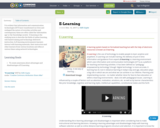
It is evident that information and communication technologies (ICT) have transformed our lives and reshaped the nature of everyday activities and contemporary times are often called the 'information age' or the 'knowledge society'.. E-learning is the unifying term to describe the fields of online learning, web-based training and technology-delivered instruction. In E-learning environments learners interact with learning materials, their instructors and other learners from various locations and often at various times using network technologies.
This is a proposed e-learning organizational structure in higher eduction. It will prefarably find use in an institution with other learning departments already teaching their courses using other modes of study e.g., face-to-face.
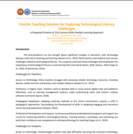
The post-pandemic era has led to changes in education, with technology playing a vital role. Teachers and students face challenges related to technological literacy. To address these challenges, investing in infrastructure, providing professional development, and developing digital skills in students are important. Blended learning, incorporating face-to-face and online activities, is a potential solution. Theories like constructivism and Bloom's Taxonomy can guide teaching. Flexible approaches such as project-based learning and the flipped classroom, along with technology tools and resources, support technology literacy. Implementing these approaches empowers students with skills for the digital age.
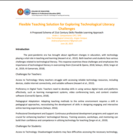
The post-pandemic era presents significant challenges in education, especially in technology integration. The Flexible Teaching Solution for Exploring Technological Literacy Challenges addresses these issues by emphasizing the importance of technological literacy and proposing effective solutions. Teachers face challenges such as limited technology access and proficiency, pedagogical adaptation, and the need for professional development. Students encounter difficulties with technology access, digital skills, self-regulation, motivation, equity, and inclusion. To overcome these challenges, investments in infrastructure, professional development, and inclusive policies are crucial. Blended learning, integrating face-to-face and online instruction, is a potential solution. Implementing the flexible teaching approach involves using various technology tools and platforms, open educational resources, and digital assessments. This dynamic learning environment fosters 21st-century skills in students.

This course aims to give students a greater appreciation of the beautiful surroundings of the University of Skövde by finding the historical roots of this area.
Edmodo, as an LMS being used worldwide, has been integral to those who got exposed to its utility, even once. Edmodo has an assessment and evaluation segment as well where the teacher can create and execute a quiz based assessment. Besides giving assignments and grading them, the Quiz feature gives us an opportunity to conduct a real-time, online assessment.
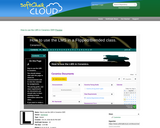
This is a lesson that I created to walk my students through the expectations for using the Learning Management System in my Ceramics class.
In this lesson, students will view and analyze both good and bad interview techniques. Students will identify proper dress for a professional interview setting, recognize proper body language and behaviors expected at interviews, and will practice proper communication skills employers are looking for. Interviewing is an important process to gaining quality employment and a problem this lesson will address. Understand proper dress, speech, and behaviors will increase a person's chance of gaining quality employment. Public speaking skills are needed, proper persuasive communication skill, life skills such as proper dress and body language.
This resource will help the users to know few tools for effective teaching and learning
Course DescriptionIntroduction to CPA Online Education prepares perspective CPA students for their designation journey. It addresses the basic principles of learning online, covers some valuable learning strategies, outlines the CPA terminology, software tools used in the professional CPA education, as well as the CPA examination requirements. Students successfully completing this course will have solid knowledge of the Canadian CPA foundational policies and procedures to ensure a strong start of their CPA journey.
E-Learning is defined as learning utilizing electronic technologies to access educational curriculum outside of a traditional classroom. This unit will help students to understand e-learning at the University of Belize and the different modalities (Web-Enhanced, Blended, and Online) associated with it. In addition, this unit will address the expectations of e-learners and provide a guide to help students choose the best modality based on their respective learning styles. We will compare the pros and cons of the different modalities (Web-Enhanced, Blended, and Online) accompanied by characteristics and examples best suited to be successful e-learners.
The LLOOF Learning Guide - A free downloadable learning guide about organic food production, entrepreneurship, volunteering and cultural exchange on farm enterprises. Plus a video channel and a community offering real life learning experience through the WWOOF network.
OpenClass is a free learning tool for building mastery-based assignments that follow a research-based format to optimize knowledge retention for learners. I (Laura Neser) have partnered with them to provide a set of 17 non-punitive review assignments around our textbook content that you can easily incorporate into your classes.
**As of spring 2024, an additional set of 17 short quizzes has also been developed through OpenClass and is available at the same URL already linked for this resource.
Instructions: You can clone the review assignments for your own use via the URL link (click the "Clone this class" button at the top of the page to set up a free account with the assignments).
Please feel free to reach out directly with any recommended edits (or possible errors) in the OpenClass assignments (neser@vt.edu). Thank you for reviewing and/or adopting this textbook and I hope this free resource is useful to you!
Openly published book
Title: Self-directed multimodal learning in higher education
Editor: Jako Olivier
Publisher: AOSIS, Cape Town, South Africa
ISBN: 978-1-928523-42-0
DOI: https://doi.org/10.4102/aosis.2020.BK210
Date of publication: 2020
This book aims to provide an overview of theoretical and practical considerations in terms of self-directed multimodal learning within the university context. Multimodal learning is approached in terms of the levels of multimodality and specifically blended learning and the mixing of modes of delivery (contact and distance education). As such, this publication will provide a unique snapshot of multimodal practices within higher education through a self-directed learning epistemological lens. The book covers issues such as what self-directed multimodal learning entails, mapping of specific publications regarding blended learning, blended learning in mathematics, geography, natural science and computer literacy, comparative experiences in distance education as well as situated and culturally appropriate learning in multimodal contexts.
This book provides a unique focus on multimodality in terms of learning and delivery within the context of self-directed learning. Therefore, the publication would not only advance the scholarship of blended and open distance learning in South Africa, but also the contribute to enriching the discourse regarding self-direction. From this book readers will get an impression of the latest trends in literature in terms of multimodal self-directed learning in South Africa as well as unique empirical work being done in this regard.
The course investigates e-Learning systems from a business, policy, technical and legal perspective. The issues presented will be tackled by discussion of the design and structure of the various example systems. The connection between information architectures and the physical workplace of the users will also be examined. The course will be comprised of readings, discussions, guest speakers and group design sessions. Laboratory sessions will be focused on implementation tools and opportunities to create one's own working prototypes. Students will learn to describe information architectures using the Unified Modeling Language (used to specify, design and structure web applications) and XML (to designate meaningful content).
This is a Proposed Schema for 21st Century Skills Flexible Learning ApproachTECHFLIPS Model: Empowering 21st Century Learners on Unleashing Creativity through Flipped Learning was created with the agenda to bring light in using a Flipped Classroom Approach in delivering lessons in the New Normal. This model considers the goal of attaining the learning outcomes presented and overall student learning achievement.
The "Transforming Assessment" model utilizes technology and flexible teaching strategies to foster collaboration, a crucial 21st-century skill. By incorporating theories such as Social Constructivism and implementing self-paced learning, technology tools/apps/sites, and Open Educational Resources (OERs), the model promotes personalized learning experiences and equips students with the skills needed for effective collaboration.
ViSH is a social and collaborative site for creating and sharing knowledge resources for the realization of educational activities. It provides a collection of tools and services for facilitating the creation of high quality courseware and maximizing technology enhanced learning both in the classroom and in Virtual Learning Environments and Learning Management Systems. ViSH is also a community for teachers and educational professionals who want to meet new educators, create, share and discover novel educational resources, and get access to tools for maximizing technology enhanced learning.