This resource is a video abstract of a research paper created by …
This resource is a video abstract of a research paper created by Research Square on behalf of its authors. It provides a synopsis that's easy to understand, and can be used to introduce the topics it covers to students, researchers, and the general public. The video's transcript is also provided in full, with a portion provided below for preview:
"3D-printed with microscale precision, these tiny architectural marvels could be the key to making high-temperature ceramics less vulnerable to fracture. The implications could span across the numerous areas these materials are used, from aerospace to tissue engineering. The blueprint for these hardy structures is reported in the Journal of Materials Research Volume 33, Issue No. 3, earning honors as the 2018 JMR Paper of the Year. Researchers built the miniature trusses layer by layer using a technique called projection microstereolithography. In this process, a UV-light pattern is scanned across a polymer bath composed of photo-active ceramic building blocks. The silicon-based polymer solidifies at every point traced by the UV beam. Subsequent heating in a high-temperature furnace activates the polymer structures, baking off volatile organics, to produce silicon oxycarbide structures. The team then put these structures to the test..."
The rest of the transcript, along with a link to the research itself, is available on the resource itself.
This is the first lesson in a sequential unit. Students view ceramic …
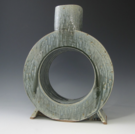
This is the first lesson in a sequential unit. Students view ceramic vessels from different time periods and cultures and discuss their meanings, functions, and original contexts. They develop criteria for value and meaning of these objects, and create a timeline to situate the objects in history.
This lesson is part of a sequential unit. Students are tested on …
This lesson is part of a sequential unit. Students are tested on what they learned about the history of ceramic forms in "Ceramics: A Vessel into History -- Lesson 1." They start work on a personal clay vessel that has a specific use or meaning in their contemporary culture, which could be discerned through study by future archeologists and art historians.
This lesson is part of a sequential unit. Students begin work on …
This lesson is part of a sequential unit. Students begin work on a ceramic vessel, which they designed in "Ceramics: A Vessel into History -- Lesson 2." They discuss their artistic choices and identify elements derived from historical examples, while considering how artists appropriate ideas from earlier artists.
This lesson is part of a sequential unit. Students hold a critique …
This lesson is part of a sequential unit. Students hold a critique session to evaluate the work of their peers using the criteria for value and meaning they developed in "Ceramics: A Vessel into History -- Lesson 1."
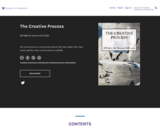
Short Description: 20 visual artists in conversation about why they make, how …
Short Description: 20 visual artists in conversation about why they make, how they work, and how the creative process unfolds.
Long Description: This book was created by seniors in the 2020-2021 Art BA Departmental Honors program in the School of Art + Art History + Design, University of Washington, Seattle. The students in the Honors in Art track come from the four concentrations of the Division of Art: 3D4M: Ceramics + Glass + Sculpture, Interdisciplinary Visual Arts, Painting + Drawing, and Photo/Media.
The book presents first-person accounts of the creative process by a diverse group of makers as they develop artwork, consistently question habits, meanings, and inspirations while interfacing the world during uncertain times.
Word Count: 28304
(Note: This resource's metadata has been created automatically by reformatting and/or combining the information that the author initially provided as part of a bulk import process.)
This course covers the fundamental concepts that determine the electrical, optical, magnetic …
This course covers the fundamental concepts that determine the electrical, optical, magnetic and mechanical properties of metals, semiconductors, ceramics and polymers. The roles of bonding, structure (crystalline, defect, energy band and microstructure) and composition in influencing and controlling physical properties are discussed. Also included are case studies drawn from a variety of applications: semiconductor diodes and optical detectors, sensors, thin films, biomaterials, composites and cellular materials, and others.
Texture is one of the seven basic building blocks of art along …
Texture is one of the seven basic building blocks of art along with Line, Form, Shape, Value, Space, and Color. Here we look at the how visual artists try to stimulate our sight and our other senses through different textures. They create something that we can see and feel or imagine the feeling of and try to engage us in that way as well. Learn how different textures (and implied textures) convey different feelings here.
Check out the entire collection of KQED Art School videos!
This course will focus on providing students with the tools needed to …
This course will focus on providing students with the tools needed to practice responsible architecture in a contemporary context. It will familiarize students with the materials currently used in responsible practice, as well as the material properties most relevant to assembly. The course will also introduce students to materials that are untested but hold promise for future usage. Finally, the course will challenge students to refine their understanding of responsible or sustainable design practice by looking at the evolution of those ideas within the field of architecture.
This is a very well-produced website with material on a wide range …
This is a very well-produced website with material on a wide range of art-related topics. There are essays on specific artists and on more quirky topics like pop star clothing. The images on individual art historical movements are interactive, click and more information appears. There are embedded videos on certain topics. It is a relatively comprehensive and entertaining website, although the topics have to be searched for - it is not chronologically laid out as a text.
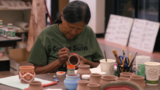
Joyce Pendleton and her brother Benjamin Pendleton give a glimpse into the …
Joyce Pendleton and her brother Benjamin Pendleton give a glimpse into the Cansayapi makaćhèga resurgence and classes for community members and youth.
A lesson plan for grades 7-12 is included as a gallery asset and in the support materials.
More About This Resource: Postcards is an award-winning series showcasing the arts, history, and cultural heritage of western Minnesota and beyond. Funding for Postcards comes from the Minnesota Arts and Cultural Heritage Fund. To watch more Postcards, visit the show page or video portal.
Short Description: The book examines the work of Terence Grieder, an early …
Short Description: The book examines the work of Terence Grieder, an early pre-Columbian art historian of wide-ranging interests and often provocative stances. His students and other intellectual descendants discuss his major ideas through examples drawn from their own work. The work of those he mentored is in the end the most important testament to his continuing influence in the field.
Word Count: 77114
(Note: This resource's metadata has been created automatically by reformatting and/or combining the information that the author initially provided as part of a bulk import process.)
Examines the ways in which people in ancient and contemporary societies have …
Examines the ways in which people in ancient and contemporary societies have selected, evaluated, and used materials of nature, transforming them to objects of material culture. Some examples: glass in ancient Egypt and Rome; powerful metals in the Inka empire; rubber processing in ancient Mexico. Explores ideological and aesthetic criteria often influential in materials development. Laboratory/workshop sessions provide hands-on experience with materials discussed in class. Subject complements 3.091. Enrollment may be limited.
What materials have you touched today? In today's society, virtually every segment …
What materials have you touched today? In today's society, virtually every segment of our personal and professional lives is influenced by the limitations, availability, and economic considerations of the materials used. Through readings and science documentaries, this course will show you how and why certain materials are selected for different applications and how the processing, structure, properties, and performance of materials are intrinsically linked. You will be introduced to the basic science and technology of materials, how the world has been shaped by materials, and how knowledge of materials can be used to understand modern materials and the development of new ones.
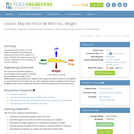
The purpose of this lesson is to help students understand the relationship …
The purpose of this lesson is to help students understand the relationship between the mass and the weight of an object. Students will study the properties of common materials and why airplanes use specific materials.
Here we will learn about the mechanical behavior of structures and materials, …
Here we will learn about the mechanical behavior of structures and materials, from the continuum description of properties to the atomistic and molecular mechanisms that confer those properties to all materials. We will cover elastic and plastic deformation, creep, fracture and fatigue of materials including crystalline and amorphous metals, semiconductors, ceramics, and (bio)polymers, and will focus on the design and processing of materials from the atomic to the macroscale to achieve desired mechanical behavior. We will cover special topics in mechanical behavior for material systems of your choice, with reference to current research and publications.
A begging guide for a studio Ceramics course with breakdowns of studio …
A begging guide for a studio Ceramics course with breakdowns of studio equpment, methods of making, imagry and text breakdowns and demonstrations, and assignments.
Brendan Monroe doesn't follow strict guidelines, especially when it comes to his …
Brendan Monroe doesn't follow strict guidelines, especially when it comes to his artwork. He makes rough sketches of his ideas and improvises along the way, making sure to keep the blurriness of the concepts and the mystery. His aim is to encourage people to see living things in everything in their environment.
This course addresses the design of tribological systems: the interfaces between two …
This course addresses the design of tribological systems: the interfaces between two or more bodies in relative motion. Fundamental topics include: geometric, chemical, and physical characterization of surfaces; friction and wear mechanisms for metals, polymers, and ceramics, including abrasive wear, delamination theory, tool wear, erosive wear, wear of polymers and composites; and boundary lubrication and solid-film lubrication. The course also considers the relationship between nano-tribology and macro-tribology, rolling contacts, tribological problems in magnetic recording and electrical contacts, and monitoring and diagnosis of friction and wear. Case studies are used to illustrate key points.
No restrictions on your remixing, redistributing, or making derivative works. Give credit to the author, as required.
Your remixing, redistributing, or making derivatives works comes with some restrictions, including how it is shared.
Your redistributing comes with some restrictions. Do not remix or make derivative works.
Most restrictive license type. Prohibits most uses, sharing, and any changes.
Copyrighted materials, available under Fair Use and the TEACH Act for US-based educators, or other custom arrangements. Go to the resource provider to see their individual restrictions.