(Complete Item Description)
- Abstract:
-
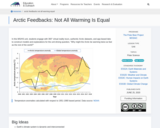
This animation displays one year of Outgoing Long-wave Radiation (OLR) Terra-CERES data (March 1, 2000 to May 25, 2001) with a 14-day boxcar average. Endpoints have the average re-weighted for the smaller amount of data. The data are 2.5 degree resolution.
- Subject:
-
Science and Technology
- Grade Level:
-
Secondary,
Post-secondary
- Collection:
-
NASA GSFC Scientific Visualization Studio
Rate this resource by using the left and right arrow keys and pressing Enter.
No Strings Attached
(Complete Item Description)
- Abstract:
-
This animation displays one year of Reflected Solar Radiation (RSR) Terra-CERES data (March 1, 2000 to May 25, 2001) with a 14-day boxcar average. Endpoints have the average re-weighted for the smaller amount of data. The data are 2.5 degree resolution.
- Subject:
-
Science and Technology
- Grade Level:
-
Secondary,
Post-secondary
- Collection:
-
NASA GSFC Scientific Visualization Studio
Rate this resource by using the left and right arrow keys and pressing Enter.
No Strings Attached
(Complete Item Description)
- Abstract:
-
In this animation of total ozone, the luminance values of the colors bounding areas of missing data are used in interpolating over these regions. The missing data are mapped to the grayscale portion of the color map.
- Subject:
-
Science and Technology
- Grade Level:
-
Secondary,
Post-secondary
- Collection:
-
NASA GSFC Scientific Visualization Studio
Rate this resource by using the left and right arrow keys and pressing Enter.
No Strings Attached
(Complete Item Description)
- Abstract:
-
In this animation of total ozone, the luminance values of the colors bounding areas of missing data are used in interpolating over these regions. The missing data are mapped to the grayscale portion of the color map.
- Subject:
-
Science and Technology
- Grade Level:
-
Secondary,
Post-secondary
- Collection:
-
NASA GSFC Scientific Visualization Studio
Rate this resource by using the left and right arrow keys and pressing Enter.
No Strings Attached
(Complete Item Description)
- Abstract:
-
In this animation of total ozone, the luminance values of the colors bounding areas of missing data are used in interpolating over these regions. The missing data are mapped to the grayscale portion of the color map.
- Subject:
-
Science and Technology
- Grade Level:
-
Secondary,
Post-secondary
- Collection:
-
NASA GSFC Scientific Visualization Studio
Rate this resource by using the left and right arrow keys and pressing Enter.
No Strings Attached
(Complete Item Description)
- Abstract:
-
TOMS provides dramatic visual evidence of the annual growth and decay of the Antarctic ozone hole. The ozone losses over Antarctica result from reactions with the products of man-made chlorine and bromine compounds. Because of the tilt of the Earths axis, continuous darkness falls at the South Pole from March 21 to September 21. The dark region in the middle of the July 1 total ozone picture is polar night, where TOMS cannot make measurements. Ozone losses are in blue. Beginning in August, returning sunlight reaches the edges of Antarctica providing chlorine and bromine compounds with energy to rapidly destroy ozone. By mid September, the ozone loss peaks, creating an ozone hole over Antarctic. For more information see www.gsfc.nasa.gov-topstory-2003-1208toms.html
- Subject:
-
Science and Technology
- Grade Level:
-
Secondary,
Post-secondary
- Collection:
-
NASA GSFC Scientific Visualization Studio
Rate this resource by using the left and right arrow keys and pressing Enter.
No Strings Attached
(Complete Item Description)
- Abstract:
-
A relatively warm Antarctic winter in 2004 kept the thinning of the protective ozone layer over Antarctica, known as the ozone hole, slightly smaller than in 2003. Each year the hole expands over Antarctica, sometimes reaching populated areas of South America and exposing them to ultraviolet rays normally absorbed by ozone. Scientists have new tools to study this annual phenomenon, and the human-produced compounds that contribute to ozone breakdown are decreasing. On September 22, 2004, ozone thinning over Antarctica reached its maximum extent for the year at 24.2 million square kilometers (9.4 million square miles). The largest maximum area on record was 29.2 million square kilometers, in 2000. On October 5, 2004, the ozone layer reached a low value of 99 Dobson Units.
- Subject:
-
Science and Technology
- Grade Level:
-
Secondary,
Post-secondary
- Collection:
-
NASA GSFC Scientific Visualization Studio
Rate this resource by using the left and right arrow keys and pressing Enter.
No Strings Attached
Rate this resource by using the left and right arrow keys and pressing Enter.
No Strings Attached
(Complete Item Description)
- Abstract:
-
This visualization shows Aqua-AIRS simulated volumetric cloud data for September 13, 1999. The data was created using the Finite Volume Community Climate Model (FVCCM). Temperature and cloud data sets were match rendered for cross dissolves in post production. This visualization was created as a part of the Aqua prelaunch package.
- Subject:
-
Science and Technology
- Grade Level:
-
Secondary,
Post-secondary
- Collection:
-
NASA GSFC Scientific Visualization Studio
Rate this resource by using the left and right arrow keys and pressing Enter.
No Strings Attached
(Complete Item Description)
- Abstract:
-
This visualization shows Aqua-AIRS simulated volumetric cloud data for September 13, 1999. The data was created using the Finite Volume Community Climate Model (FVCCM). Temperature and cloud data sets were match rendered for cross dissolves in post production. This visualization was created as a part of the Aqua prelaunch package.
- Subject:
-
Science and Technology
- Grade Level:
-
Secondary,
Post-secondary
- Collection:
-
NASA GSFC Scientific Visualization Studio
Rate this resource by using the left and right arrow keys and pressing Enter.
No Strings Attached
(Complete Item Description)
- Abstract:
-
This visualization shows Aqua-AIRS simulated volumetric cloud data for September 13, 1999. The data was created using the Finite Volume Community Climate Model (FVCCM). Temperature and cloud data sets were match rendered for cross dissolves in post production. This visualization was created as a part of the Aqua prelaunch package.
- Subject:
-
Science and Technology
- Grade Level:
-
Secondary,
Post-secondary
- Collection:
-
NASA GSFC Scientific Visualization Studio
Rate this resource by using the left and right arrow keys and pressing Enter.
No Strings Attached
(Complete Item Description)
- Abstract:
-
This visualization shows Aqua-AIRS simulated volumetric cloud data for September 13, 1999. The data was created using the Finite Volume Community Climate Model (FVCCM). Temperature and cloud data sets were match rendered for cross dissolves in post production. This visualization was created as a part of the Aqua prelaunch package.
- Subject:
-
Science and Technology
- Grade Level:
-
Secondary,
Post-secondary
- Collection:
-
NASA GSFC Scientific Visualization Studio
Rate this resource by using the left and right arrow keys and pressing Enter.
No Strings Attached
(Complete Item Description)
- Abstract:
-
This visualization shows Aqua-AIRS simulated volumetric temperature data for September 13, 1999. The data was created using the Finite Volume Community Climate Model (FVCCM). Temperature and cloud data sets were match rendered for cross dissolves in post production. This visualization was created as a part of the Aqua prelaunch package.
- Subject:
-
Science and Technology
- Grade Level:
-
Secondary,
Post-secondary
- Collection:
-
NASA GSFC Scientific Visualization Studio
Rate this resource by using the left and right arrow keys and pressing Enter.
No Strings Attached
(Complete Item Description)
- Abstract:
-
This visualization shows Aqua-Airs simulated volumetric temperature data for September 13, 1999. The data was created using the Finite Volume Community Climate Model (FVCCM). Temperature and cloud data sets were match rendered for cross dissolves in post production. This visualization was created as a part of the Aqua prelaunch package.
- Subject:
-
Science and Technology
- Grade Level:
-
Secondary,
Post-secondary
- Collection:
-
NASA GSFC Scientific Visualization Studio
Rate this resource by using the left and right arrow keys and pressing Enter.
No Strings Attached
(Complete Item Description)
- Abstract:
-
This visualization shows Aqua-Airs simulated volumetric temperature data for September 13, 1999. The data was created using the Finite Volume Community Climate Model (FVCCM). Temperature and cloud data sets were match rendered for cross dissolves in post production. This visualization was created as a part of the Aqua prelaunch package.
- Subject:
-
Science and Technology
- Grade Level:
-
Secondary,
Post-secondary
- Collection:
-
NASA GSFC Scientific Visualization Studio
Rate this resource by using the left and right arrow keys and pressing Enter.
No Strings Attached
(Complete Item Description)
- Abstract:
-
This visualization shows Aqua-AIRS simulated volumetric temperature data for September 13, 1999. The data was created using the Finite Volume Community Climate Model (FVCCM). Temperature and cloud data sets were match rendered for cross dissolves in post production. This visualization was created as a part of the Aqua prelaunch package.
- Subject:
-
Science and Technology
- Grade Level:
-
Secondary,
Post-secondary
- Collection:
-
NASA GSFC Scientific Visualization Studio
Rate this resource by using the left and right arrow keys and pressing Enter.
No Strings Attached
(Complete Item Description)
- Abstract:
-
Researchers and forecasters often study sea surface temperatures for an indication of hurricane potential. Scientists say above normal Atlantic Ocean temperatures is one reason for the "above normal" hurricane forecast. Hurricanes convert heat from the tropical atmosphere and oceans to wind and waves, just as a car engine converts gasoline into motion. These animations show a year in the life of global ocean temperatures, June 2, 2002 to May 11, 2003. Green indicates the coolest water, yellow the warmest. The Advanced Microwave Scanning Radiometer (AMSR-E) on the Aqua satellite saw through the clouds to provide sea surface temperatures.
- Subject:
-
Science and Technology
- Grade Level:
-
Secondary,
Post-secondary
- Collection:
-
NASA GSFC Scientific Visualization Studio
Rate this resource by using the left and right arrow keys and pressing Enter.
No Strings Attached
(Complete Item Description)
- Abstract:
-
Researchers and forecasters often study sea surface temperatures for an indication of hurricane potential. Scientists say above normal Atlantic Ocean temperatures is one reason for the above normal hurricane forecast. Hurricanes convert heat from the tropical atmosphere and oceans to wind and waves, just as a car engine converts gasoline into motion. These animations show a year in the life of global ocean temperatures, June 2, 2002 to May 11, 2003. Green indicates the coolest water, yellow the warmest. The Advanced Microwave Scanning Radiometer (AMSR-E) on the Aqua satellite saw through the clouds to provide sea surface temperatures.
- Subject:
-
Science and Technology
- Grade Level:
-
Secondary,
Post-secondary
- Collection:
-
NASA GSFC Scientific Visualization Studio
Rate this resource by using the left and right arrow keys and pressing Enter.
No Strings Attached
(Complete Item Description)
- Abstract:
-
Researchers and forecasters often study sea surface temperatures for an activity predictions for 2003 in part to changing conditions in the Pacific Ocean, such as the demise of El Nino. This sequence tracks warmer-than-normal waters. By January, the warm conditions began to dissipate. Fewer than normal hurricanes generally form when El Nino is present. Researchers say the Pacific may transition to the colder-than-normal La Nina phase. Areas in red represent warmer than normal and areas in blue represent cooler than normal.
- Subject:
-
Science and Technology
- Grade Level:
-
Secondary,
Post-secondary
- Collection:
-
NASA GSFC Scientific Visualization Studio
Rate this resource by using the left and right arrow keys and pressing Enter.
No Strings Attached
(Complete Item Description)
- Abstract:
-
Researchers and forecasters often study sea surface temperatures for an indication of hurricane potential. Scientists say above normal Atlantic Ocean temperatures is one reason for the "above normal" hurricane forecast. Hurricanes convert heat from the tropical atmosphere and oceans to wind and waves, just as a car engine converts gasoline into motion. These animations show a year in the life of global ocean temperatures, June 2, 2002 to May 11, 2003. Green indicates the coolest water, yellow the warmest. The Advanced Microwave Scanning Radiometer (AMSR-E) on the Aqua satellite saw through the clouds to provide sea surface temperatures.
- Subject:
-
Science and Technology
- Grade Level:
-
Secondary,
Post-secondary
- Collection:
-
NASA GSFC Scientific Visualization Studio
Rate this resource by using the left and right arrow keys and pressing Enter.
No Strings Attached
No restrictions on your remixing, redistributing, or making derivative works. Give credit to the author, as required.
Your remixing, redistributing, or making derivatives works comes with some restrictions, including how it is shared.
Your redistributing comes with some restrictions. Do not remix or make derivative works.
Copyrighted materials, available under Fair Use and the TEACH Act for US-based educators, or other custom arrangements. Go to the resource provider to see their individual restrictions.