Biology is designed for multi-semester biology courses for science majors. It is …
Biology is designed for multi-semester biology courses for science majors. It is grounded on an evolutionary basis and includes exciting features that highlight careers in the biological sciences and everyday applications of the concepts at hand. To meet the needs of today’s instructors and students, some content has been strategically condensed while maintaining the overall scope and coverage of traditional texts for this course. Instructors can customize the book, adapting it to the approach that works best in their classroom. Biology also includes an innovative art program that incorporates critical thinking and clicker questions to help students understand—and apply—key concepts.
By the end of this section, you will be able to:Describe the …
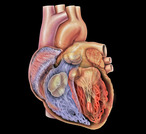
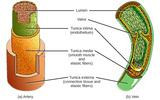
By the end of this section, you will be able to:Describe the structure of the heart and explain how cardiac muscle is different from other musclesDescribe the cardiac cycleExplain the structure of arteries, veins, and capillaries, and how blood flows through the body
By the end of this section, you will be able to:Describe the …
By the end of this section, you will be able to:Describe the structure of the heart and explain how cardiac muscle is different from other musclesDescribe the cardiac cycleExplain the structure of arteries, veins, and capillaries, and how blood flows through the body
This resource is a video abstract of a research paper created by …
This resource is a video abstract of a research paper created by Research Square on behalf of its authors. It provides a synopsis that's easy to understand, and can be used to introduce the topics it covers to students, researchers, and the general public. The video's transcript is also provided in full, with a portion provided below for preview:
"A new study re-examining the validity of a major drug trial might have doctors rethinking how to treat heart attack survivors. Bolstered by the findings of a landmark clinical trial reported in 2015, the blood thinner ticagrelor has been increasingly prescribed by doctors to reduce the risk of heart attack in people with a history of heart problems. Now, researchers from France say those findings don’t apply to all patients who meet the original study’s criteria. That bias could prove critical for prescribers, who may witness more cases of serious bleeding and death among their patients than previously reported. The 2015 drug study, known as the PEGASUS trial, screened heart attack survivors from around the globe. Those selected for the trial had to be at least 65 years old, or at least 50 with diabetes. Results showed that, when combined with aspirin, ticagrelor significantly decreased the risk of stroke or a second heart attack. It did, however, increase the risk of major bleeding..."
The rest of the transcript, along with a link to the research itself, is available on the resource itself.
This resource is a video abstract of a research paper created by …
This resource is a video abstract of a research paper created by Research Square on behalf of its authors. It provides a synopsis that's easy to understand, and can be used to introduce the topics it covers to students, researchers, and the general public. The video's transcript is also provided in full, with a portion provided below for preview:
"Calcium ions (Ca²⁺) are critical secondary messengers in our cells, shuttling messages from outside cells to within. Ca²⁺ signaling depends on transport proteins to move ions across membranes. Store-operated channels (SOCs) are one particularly important class of transporters for Ca²⁺ signaling. SOCs allow Ca²⁺ signaling to continue by refilling critical Ca²⁺ stores in a process called store-operated Ca²⁺ entry (SOCE). Our cardiovascular system is particularly dependent on Ca²⁺ signaling, even in non-excitable (i.g., non-muscle) cells like vascular endothelial cells. Growing evidence suggests that malfunctions in SOCs and the SOCE process contribute to many cardiovascular diseases. But the exact roles of SOCs and SOCE are not fully understood. A recent review examined the current literature on SOC function in the vasculature and what is currently known about SOCs' role in cardiovascular disease..."
The rest of the transcript, along with a link to the research itself, is available on the resource itself.
This resource is a video abstract of a research paper created by …
This resource is a video abstract of a research paper created by Research Square on behalf of its authors. It provides a synopsis that's easy to understand, and can be used to introduce the topics it covers to students, researchers, and the general public. The video's transcript is also provided in full, with a portion provided below for preview:
"Atherosclerosis (AS), or thickening of the arteries due to plaque buildup, is a common and potentially deadly condition. A procedure called percutaneous transluminal coronary angioplasty (PTCA) has markedly improved patient survival, but narrowing of the arteries after PTCA (restenosis) remains a problem. Unique extracellular vesicles derived from endothelial colony-forming cells (ECFC-exosomes) are known to help repair injured vessels. Therefore, a new study explored the effects of ECFC-exosomes in a human cell model and a rat model of AS-/PTCA-induced vessel injury. In lipid-injured human vascular cells, ECFC-exosomes promoted repair-related processes such as cell proliferation, migration, and tube formation by enhancing autophagy, a process in which intracellular debris is degraded and recycled. Specifically, the exosomal miRNA miR-21-5p inhibited expression of the protein SIPA1L2 to increase autophagy..."
The rest of the transcript, along with a link to the research itself, is available on the resource itself.
This resource is a video abstract of a research paper created by …
This resource is a video abstract of a research paper created by Research Square on behalf of its authors. It provides a synopsis that's easy to understand, and can be used to introduce the topics it covers to students, researchers, and the general public. The video's transcript is also provided in full, with a portion provided below for preview:
"Once considered little more than “cell dust”, exosomes are receiving much deserved attention from the research community. Exosomes are tiny sacs whose job includes clearing the cell of certain lipids, proteins, and nucleic acids. But researchers are learning that exosomes are also crucial to signaling and communication between cells. A new review explores various ways exosomes help coordinate the metabolism of lipids in the body. Some of the most promising research describes what happens when exosomes’ ability to synthesize, transport, and degrade lipids is compromised. In some cases, that can lead to disorders such as atherosclerosis, cancer, obesity, and Alzheimer’s disease. Understanding how exosomes orchestrate metabolic activities could clue researchers in on new ways to diagnose and treat related diseases..."
The rest of the transcript, along with a link to the research itself, is available on the resource itself.
This resource is a video abstract of a research paper created by …
This resource is a video abstract of a research paper created by Research Square on behalf of its authors. It provides a synopsis that's easy to understand, and can be used to introduce the topics it covers to students, researchers, and the general public. The video's transcript is also provided in full, with a portion provided below for preview:
"Dyslipidemia is a major risk factor for cardiovascular disease, especially among patients who have experienced acute coronary syndrome, or ACS. Unfortunately, guidelines for managing dyslipidemia aren’t always followed in practice. In a new study, an expert panel examines barriers to dyslipidemia management faced by patients and physicians outside of Western Europe and North America—and proposes ways of reducing them. Reducing low-density lipoprotein cholesterol, or LDL-C, is the primary target of lipid-modifying therapy for dyslipidemia, as it reduces the risk of cardiovascular disease through proposed mechanisms such as plaque stabilization or reduced inflammation. The American Heart Association and American College of Cardiology recommend at least a 50% reduction in LDL-C, but recommend intensification of therapy if LDL-C values remain at or above 1.8 mmol/L. Meanwhile, the European Society of Cardiology and European Atherosclerosis Society recently lowered their recommended goal to 1..."
The rest of the transcript, along with a link to the research itself, is available on the resource itself.
This resource is a video abstract of a research paper created by …
This resource is a video abstract of a research paper created by Research Square on behalf of its authors. It provides a synopsis that's easy to understand, and can be used to introduce the topics it covers to students, researchers, and the general public. The video's transcript is also provided in full, with a portion provided below for preview:
"Atherosclerosis and vascular injury are leading causes of cardiovascular disease worldwide Low-density lipoprotein (LDL) plays a key role in these diseases by inducing inflammation and oxidative stress Endothelial cells can repair blood vessels damaged by LDL But how endothelial cells mature and take on this task is unclear In a recent study, researchers examined the maturation and antioxidative activity of endothelial cells Molecular biology techniques revealed that the differentiation of endothelial cells was regulated by a microRNA molecule called miR-544 miR-544 inhibited the expression of genes involved in maintaining stem cell pluripotency Promoting endothelial cell maturation and vascular formation Transplanting endothelial cells expressing miR-544 also improved the outcome of oxidative stress injury in mice Although these studies must be further evaluated in humans The results suggest that targeting miR-544 may help with regeneration and repair of blood vessels after vascular injury Impr.."
The rest of the transcript, along with a link to the research itself, is available on the resource itself.
This patient education program explains the rehabilitation options available for people who …
This patient education program explains the rehabilitation options available for people who have had a stroke. Rehabilitation through physical therapy, speech therapy, and occupational therapy may be necessary to improve the functions of the body after a stroke. This is a MedlinePlus Interactive Health Tutorial from the National Library of Medicine, designed and developed by the Patient Education Institute.
This resource is a video abstract of a research paper created by …
This resource is a video abstract of a research paper created by Research Square on behalf of its authors. It provides a synopsis that's easy to understand, and can be used to introduce the topics it covers to students, researchers, and the general public. The video's transcript is also provided in full, with a portion provided below for preview:
"Atherosclerosis is a chronic inflammatory process where lipids accumulate along the arterial wall. One key protein in atherosclerosis development is AIBP (Apolipoprotein A-I binding protein). AIBP exists both inside and outside cells, but only secreted AIBP is well characterized in atherosclerosis. A recent study found that AIBP is highly expressed in human and mouse atherosclerotic lesions and that the AIBP was concentrated within the inner membrane of macrophage mitochondria. Macrophages are immune cells that can have pro- or anti-inflammatory phenotypes. The interplay between these phenotypes plays a pathogenic role in atherosclerosis. In this study, blocking the production of AIBP in bone marrow aggravated atherosclerosis and increased macrophage infiltration in a mouse model. This bone-marrow-specific AIBP deficiency increased the cleavage of the protein PINK1 (PTEN-induced putative kinase 1)..."
The rest of the transcript, along with a link to the research itself, is available on the resource itself.
No restrictions on your remixing, redistributing, or making derivative works. Give credit to the author, as required.
Your remixing, redistributing, or making derivatives works comes with some restrictions, including how it is shared.
Your redistributing comes with some restrictions. Do not remix or make derivative works.
Most restrictive license type. Prohibits most uses, sharing, and any changes.
Copyrighted materials, available under Fair Use and the TEACH Act for US-based educators, or other custom arrangements. Go to the resource provider to see their individual restrictions.