This assignment is designed for undergraduate/graduate students in social sciences/humanities to learn …
This assignment is designed for undergraduate/graduate students in social sciences/humanities to learn to express their ideas digitally based on a specific topic. A digital artifact is a digital expression of one’s ideas and understanding of a specific topic.
Mending is an important part of archaeology, as it can be used …
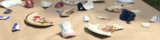
Mending is an important part of archaeology, as it can be used to establish relationships between different parts of an archaeological site. This resource is a tutorial detailing how to perform a ceramic mending activity with your students. Use it to support Maryland Math Standard 7.G.B.4-6 for grade 7 by focusing on the mending of round ceramics and determining their circumference or diameter from pieces. If you evaluate this resource or use it, please consider responding to this short (4 question) survey bit.ly/3rw0WQY
What should you do if you're lucky enough to find an artifact? …
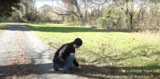
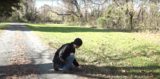
What should you do if you're lucky enough to find an artifact? In this resource, JPPM Educator Kenny walks you through a simple 4-step process for making sure your find gets taken care of. Use to support Maryland Social Studies Frameworks for Grades 2 and 3. For Grade 2 Content Topic "Civic Engagement" search OER Commons for the related resource "JPPM - Marv's Story". Read the story together then as a class discuss and explore students' ideas of citizenship by asking whether Marv was a good citizen and if she could have made a different decision while still being a good citizen then have students reflect further by creating short profiles of people they respect, writing what makes them good citizens. For Grade 3 Content Topic "Civic Virtue" do the same except before discussing Marv's story have some students list their responsibilities if they find an artifact while others list what they are technically free to do even if they find an artifact. Then as a class decide if Marv had even more responsibility to do something when artifacts were found on her farm. If you evaluate or use this resource, please respond to this short (4 question) survey at bit.ly/3Gb4ZX5
What should you do if you're lucky enough to find an artifact? …
What should you do if you're lucky enough to find an artifact? In this resource, JPPM Educator Kenny walks you through a simple 4-step process for making sure your find gets taken care of. Available in video and text form, this resource also includes connections for instructors to Maryland State Social Studies Frameworks for grades 2 and 3 on Civic Engagment and Civic Virtue.
Students will use their knowledge and understanding of the lives and contributions …
Students will use their knowledge and understanding of the lives and contributions of Harriet Tubman, Frederick Douglass, and Abraham Lincoln with focus on the Civil War era by reconstructing key aspects of their lives that connect them to the Civil War.
Create a museum exhibit that will explore a specific historical time period …
Create a museum exhibit that will explore a specific historical time period or event through the display and analysis of historical artifacts and primary sources.
In a spin-off to studying about angular momentum, students use basic methods …
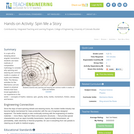
In a spin-off to studying about angular momentum, students use basic methods of comparative mythology to consider why spinning and weaving are common motifs in creation of myths and folktales. Note: The literacy activities for the Mechanics unit are based on physical themes that have broad application to our experience in the world â concepts of rhythm, balance, spin, gravity, levity, inertia, momentum, friction, stress and tension.
Students learn how scientific terms are formed using Latin and Greek roots, …
Students learn how scientific terms are formed using Latin and Greek roots, prefixes and suffixes, and on that basis, learn to make an educated guess about the meaning of a word. Students are introduced to the role played by metaphor in language development.
Students will explore the enduring legacy of the cultures of enslaved people …
Students will explore the enduring legacy of the cultures of enslaved people in Virginia by examining primary sources, engaging the research of Black historians, and connecting to their own experiences, interests, and cultures. Students document their thinking in a graphic organizer for formative assessment.
No restrictions on your remixing, redistributing, or making derivative works. Give credit to the author, as required.
Your remixing, redistributing, or making derivatives works comes with some restrictions, including how it is shared.
Your redistributing comes with some restrictions. Do not remix or make derivative works.
Most restrictive license type. Prohibits most uses, sharing, and any changes.
Copyrighted materials, available under Fair Use and the TEACH Act for US-based educators, or other custom arrangements. Go to the resource provider to see their individual restrictions.