This is a free textbook written for introductory undergraduate courses in American …
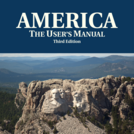
This is a free textbook written for introductory undergraduate courses in American politics and government, covering the creation and principles of the Constitution, the fundamentals of American public opinion and political behavior, and the basic functions of the three branches of government.
This text is a comprehensive introduction to the vital subject of American …
This text is a comprehensive introduction to the vital subject of American government and politics. Governments decide who gets what, when, how (See Harold D. Lasswell, Politics: Who Gets What, When, How, [New York: McGraw-Hill, 1936]); they make policies and pass laws that are binding on all a society’s members; they decide about taxation and spending, benefits and costs, even life and death.Governments possess power—the ability to gain compliance and to get people under their jurisdiction to obey them—and they may exercise their power by using the police and military to enforce their decisions. However, power need not involve the exercise of force or compulsion; people often obey because they think it is in their interest to do so, they have no reason to disobey, or they fear punishment. Above all, people obey their government because it has authority; its power is seen by people as rightfully held, as legitimate. People can grant their government legitimacy because they have been socialized to do so; because there are processes, such as elections, that enable them to choose and change their rulers; and because they believe that their governing institutions operate justly.Politics is the process by which leaders are selected and policy decisions are made and executed. It involves people and groups, both inside and outside of government, engaged in deliberation and debate, disagreement and conflict, cooperation and consensus, and power struggles.In covering American government and politics, this text introduces the intricacies of the Constitution, the complexities of federalism, the meanings of civil liberties, and the conflicts over civil rights;explains how people are socialized to politics, acquire and express opinions, and participate in political life; describes interest groups, political parties, and elections—the intermediaries that link people to government and politics; details the branches of government and how they operate; and shows how policies are made and affect people’s lives.
The United States Congress is the most open of the national branches …
The United States Congress is the most open of the national branches of government, and therefore the most closely studied. This course aims to find ways to deal with the vast array of information we have about Congress by asking two basic questions: What does Congress do (and why), and what are the various ways of studying congressional behavior? This course focuses on both the internal processes of the House and Senate, and on the place of Congress in the American political system.
This course analyzes the development of the US Congress by focusing on …
This course analyzes the development of the US Congress by focusing on the competing theoretical lenses through which legislatures have been studied. In particular, it compares sociological and economic models of legislative behavior, applying those models to floor decision-making, committee behavior, political parties, relations with other branches of the Federal government, and elections.
This is a module framework. It can be viewed online or downloaded …
This is a module framework. It can be viewed online or downloaded as a zip file.
As taught Autumn Semester 2010/2011.
This is a self-contained study of the institutions and processes of the government and politics of the United States. It explores the concepts of limited government, constitutionalism and checks and balances, and the way in which they operate in the American political system.
It examines how American governments seek to make policy, the extent to which they can make an impact on society and the different types of constraints on their actions. It also looks at democracy in the American context, how citizens attempt to influence the activities of government and their expectations and beliefs about what is the appropriate role of government.
Module Code: M12019
Suitable for study at: Undergraduate level 1
Credits:20
Dr Sue Pryce, School of Politics and International Relations
Dr Pryce's interests include British and US politics; the premiership, politics and drugs.
Modules taught: Power and Leadership; European Union Studies; American Government and Politics; Political Ideas in Revolution; Political Ideas in Conflict; Politics and Drugs (all undergraduate).
This is the second in a sequence of two field seminars in …
This is the second in a sequence of two field seminars in American politics intended for graduate students in political science, in preparation for taking the general examination in American politics. The material covered in this semester focuses on American political institutions. The readings covered here are not comprehensive, but it is sufficiently broad to give students an introduction to major empirical questions and theoretical approaches that guide the study of American political institutions these days.
This graduate-level course focuses on mass political behavior within the American political …
This graduate-level course focuses on mass political behavior within the American political system. The goal of this course is to give an introduction to some of the major questions in the study of American political behavior, and how people have gone about answering them. The background goal is to help students practice reading work critically, and thinking through the difficulties of social science research, in preparation for individual research projects. The course examines political ideology, public opinion, voting behavior, media effects, racial attitudes, mass-elite relations, and opinion-policy linkages.
This course provides a substantive overview of U.S. politics and an introduction …
This course provides a substantive overview of U.S. politics and an introduction to the discipline of political science. It surveys the institutional foundations of U.S. politics as well as the activities of political elites, organizations, and ordinary citizens. It also explores the application of general political science concepts and analytic frameworks to specific episodes and phenomena in U.S. politics.
This course explores the role of race and ethnicity in modern American …
This course explores the role of race and ethnicity in modern American politics. It focuses on social science approaches to measuring the effects of race, both at the individual level and more broadly. Topics include race and representation, measurement of racial and ethnic identities, voting rights and electoral districting, protest and other forms of political participation, and the meaning and measurement of racial attitudes.
No restrictions on your remixing, redistributing, or making derivative works. Give credit to the author, as required.
Your remixing, redistributing, or making derivatives works comes with some restrictions, including how it is shared.
Your redistributing comes with some restrictions. Do not remix or make derivative works.
Most restrictive license type. Prohibits most uses, sharing, and any changes.
Copyrighted materials, available under Fair Use and the TEACH Act for US-based educators, or other custom arrangements. Go to the resource provider to see their individual restrictions.