Finches on the Galapagos Islands have evolved to exploit almost every possible …
Finches on the Galapagos Islands have evolved to exploit almost every possible niche. This diagram shows the range of food sources available on the island and the different beak shapes adapted to exploit each of them.
As the digital revolution brings with it radical changes in how and …
As the digital revolution brings with it radical changes in how and what we learn, people must continue to learn all the time. New technologies make possible new approaches to learning, new contexts for learning, new tools to support learning, and new ideas of what can be learned. This course will explore these new opportunities for learning with a special focus on what can be learned through immersive, hands-on activities. Students will participate in (and reflect on) a variety of learning situations, and will use Media Lab technologies to develop new workshops, iteratively run and refine the workshops, and analyze how and what the workshop participants learn.
This resource is a video abstract of a research paper created by …
This resource is a video abstract of a research paper created by Research Square on behalf of its authors. It provides a synopsis that's easy to understand, and can be used to introduce the topics it covers to students, researchers, and the general public. The video's transcript is also provided in full, with a portion provided below for preview:
"N6-methyl-adenosine (m⁶A) methylation is the most abundant epigenetic modification on mRNA and lncRNA. This modification is regulated by m⁶A writers, readers, and erasers, and its proper regulation is critical for innate and adaptive immunity, especially since m⁶A can play different roles depending on the transcript region, cell type, or specific regulators involved. For example, in the innate immune system, m⁶A can promote the antitumor and antiviral activity of NK cells. It can also activate disease- fighting M1 macrophages, reduce inflammation, and encourage dendritic cell maturation and activity. On the other hand, m⁶A can prevent dendritic cells from cross-presenting tumor antigens to prime T cells, hindering the antitumor response. In the adaptive immune system, m⁶A promotes T cell homeostasis but also suppresses T follicular helper cell development and it can either exacerbate or inhibit HIV-1 infection in CD4⁺ T cells..."
The rest of the transcript, along with a link to the research itself, is available on the resource itself.
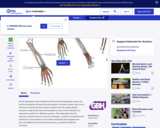
This illustration from Evolution by Monroe W. Strickberger shows the remarkable similarities …
This illustration from Evolution by Monroe W. Strickberger shows the remarkable similarities between the bones in the forelimbs of various tetrapods, all of whose limbs serve very different functions.
No restrictions on your remixing, redistributing, or making derivative works. Give credit to the author, as required.
Your remixing, redistributing, or making derivatives works comes with some restrictions, including how it is shared.
Your redistributing comes with some restrictions. Do not remix or make derivative works.
Most restrictive license type. Prohibits most uses, sharing, and any changes.
Copyrighted materials, available under Fair Use and the TEACH Act for US-based educators, or other custom arrangements. Go to the resource provider to see their individual restrictions.