This collection uses primary sources to explore the American Abolitionist Movement. Digital …
This collection uses primary sources to explore the American Abolitionist Movement. Digital Public Library of America Primary Source Sets are designed to help students develop their critical thinking skills and draw diverse material from libraries, archives, and museums across the United States. Each set includes an overview, ten to fifteen primary sources, links to related resources, and a teaching guide. These sets were created and reviewed by the teachers on the DPLA's Education Advisory Committee.
This course provides a basic history of American social, economic, and political …
This course provides a basic history of American social, economic, and political development from the colonial period through the Civil War. It examines the colonial heritages of Spanish and British America; the American Revolution and its impact; the establishment and growth of the new nation; and the Civil War, its background, character, and impact. Readings include writings of the period by J. Winthrop, T. Paine, T. Jefferson, J. Madison, W. H. Garrison, G. Fitzhugh, H. B. Stowe, and A. Lincoln.
This course explores the causes, course, and consequences of the American Civil …
This course explores the causes, course, and consequences of the American Civil War, from the 1840s to 1877. The primary goal of the course is to understand the multiple meanings of a transforming event in American history. Those meanings may be defined in many ways: national, sectional, racial, constitutional, individual, social, intellectual, or moral. Four broad themes are closely examined: the crisis of union and disunion in an expanding republic; slavery, race, and emancipation as national problem, personal experience, and social process; the experience of modern, total war for individuals and society; and the political and social challenges of Reconstruction.
Complementary to 21L.001. A broad survey of texts - literary, philosophical, and …
Complementary to 21L.001. A broad survey of texts - literary, philosophical, and sociological - studied to trace the growth of secular humanism, the loss of a supernatural perspective upon human events, and changing conceptions of individual, social, and communal purpose. Stresses appreciation and analysis of texts that came to represent the common cultural possession of our time. Enrollment limited. HASS-D, CI. Readings this semester ranging from political theory and oratory to autobiography, poetry, and science fiction reflect on war, motives for war, reconciliation and memory. The readings are largely organized around three historical moments: the Renaissance and first contacts between Europe and America (Machiavelli, Cortés, Sahagún); the European age of revolutions (Voltaire, Blake, Williams); the American Civil War and the abolition of slavery (Stowe, Whitman, Lincoln). Readings from the twentieth-century include poetry by Lowell and Walcott and fiction by Ondaatje and O.S. Card.
The Frederick Douglass Papers at the Library of Congress presents the papers …
The Frederick Douglass Papers at the Library of Congress presents the papers of the nineteenth-century African-American abolitionist who escaped from slavery and then risked his own freedom by becoming an outspoken antislavery lecturer, writer, and publisher. The papers span the years 1841 to 1964, with the bulk of the material from 1862 to 1895. The printed Speech, Article, and Book Series contains the writings of Douglass and contemporaries in the abolitionist and early women's rights movements.The Subject File Series reveals Douglass's interest in diverse subjects such as politics, emancipation, racial prejudice, women's suffrage, and prison reform. Scrapbooks document Douglass's role as minister to Haiti and the controversy surrounding his interracial second marriage.
In addition to making historical points about nineteenth-century attitudes toward slavery, race, …
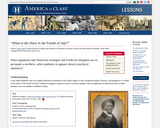
In addition to making historical points about nineteenth-century attitudes toward slavery, race, and abolition, you can use this speech to teach formal rhetoric. We have divided the address into four sections according to the function of each one. This division follows the classic structure of argumentative writing:
paragraphs 1–3: introduction (exordium) paragraphs 4–29: narrative or statement of fact (narratio) paragraphs 30–70: arguments and counter-arguments (confirmatio and refutatio) paragraph 71: conclusion (peroratio) We have included notes that explain the function of each section as well as questions that invite discussion of the ways in which Douglass deploys rhetoric to make his case.
This lesson features five interactive activities, which can be accessed by clicking on this icon . The first explores the subtle way in which Douglass compares the patriots of 1776 with the abolitionists of 1852. The second challenges students to determine how Douglass supports his thesis. The third focuses on his use of syllogistic reasoning, while the fourth examines how he makes his case through emotion and the fifth through analogy.
We recommend assigning the entire text . For close reading we have analyzed eighteen of the speech’s seventy-one paragraphs through fine-grained questions, most of them text-dependent, that will enable students to explore rhetorical strategies and significant themes. The version below, designed for teachers, provides responses to those questions in the “Text Analysis” section. The classroom version , a printable worksheet for use with students, omits those responses and this “Teaching the Text” note. Terms that appear in blue are defined on hover and in a printable glossary on the last page of the classroom version. The student worksheet also includes links to the activities, indicated by this icon .
This is a long lesson. We recommend dividing students into groups and assigning each group a set of paragraphs to analyze.
This collection uses primary sources to compare and explore the relationships between …
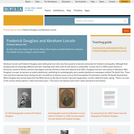
This collection uses primary sources to compare and explore the relationships between Frederick Douglass and Abraham Lincoln. Digital Public Library of America Primary Source Sets are designed to help students develop their critical thinking skills and draw diverse material from libraries, archives, and museums across the United States. Each set includes an overview, ten to fifteen primary sources, links to related resources, and a teaching guide. These sets were created and reviewed by the teachers on the DPLA's Education Advisory Committee.
In this lesson, created in partnership with the Association for Cultural Equity, …
In this lesson, created in partnership with the Association for Cultural Equity, students discover how the banjo and music making more generally among slaves contributed to debates on the ethics of slavery. They listen to slave narratives, examine statistics, and read primary sources to better understand how slavery was conceptualized and lived through in the 18th and 19th centuries. Throughout the lesson, students return to videos created by Alan Lomax of pre-blues banjo player Dink Roberts as a way to imagine what music among slaves in the United States may have sounded like.
This course, organized as a series of lectures, aims to provide an …
This course, organized as a series of lectures, aims to provide an interdisciplinary view of the history and current climate of nuclear weapons and non-proliferation policy. The first lecture begins the series by discusses nuclear developments in one of the world's most likely nuclear flash points, and the second lecture presents a broad discussion of the dangers of current nuclear weapons policies as well as evaluations of current situations and an outlook for future nuclear weapons reductions.
This site presents two dozen publications written in the 19th century about …
This site presents two dozen publications written in the 19th century about slavery in America. It includes first-person accounts from former slaves, judicial opinions, abolitionist pieces, and more.
In this lesson, students read the story of Sojourner Truth and discuss …
In this lesson, students read the story of Sojourner Truth and discuss events that took place during her lifetime. Among these were the abolition of slavery and the effects of policies pertaining to abolition. Students will determine the costs, benefits, and unintended consequences of policies, beginning with an analysis of costs, benefits, and unintended consequences of a policy that would allow them to take two years off of school before advancing to middle school. They will analyze the effects of policies noted in the book and continue the analysis by examining government policies.
This annotated bibliography contains resources about Sojourner Truth's life and legacy, categorized …
This annotated bibliography contains resources about Sojourner Truth's life and legacy, categorized by Elementary, Middle School, and General/Adult. Resources listed on the bibliography include books, websites, videos, interactive timelines, and newspaper articles. Resources are annotated to instruct educators in how they might best use the resources in their classes.
StoryWorks Theater’s Teaching the Constitution Through Theater develops inclusive and transformative educational …
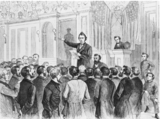
StoryWorks Theater’s Teaching the Constitution Through Theater develops inclusive and transformative educational theater experiences that provides students with the opportunity to examine our history and to foster a deeper understanding of the U.S. Constitution. Through content consistent with school curriculum standards, the program engages students in experiential learning and inspires them to ask complex questions about the historical underpinnings behind contemporary issues. The process creates pathways to civic engagement, creates lasting memories and instills a tangible sense of social belonging. Now’s The Time opens at the dawn of Reconstruction, the Civil War has just ended but the nation is plunged again into crisis with the assassination of President Abraham Lincoln. Andrew Johnson ascends to the Presidency determined to restore white supremacy in the South. Congressional radicals led by Thaddeus Stevens are fighting for a different vision. They intend to create a new society of full racial equality, where Black Americans will have real economic and political power, including ownership of land confiscated from the rebels, education, suffrage and election to public office. This titanic political battle between President and Congress culminates in the first impeachment and trial of a U.S. president, and to more than 150 years of continuing violence and discrimination against Black Americans.View the complete play Now’s The Time on the StoryWorks Theater site. Implementation1. Now’s The Time Performance Classroom watches a prerecorded, staged reading of the play Now’s The Time, written by Jean P. Bordewich and Produced by StoryWorks Theater.2. Lesson Plan Activities Following the six lesson plan structure, students will read aloud or act out scenes from the play. This participatory interaction with the text and the historical events promotes a high level of engagement from the students and encourages experiential learning. These activities directly correspond to scenes in the play and to specific content area standards. Throughout the curriculum, teachers will lead guided discussions and help to explain the historical context and theme of each scene. Students/actors will have the ability to share their experiences having portrayed these historical figures. Students/historians will have the unique opportunity to work with primary source materials to further their understanding of the complexities of the era and to gain insight into the critical legislative debates of the time.
Through the play Now's The Time and the accompanying curriculum, students will explore …
Through the play Now's The Time and the accompanying curriculum, students will explore the Reconstruction Era through the life of Thaddeus Stevens and his colleagues as they sought to push for radical change in the making of a "new" America.
This educational curriculum package is the product of a five-year labor of …
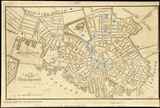
This educational curriculum package is the product of a five-year labor of love. Beginning in 2011, several educators, history enthusiasts and social activists coalesced around the charismatic Horace Seldon. Horace was finishing a long local career in social work, years with the National Parks Service, Boston, and as one of the founders of the social service organization Community Change. He was intent upon pursuing a historical research project which he had been contemplating for some time. The resultant group, led by Horace Seldon, then embarked on a research and reading circle exploring the hidden history of the Boston antebellum African American community situated on the North Slope of Beacon Hill and in the area immediately adjacent to the current Boston City Hall Plaza. The work began by investigating legendary author, activist and Beacon Hill resident David Walker. It has since grown organically into a full-fledged historical reclamation project, the results of which we now share with you.Being educators, we have naturally gravitated to exploring avenues which facilitate promoting civic engagement and self-actualization, both in the classroom and for lifelong learning. This enterprise reflects that perspective and energizing prospect. We are currently in discussion with the Mayor's Office of Diversity about bringing this project to City Hall Plaza as an integral part of the upcoming 400'h anniversary celebration of the founding of Boston. Roxbury Community College is honored to have been given the opportunity to create a digital curriculum platform to dispense information and inspire enthusiasm for history across the commonwealth, a history which surrounds us but remains invisible to many residents and tourists. It is our intention to combine an interdisciplinary approach using the latest in technological innovations, artistry and networking to share this compelling narrative, illuminating not only the lessons of the past, but the durability of a community preparing for a future of multiple challenges and inconvenient truths.
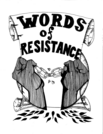
This first module includes:David Coleman: Words of ResistancePeter Snoad: Raising David WalkerVideo: …
This first module includes:David Coleman: Words of ResistancePeter Snoad: Raising David WalkerVideo: Walking TourVideo: Innerview, Ms. L'Merchie Frazier 10Video: Innerview, Mr. Horace Seldon
This collection uses primary sources to explore Harriet Beecher Stowe's Uncle Tom's …
This collection uses primary sources to explore Harriet Beecher Stowe's Uncle Tom's Cabin. Digital Public Library of America Primary Source Sets are designed to help students develop their critical thinking skills and draw diverse material from libraries, archives, and museums across the United States. Each set includes an overview, ten to fifteen primary sources, links to related resources, and a teaching guide. These sets were created and reviewed by the teachers on the DPLA's Education Advisory Committee.
No restrictions on your remixing, redistributing, or making derivative works. Give credit to the author, as required.
Your remixing, redistributing, or making derivatives works comes with some restrictions, including how it is shared.
Your redistributing comes with some restrictions. Do not remix or make derivative works.
Most restrictive license type. Prohibits most uses, sharing, and any changes.
Copyrighted materials, available under Fair Use and the TEACH Act for US-based educators, or other custom arrangements. Go to the resource provider to see their individual restrictions.