This lesson introduces students to historic medical discoveries by focusing on the …
This lesson introduces students to historic medical discoveries by focusing on the individuals and medical innovations that advanced the field. Students will create “About Me” pages for individuals and create a presentation about medical innovations. Finally, a timeline is created for students to identify trends and reflect on the importance of history to the field.
In 2023, Washington State passed legislation designating January as Americans of Chinese Descent …
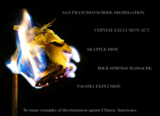
In 2023, Washington State passed legislation designating January as Americans of Chinese Descent History Month, the first-ever in the U.S. Public schools are encouraged to designate time in January for appropriate activities in commemoration of the lives, history, achievements, and contributions of Americans of Chinese descent. Students have created posters specifically intended for use in schools and classrooms. These posters serve the purpose of acknowledging and illustrating the historical timeline of Americans of Chinese descent in the United States, including highlighting significant events in that history.The posters are available in 11"x17" or in 24"x36". Districts can upload their own logo in the corners.
OverviewThis lesson introduces students to historic medical discoveries by focusing on the …
OverviewThis lesson introduces students to historic medical discoveries by focusing on the individuals and medical innovations that advanced the field. Students will create “About Me” pages for individuals and create a presentation about medical innovations. Finally, a timeline is created for students to identify trends and reflect on the importance of history to the field. StandardsHS.HS.6.1.a Identify the history of health care.
We are committed to preserving and promoting the state’s history and encouraging …
We are committed to preserving and promoting the state’s history and encouraging a public conversation about the story of Iowa. Our mission is to advance the understanding and appreciation of Iowa history among the state’s students, scholars and general public. We have established a number of programs designed to heighten public awareness and interest in Iowa history, expand educational opportunities in Iowa history, and make this history more widely available.
This site is committed to maintaining and nurturing the history of Iowa and its story. They have numerous programs to increase public interest and understanding of Iowa history. Their goal is to create more educational opportunities and make Iowa’s history more available for the public.
In 2021, a team of middle school and high school students spent …
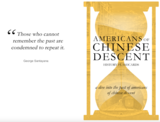
In 2021, a team of middle school and high school students spent the summer researching the rich history of Americans of Chinese descent. They compiled their research findings in a simple, easy-to-understand flashcard format with the intention of helping the public learn and recognize the achievements, contributions, and struggles of Americans of Chinese descent in the United States.
World History Encyclopedia is a non-profit organization publishing the world's most-read history …
World History Encyclopedia is a non-profit organization publishing the world's most-read history encyclopedia. Its mission is to engage people with cultural heritage and to improve history education worldwide.
The website offers thousands of free history articles, with a writing style aimed at students from middle school level and up. Articles are complemented by videos, timelines, 3D models, and interactive maps. The search function offers many filters, including the possibiliy to search for primary source texts.
Additionally, the organization published free teaching materials in its education section (https://www.worldhistory.org/edu/).
Discover the people, places, events, and ideas of Iowa history. Explore hundreds …
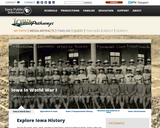
Discover the people, places, events, and ideas of Iowa history. Explore hundreds of articles, images, videos and websites. Create your own story of Iowa as you go to unexpected places and search the past and present. Travel down side trails and uncover artifacts as you explore your Iowa pathway.
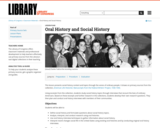
Students use Library of Congress primary sources to understand the genuine experience …
Students use Library of Congress primary sources to understand the genuine experience of oral history in order to appreciate the process of historiography using the topic of immigration.
Friends of IAGenWeb provides financial support for the IAGenWeb Project. If you …
Friends of IAGenWeb provides financial support for the IAGenWeb Project. If you like what you see here, please visit the Friends Website and find out how you too can participate.
This websites provides on-line publications pertaining to Iowa’s History. Some of these may include Biographies, County Records, Diaries, Newspapers and many more.
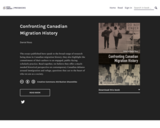
Short Description: The essays published here speak to the broad range of …
Short Description: The essays published here speak to the broad range of research being done in Canadian migration history; they also highlight the commitment of their authors to an engaged, public-facing scholarly practice. Read together, we believe they offer a much-needed historical perspective on contemporary Canadian debates around immigration and refuge, questions that cut to the heart of who we are as a society.
Long Description: Confronting Canadian Migration History means two things. First, engaging with the history of population movements into, through, and from this territory, and their importance for our history as a multiethnic settler society. This has been one of the central projects of migration historians in Canada in recent decades. Second, to make and maintain a place for that historical knowledge in contemporary discussions of migration, and in doing so confront the present with the past. That latter goal is at the heart of this collection, which assembles in one volume fifteen texts published on ActiveHistory.ca over the last four years.
Word Count: 25644
ISBN: 978-1-9990201-3-2
(Note: This resource's metadata has been created automatically by reformatting and/or combining the information that the author initially provided as part of a bulk import process.)
Obelisk (formerly Trivium) Art History is a free, online art history textbook …
Obelisk (formerly Trivium) Art History is a free, online art history textbook designed for discovery. Meet history's greatest artists, browse artwork, and explore the timeline of human creativity. Trivium offers short, conversational essays and artist biographies and encourages exploration by artistic movements, mediums and themes.
Conversations host Harry Kreisler welcomes historian John Heilbron, the 2007 Hitchcock Lecturer, …
Conversations host Harry Kreisler welcomes historian John Heilbron, the 2007 Hitchcock Lecturer, for a discussion of the history of science. He reflects on his contributions to the field, analyzes the challenges of studying science as a historian, and offers insight into the value of science history for society. John Heilbron also discusses his years as Vice Chancellor of the Berkeley campus. (51 minutes)
From CK-12, U.S. History Sourcebook - Advanced covers U.S. history from Colonial …
From CK-12, U.S. History Sourcebook - Advanced covers U.S. history from Colonial America through World War I. This book provides high school U.S. History teachers and students with sets of primary and secondary sources about important topics. Some teachers will use it as a supplement to a traditional textbook. For those looking to leave the textbook behind entirely, it will provide a course with basic structure and continuity, and will reduce the burden of finding new primary sources for each class meeting. However, it is not yet comprehensive enough to meet the coverage requirements of, for example, an Advanced Placement test.
U.S. History is designed to meet the scope and sequence requirements of …
U.S. History is designed to meet the scope and sequence requirements of most introductory courses. The text provides a balanced approach to U.S. history, considering the people, events, and ideas that have shaped the United States from both the top down (politics, economics, diplomacy) and bottom up (eyewitness accounts, lived experience). U.S. History covers key forces that form the American experience, with particular attention to issues of race, class, and gender.
The History Engine is an educational tool that gives students the opportunity …
The History Engine is an educational tool that gives students the opportunity to learn history by doing the work—researching, writing, and publishing—of an historian. The result is an ever-growing collection of historical articles or "episodes" that paint a wide-ranging portrait of life in the United States throughout its history, available in our online database to scholars, teachers, and the general public.The History Engine project aims to enhance historical education and research for teachers, students, and scholars alike. It allows undergraduate professors to introduce a more collaborative and creative approach to history into their classrooms, while maintaining rigorous academic standards. The History Engine gives students a more intimate experience with the process of history. Participants who work with the History Engine project learn the craft of an historian: they examine primary documents, place these documents in a larger historical context using secondary sources, and prepare cogent analysis of their sources for the public eye. Finally, the History Engine provides a way for professors to take advantage of digital technology in their classrooms while maintaining rigorous academic standards. The cumulative database provides all the easy-access and searchability of other websites, but also subjects its contents to a careful academic screening process on the part of library staff, archivists, professors, and teaching assistants.
No restrictions on your remixing, redistributing, or making derivative works. Give credit to the author, as required.
Your remixing, redistributing, or making derivatives works comes with some restrictions, including how it is shared.
Your redistributing comes with some restrictions. Do not remix or make derivative works.
Most restrictive license type. Prohibits most uses, sharing, and any changes.
Copyrighted materials, available under Fair Use and the TEACH Act for US-based educators, or other custom arrangements. Go to the resource provider to see their individual restrictions.