Learn about Rube Goldberg Machines, set imaginations on fire! Wonderopolis targets a 5th …
Learn about Rube Goldberg Machines, set imaginations on fire! Wonderopolis targets a 5th grade reading level and is aligned to Common Core Standards and <sci/ss standards>. We have Immersive Reader embedded for each Wonder of the Day--which means accommodations are available and translations can be provided with a few mouse clicks. <--come up with some standard content for after the overview of the individual Wonder.
The focus of this lesson is to provide an opportunity for children …
The focus of this lesson is to provide an opportunity for children to develop oral language skills and to record their oral language to share with others.
This English Language Arts lesson for 9th or 10th graders focuses on reading …
This English Language Arts lesson for 9th or 10th graders focuses on reading comprehension and vocabulary via nonfiction articles linked from commonlit.org, and addresses the following NE state standards: NE.LA 10.1.5.A; NE.LA 10.1.5.C; NE.LA 10.1.6.A; NE.LA 10.2.2.BThe lesson will take approximately 90 minutes.
Direct teaching of vocabulary can help improve comprehension only when taught in …
Direct teaching of vocabulary can help improve comprehension only when taught in meaningful context. Through the use of technology, students can develop their academic vocabulary in an engaging and fun way.
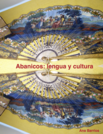
Abanicos: lengua y cultura is designed for a first semester of elementary Spanish …
Abanicos: lengua y cultura is designed for a first semester of elementary Spanish but it can be used to review vocabulary and grammar at any level. It offers textbook pages in color and printable worbook pages that align with the textbook. The vocabulary and grammar derive from the topics in the textbook. These topics cover physical and political geography of the Spanish-speaking world, traditions, and popular culture. Reading, listening, speaking, and writing are goals in each section. The book is complemented by videos, games and grammar practice, quizlet sets, and other resources found on internet. This project will continue with the second semester book in the near future. I welcome ideas and collaboration as well as suggestions for improving. I hope this book will be useful to many Spanish language instructors and learners.
This lesson employs direct instruction and small-group discussion to help students learn …
This lesson employs direct instruction and small-group discussion to help students learn new vocabulary skills while reading Patricia Polacco's "Pink and Say".
Secondly, lesson 2 introduces more complex adjectives like wide/narrow and fresh/stale. Students will have a chance to put …
Secondly, lesson 2 introduces more complex adjectives like wide/narrow and fresh/stale. Students will have a chance to put the adjectives into use through various activities.If you want additional lesson plans and support, including teachers’ notes, be sure to register for a free Off2Class account.
Lastly, lesson 3 focuses on more complex adjectives like dull/smart. Though these adjectives aren’t as …
Lastly, lesson 3 focuses on more complex adjectives like dull/smart. Though these adjectives aren’t as common, they are still important for English learners to know.If you want additional lesson plans and support, including teachers’ notes, be sure to register for a free Off2Class account.
This is an advanced ESL lesson that is designed to introduce vocabulary …
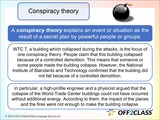
This is an advanced ESL lesson that is designed to introduce vocabulary about conspiracy theories. This lesson plan on conspiracy theories promotes fluency in speaking as it includes controlled and free tasks. Also please keep in mind the conversational nature of this topic. I strongly advise you to review this lesson on conspiracy theories before teaching it. In any case, you will have so much fun teaching this lesson as it covers so many interesting and conversational topics. If you want additional lesson plans and support, including teachers’ notes, be sure to register for a free Off2Class account.
SYNOPSIS: In this lesson, students connect air quality with environmental justice. SCIENTIST …
SYNOPSIS: In this lesson, students connect air quality with environmental justice.
SCIENTIST NOTES: This lesson introduces the relationship between environment and justice. Students understand if their community is healthy and what to do to create a fair, just, equitable, and sustainable planet for all to thrive. Additional materials are suitable to broaden their understanding on a wide range of topics such as segregation, the connection between climate and justice, racial justice, and social justice. All materials in this lesson are properly cited and are void of scientific contradictions. In this light, this lesson has passed our science credibility process.
POSITIVES: -This lesson allows students to create their own meaning of environmental justice before viewing the explanatory video. -The EPA's Environmental Justice Screening and Mapping Tool is amazing. Students will love it.
ADDITIONAL PREREQUISITES: -The video explaining environmental justice might be tough for 3rd-5th graders to understand. Students should understand the core message in the video, even if they might not understand all the details.
DIFFERENTIATION: -Some students may want more time to explore the EPA's Environmental Justice Screening and Mapping Tool. -The reflection journal at the end of the lesson has options for student creativity and imagination.
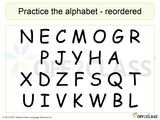
Lesson 2 allows students to practice what they learned prior. With your …
Lesson 2 allows students to practice what they learned prior. With your help, students can work on recognizing letters out of sequential order while learning additional vocabulary.If you want additional lesson plans and support, including teachers’ notes, be sure to register for a free Off2Class account.
Lesson 3 introduces spelling exercises to challenge your student’s existing knowledge of …
Lesson 3 introduces spelling exercises to challenge your student’s existing knowledge of each letter. It can also be used as a review lesson for more intermediate students.If you want additional lesson plans and support, including teachers’ notes, be sure to register for a free Off2Class account.
This American Sign Language 101 OER is a Google Doc containing instructional videos …
This American Sign Language 101 OER is a Google Doc containing instructional videos of original design. The document also offers media content from ASL instructors and creators across the Web. All materials are meant as a supplement to ASL instruction. These resources are in no way intended to replace the breadth of knowledge acquired from taking an ASL course.
This American Sign Language 102 OER is a Google Doc containing instructional …
This American Sign Language 102 OER is a Google Doc containing instructional videos of original design. The document also offers media content from ASL instructors and creators across the Web. All materials are meant as a supplement to ASL instruction. These resources are in no way intended to replace the breadth of knowledge acquired from taking an ASL course.
his lesson uses music and art in a vocabulary study of unfamiliar …
his lesson uses music and art in a vocabulary study of unfamiliar words from the song "America the Beautiful," increasing students' vocabulary while also increasing their knowledge of U.S. geography. A discussion to activate students' prior knowledge about sights and scenery throughout the United States is followed by a read-aloud and introduction to the song "America the Beautiful," which is then sung in each session of the lesson. Students learn the meanings of the song's words through shared reading and the use of context clues and images. Students then use photographs, illustrations, and descriptive language to create a mural shaped like the United States. Finally, through pictures and words, students reflect on what they have learned. This lesson is appropriate and adaptable for any patriotic event or holiday, and many of the vocabulary strategies are adaptable for other texts or word lists, as well.
This webpage displays a common conversation between three friends. The structure and …
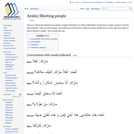
This webpage displays a common conversation between three friends. The structure and topics of the conversation are purposefully general so as to be helpful to students' ability to create and sustain conversations of their own. The conversation includes Arabic text, transliteration, and translation.
No restrictions on your remixing, redistributing, or making derivative works. Give credit to the author, as required.
Your remixing, redistributing, or making derivatives works comes with some restrictions, including how it is shared.
Your redistributing comes with some restrictions. Do not remix or make derivative works.
Most restrictive license type. Prohibits most uses, sharing, and any changes.
Copyrighted materials, available under Fair Use and the TEACH Act for US-based educators, or other custom arrangements. Go to the resource provider to see their individual restrictions.