In this lesson each student will create a glyph (symbol or icon) …
In this lesson each student will create a glyph (symbol or icon) which represents them and read the glyphs of others using a legend to understand the data on the glyphs.
This resource was created by Heidi Meyers, in collaboration with Dawn DeTurk, …
This resource was created by Heidi Meyers, in collaboration with Dawn DeTurk, Hannah Blomstedt, and Julie Albrecht, as part of ESU2's Integrating the Arts project. This project is a four year initiative focused on integrating arts into the core curriculum through teacher education, practice, and coaching.
This resource was created by Judy Prewett, in collaboration with Dawn DeTurk, …
This resource was created by Judy Prewett, in collaboration with Dawn DeTurk, Hannah Blomstedt, and Julie Albrecht, as part of ESU2's Integrating the Arts project. This project is a four year initiative focused on integrating arts into the core curriculum through teacher education, practice, and coaching.
Develop a passion for visual communication and learn new skills! In Two-Dimensional …
Develop a passion for visual communication and learn new skills! In Two-Dimensional Design students of all abilities will master the fundamentals of visual composition, and the various ways artists and designers use visual language. Through the study of the elements and principals of design students will develop technical proficiency in a range of art media and find creative confidence in the expression of visual communication. This course approach fosters creativity through one-one-one instruction during time, written feedback, and group critiques.
Develop a passion for visual communication and learn new skills! In Three-Dimensional …
Develop a passion for visual communication and learn new skills! In Three-Dimensional Design students of all abilities will master the fundamentals of visual composition, and the various ways artists and designers use visual language. Through the study of the elements and principals of design students will develop technical proficiency in a range of art media and find creative confidence in the expression of visual communication. This course approach fosters creativity through one-one-one instruction during time, written feedback, and group critiques.
This resource was created by Maelynn Liewer, in collaboration with Dawn DeTurk, …
This resource was created by Maelynn Liewer, in collaboration with Dawn DeTurk, Hannah Blomstedt, and Julie Albrecht, as part of ESU2's Integrating the Arts project. This project is a four year initiative focused on integrating arts into the core curriculum through teacher education, practice, and coaching.
Studied students stupefy! Students learn about alliteration by listening to an alliterative …
Studied students stupefy! Students learn about alliteration by listening to an alliterative read-aloud and apply the knowledge they gain to the creation of their own poem and illustration.
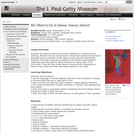
Students will observe dance movements depicted in a drawing and a painting. …
Students will observe dance movements depicted in a drawing and a painting. Partners will use simple lines to draw their partner's movements and paint dance costumes on the figures using various brushstrokes. Students will write a persuasive speech to the school superintendent explaining why they believe dance should be a regular part of the curriculum. They will then model dance movements for classmates in teams of four and recite their persuasive speech to the class.
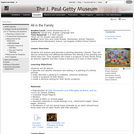
Students will analyze and describe a painting depicting a family. They will …
Students will analyze and describe a painting depicting a family. They will discuss similarities and differences between the setting of the painting and where they live. Then students will create a sculpture of their family doing an activity together and also create a diorama of a room in their home.
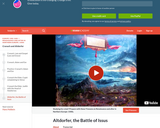
In this art history video discussion Beth Harris and Steven Zucker examine …
In this art history video discussion Beth Harris and Steven Zucker examine Albrecht Altdorfer's "The Battle of Issus," 1529, oil on panel. Alte Pinokothek, Munich.
This resource was created by Sara Pittack, in collaboration with Lynn Bowder, …
This resource was created by Sara Pittack, in collaboration with Lynn Bowder, as part of ESU2's Mastering the Arts project. This project is a four year initiative focused on integrating arts into the core curriculum through teacher education and experiential learning.
Students apply the analytical skills that they use when reading literature to …
Students apply the analytical skills that they use when reading literature to an exploration of the underlying meaning and symbolism in Hieronymous Bosch's early Renaissance painting "Death and the Miser".
This resource was created by Cierra Morten, in collaboration with Dawn DeTurk, …
This resource was created by Cierra Morten, in collaboration with Dawn DeTurk, Hannah Blomstedt, and Julie Albrecht, as part of ESU2's Integrating the Arts project. This project is a four year initiative focused on integrating arts into the core curriculum through teacher education, practice, and coaching.
This semester students are asked to transform the Hereshoff Museum in Bristol, …
This semester students are asked to transform the Hereshoff Museum in Bristol, Rhode Island, through processes of erasure and addition. Hereshoff Manufacturing was recognized as one of the premier builders of America's Cup racing boats between 1890's and 1930's. The studio, however, is about more than the program. It is about land, water, and wind and the search for expressing materially and tectonically the relationships between these principle conditions. That is, where the land is primarily about stasis (docking, anchoring and referencing our locus), water's fluidity holds the latent promise of movement and freedom. Movement is activated by wind, allowing for negotiating the relationship between water and land.
This is the second undergraduate design studio. It introduces a full range …
This is the second undergraduate design studio. It introduces a full range of architectural ideas and issues through drawing exercises, analyses of precedents, and explored design methods. Students will develop design skills by conceptualizing and representing architectural ideas and making aesthetic judgments about building design. Discussions regarding architecture's role in mediating culture, nature and technology will help develop the students' architectural vocabulary.
This is a ten-week course broken into thematic topics. Its current design …
This is a ten-week course broken into thematic topics. Its current design is asynchronous online, though you will find a mix of asynchronous and synchronous activity options. It can be modified for any modality. Included are weekly activities, exercises, projects, and slides following the provided syllabus.
• ART102 Syllabus • Week 1: What is Art? What do you want from art? • Week 2: Elements of Art: Formal Elements • Week 3: Elements of Art: Principles of Design • Week 4: Describing Art • Week 5: Media & Materials: Images • Week 6: Media & Materials: Objects • Week 7: Symbols & Iconography • Week 8: Contexts of Art • Week 9: Art and Artists • Week 10: Public Art/Art & Controversy
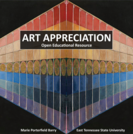
The Art Appreciation course explores the world’s visual arts, focusing on the …
The Art Appreciation course explores the world’s visual arts, focusing on the development of visual awareness, assessment, and appreciation by examining a variety of styles from various periods and cultures while emphasizing the development of a common visual language. The materials are meant to foster a broader understanding of the role of visual art in human culture and experience from the prehistoric through the contemporary.
This is an Open Educational Resource (OER), an openly licensed educational material designed to replace a traditional textbook. The course materials consist of 24 lessons each with a presentation, reading list, and/or sample assignment. For ease of adapting, materials are available as PDFs and Microsoft PowerPoint or Word documents.
This course is an exploration of visual art forms and their cultural …
This course is an exploration of visual art forms and their cultural connections for the student with little experience in the visual arts. It includes a brief study of art history and in depth studies of the elements, media, and methods used in creative processes and thought. Upon successful completion of this course, students will be able to: interpret examples of visual art using a five-step critical process that includes description, analysis, context, meaning, and judgment; identify and describe the elements and principles of art; use analytical skills to connect formal attributes of art with their meaning and expression; explain the role and effect of the visual arts in societies, history, and other world cultures; articulate the political, social, cultural, and aesthetic themes and issues that artists examine in their work; identify the processes and materials involved in art and architectural production; utilize information to locate, evaluate, and communicate information about visual art in its various forms. Note that this course is an alternative to the Saylor FoundationĺÎĺ_ĺĚĺ_s ARTH101A and has been developed through a partnership with the Washington State Board for Community and Technical Colleges; the Saylor Foundation has modified some WSBCTC materials. This free course may be completed online at any time. (Art History 101B)
No restrictions on your remixing, redistributing, or making derivative works. Give credit to the author, as required.
Your remixing, redistributing, or making derivatives works comes with some restrictions, including how it is shared.
Your redistributing comes with some restrictions. Do not remix or make derivative works.
Most restrictive license type. Prohibits most uses, sharing, and any changes.
Copyrighted materials, available under Fair Use and the TEACH Act for US-based educators, or other custom arrangements. Go to the resource provider to see their individual restrictions.