This resource is a video abstract of a research paper created by …
This resource is a video abstract of a research paper created by Research Square on behalf of its authors. It provides a synopsis that's easy to understand, and can be used to introduce the topics it covers to students, researchers, and the general public. The video's transcript is also provided in full, with a portion provided below for preview:
"Humans rely on microbial communities in both natural and applied settings. One such applied setting is wastewater treatment plants, which use microbial communities to remove pollutants. However, the stability of the taxonomic diversity in these settings is not well understood. To close this gap, researchers examined how the microbial community in activated sludge changed over time in a full-scale wastewater treatment plant. For the first 3 years of a 9-year series, the microbial community fluctuated around a stable average. Then a bleaching event, marked in red under the timeline, abruptly pushed the community to an alternative stable state, where the originally dominant Actinobacteriota were disproportionally depleted and replaced with Proteobacteria, but these taxonomic changes led to little change in either the metabolic profile of the community or system performance. In a fine-scale analysis of dynamics, the researchers identified cohorts that dominated at different periods..."
The rest of the transcript, along with a link to the research itself, is available on the resource itself.
This course provides a deep understanding of engineering systems at a level …
This course provides a deep understanding of engineering systems at a level intended for research on complex engineering systems. It provides a review and extension of what is known about system architecture and complexity from a theoretical point of view while examining the origins of and recent developments in the field. The class considers how and where the theory has been applied, and uses key analytical methods proposed. Students examine the level of observational (qualitative and quantitative) understanding necessary for successful use of the theoretical framework for a specific engineering system. Case studies apply the theory and principles to engineering systems.
Biology is designed for multi-semester biology courses for science majors. It is …
Biology is designed for multi-semester biology courses for science majors. It is grounded on an evolutionary basis and includes exciting features that highlight careers in the biological sciences and everyday applications of the concepts at hand. To meet the needs of today’s instructors and students, some content has been strategically condensed while maintaining the overall scope and coverage of traditional texts for this course. Instructors can customize the book, adapting it to the approach that works best in their classroom. Biology also includes an innovative art program that incorporates critical thinking and clicker questions to help students understand—and apply—key concepts.
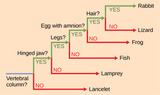
By the end of this section, you will be able to:Discuss the …
By the end of this section, you will be able to:Discuss the need for a comprehensive classification systemList the different levels of the taxonomic classification systemDescribe how systematics and taxonomy relate to phylogenyDiscuss the components and purpose of a phylogenetic tree
Introduction to the basic principles of ecology and evolutionary biology emphasizing quantitative …
Introduction to the basic principles of ecology and evolutionary biology emphasizing quantitative approaches and hypothesis testing. Scientific reasoning, computer literacy, and writing skills are developed in the laboratory.
This resource is a video abstract of a research paper created by …
This resource is a video abstract of a research paper created by Research Square on behalf of its authors. It provides a synopsis that's easy to understand, and can be used to introduce the topics it covers to students, researchers, and the general public. The video's transcript is also provided in full, with a portion provided below for preview:
"Most current knowledge about gut microbiomes has been obtained from studies on mammals, while the microbiomes of fish, the most diverse group of vertebrates (~33,000 species), are less well understood. Specifically, the major influencing factors and unique features of fish gut microbiomes remain unclear. To bridge this knowledge gap, a recent study analyzed the gut contents of 227 fish representing 85 different freshwater fish (FWF) and saltwater fish (SWF) species. rRNA sequencing revealed that Proteobacteria and Firmicutes were the two most abundant phyla, indicating a different composition from the typical vertebrate microbiome, which is composed mainly of Firmicutes and Bacteroidetes. Habitat (freshwater versus saltwater) more strongly influenced the host microbiome than host taxonomy or trophic level and the microbiome taxonomic and functional profiles were better indicators of a fish’s habitat than of its taxonomy..."
The rest of the transcript, along with a link to the research itself, is available on the resource itself.
This resource is a video abstract of a research paper created by …
This resource is a video abstract of a research paper created by Research Square on behalf of its authors. It provides a synopsis that's easy to understand, and can be used to introduce the topics it covers to students, researchers, and the general public. The video's transcript is also provided in full, with a portion provided below for preview:
"Genomics research has greatly increased understanding of the human gut microbiome, but the existing reference databases remain insufficient, failing to map up to half of the sequences obtained in human gut studies. To solve this problem, researchers recently created HumGut, a comprehensive global reference database for the genomes of gut microbes in healthy humans. The researchers built the database by comparing nearly half a million publicly available prokaryote genomes with over 3,500 gut metagenomes from healthy humans worldwide, and retaining the prokaryote genomes that closely matched the sequences in healthy human guts. HumGut was approximately the same size as the recently released UHGG collection and half the size of a standard reference database. However, HumGut outperformed both other databases in classifying metagenomic reads from human gut samples, resulting in a lower percentage of unclassified reads..."
The rest of the transcript, along with a link to the research itself, is available on the resource itself.
Fossils are a glimpse into the distant past and fascinate young and …
Fossils are a glimpse into the distant past and fascinate young and old alike. This unit will introduce you to the explosion of evolution that took place during the Palaeozoic era. You will look at the many different types of creatures that existed at that time and how they managed to evolve to exist on land.
Students will be able to use correct terminology for livestock (e.g. bovine, …
Students will be able to use correct terminology for livestock (e.g. bovine, steer, ewe, ram). This lesson is used in exploring agriculture, animal science lesson. Written by Kathryn Savat.
This resource is a video abstract of a research paper created by …
This resource is a video abstract of a research paper created by Research Square on behalf of its authors. It provides a synopsis that's easy to understand, and can be used to introduce the topics it covers to students, researchers, and the general public. The video's transcript is also provided in full, with a portion provided below for preview:
"Dental calculus, or mineralized dental plaque, preserves various microfossils and biomolecules, including DNA. Dental calculus from ancient human remains therefore contains information about the oral microbiomes, health, and diets of our ancestors. However, little is known about the non-bacterial microbes in ancient calculus. In a new study, researchers used metagenomics to study calculus from 20 sets of human remains dating to the Neolithic period through the Early Middle Ages. Compared with modern calculus in publicly available datasets, the ancient calculus had a much higher abundance of archaea belonging to the phylum Euryarchaeota. Compared with modern calculus in publicly available datasets, the ancient calculus had a much higher abundance of archaea belonging to the phylum Euryarchaeota, specifically archaea in the genus Methanobrevibacter. The only known Methanobrevibacter species in modern calculus, M..."
The rest of the transcript, along with a link to the research itself, is available on the resource itself.
This resource is a video abstract of a research paper created by …
This resource is a video abstract of a research paper created by Research Square on behalf of its authors. It provides a synopsis that's easy to understand, and can be used to introduce the topics it covers to students, researchers, and the general public. The video's transcript is also provided in full, with a portion provided below for preview:
"Amphibians are one of the most vulnerable animal groups on the planet, with over 40% of their species threatened with extinction. A major driver of that vulnerability is the fungal pathogen _Batrachochytrium dendrobatidis_ (Bd). Bd is linked to the decline of at least 500 amphibian species, the greatest loss in biodiversity due to a pathogen ever recorded. The amphibian skin microbiome community structure has been linked to health outcomes of Bd infection, but the functional importance of the microbiota is not yet fully understood. To close this gap and potentially discover biomarkers or disease control methods, researchers investigated the microbiome of midwife toads. They examined both wild populations with naturally occurring Bd infection and controlled laboratory exposure. Infection with Bd led to changes in the microbial community structure, gene profile, and metabolic function in laboratory and wild toad populations..."
The rest of the transcript, along with a link to the research itself, is available on the resource itself.
This resource is a video abstract of a research paper created by …
This resource is a video abstract of a research paper created by Research Square on behalf of its authors. It provides a synopsis that's easy to understand, and can be used to introduce the topics it covers to students, researchers, and the general public. The video's transcript is also provided in full, with a portion provided below for preview:
"The gut microbiome (GM) plays an integral role in overall human health, yet over 70% of human GM species have never been cultured, and these microbes may hold important clues into the function of the human GM and GM-host interactions. To address this gap, researchers recently cultured 10,558 bacterial isolates representing 400 GM species from 239 healthy human donors. Of the 400 cultured species, 102 new species were identified and characterized, 28 new genera and 3 new families were proposed, and 115 genomes were newly sequenced. These data were used to construct the human Gut Microbial Biobank, an open-access resource containing taxonomic and genetic information on over 80% of the dominant microbial taxa in the human gut. Although numerous gut microbes remain uncultured, the Gut Microbial Biobank sheds new light on the identities and functions of the microbes composing the human GM and has potential applications in the development of next-generation probiotics..."
The rest of the transcript, along with a link to the research itself, is available on the resource itself.
This resource is a video abstract of a research paper created by …
This resource is a video abstract of a research paper created by Research Square on behalf of its authors. It provides a synopsis that's easy to understand, and can be used to introduce the topics it covers to students, researchers, and the general public. The video's transcript is also provided in full, with a portion provided below for preview:
"Our gut microbiomes are rich communities of bacteria, archaea, and viruses that play critical roles in our health. But although bacteria and archaea in the gut are well-characterized, the gut virome is less understood. A recent study sought to better understand a specific component of the gut virome. Double-stranded DNA bacteriophages (dsDNA phages) – viruses that infect bacteria – play pivotal roles in structuring the human gut microbiome. Using a new multilevel framework for taxonomic classification of viruses, researchers searched human gut metagenomes for phage hallmark genes. They identified 3,738 apparently complete phage genomes, representing 451 putative genera. Several of the genera were new, only distantly related to previously identified phages. Two of the candidate families – “Flandersviridae” and “Quimbyviridae” – included common members of the gut virome that infect ubiquitous gut bacteria, while the third family, “Gratiaviridae,” comprised less abundant phages..."
The rest of the transcript, along with a link to the research itself, is available on the resource itself.
This resource is a video abstract of a research paper created by …
This resource is a video abstract of a research paper created by Research Square on behalf of its authors. It provides a synopsis that's easy to understand, and can be used to introduce the topics it covers to students, researchers, and the general public. The video's transcript is also provided in full, with a portion provided below for preview:
"Solving problems doesn’t always require an entirely new fix -- or new software. A team at IBM recently demonstrated that repurposed software offers improved functional characterization of microbiomes at a fraction of the development time. Currently, microbial functional profiling is typically done by classifying sequencing reads taxonomically, followed by computationally demanding functional analysis. But in a clever twist, researchers opted instead to directly compare sequencing reads to a functionally annotated database. The group developed a tree-shaped functional hierarchy and repurposed taxonomic bioinformatics tools to do the functional annotation. The method was applied to soil samples taken across the globe. This revealed, for example, that antioxidant activity was much higher in polar regions compared with equatorial areas. Next, the team plans to use the technique on other biological samples to further probe the secret lives of microbes..."
The rest of the transcript, along with a link to the research itself, is available on the resource itself.
The University of Florida Book of Insect Records (UFBIR) names insect champions …
The University of Florida Book of Insect Records (UFBIR) names insect champions and documents their achievements. Each chapter deals with a different category of record.
No restrictions on your remixing, redistributing, or making derivative works. Give credit to the author, as required.
Your remixing, redistributing, or making derivatives works comes with some restrictions, including how it is shared.
Your redistributing comes with some restrictions. Do not remix or make derivative works.
Most restrictive license type. Prohibits most uses, sharing, and any changes.
Copyrighted materials, available under Fair Use and the TEACH Act for US-based educators, or other custom arrangements. Go to the resource provider to see their individual restrictions.