Your success as an academic will depend heavily on your ability to …
Your success as an academic will depend heavily on your ability to communicate to fellow researchers in your discipline, to colleagues in your department and university, to undergraduate and graduate students, and perhaps even to the public at large. Communicating well in an academic setting depends not only on following the basic rules that govern all good communication (for example, tailoring the message to meet the needs of a specific audience), but also on adhering to the particular norms of academic genres. The purpose of this course, then, is threefold. First, the course will acquaint you with guidelines that will help you create well-crafted academic communication. Second, it will give you the opportunity to practice your communication skills and to receive extensive feedback from your colleagues and from me. You will write and/or revise an article manuscript or conference paper, present a conference paper or job talk, write a manuscript peer review, and engage in various other communication exercises. The article and talk, which are the major assignments of the course, will be based on material from your own doctoral studies. Third, the course will provide an opportunity for you to learn about professional norms for a range of activities that surround the academic enterprise, including, for example, the scholarly publication process and the job search process.
21G.301/351 offers an introduction to the French language and culture with an …
21G.301/351 offers an introduction to the French language and culture with an emphasis on the acquisition of vocabulary and grammatical concepts through active communication. The course is conducted entirely in French, and students interact in French with their classmates from the very beginning. They also receive exposure to the language via a variety of authentic sources such as the Internet, audio, video and printed materials which help them develop cultural awareness as well as linguistic proficiency. There is a coordinated language lab program. This course is taught in rotation by the following instructors: Laura Ceia-Minjares, Cathy Culot, Gilberte Furstenberg, and Johann Sadock.
21G.302/352 is the second part of an introductory course to the French …
21G.302/352 is the second part of an introductory course to the French language and culture with an emphasis on the acquisition of vocabulary and grammatical concepts through active communication. The course is conducted entirely in French and students interact in French with their classmates from the very beginning. They also receive exposure to the language via a variety of authentic sources such as the Internet, audio, video and printed materials which help them develop cultural awareness as well as linguistic proficiency. There is a coordinated language lab program. This course is taught in rotation by the following instructors: Laura Ceia-Minjares, Cathy Culot, Gilberte Furstenberg, and Johann Sadock.
This lesson plan on the present continuous tense should be used to …
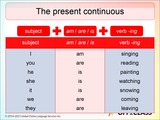
This lesson plan on the present continuous tense should be used to teach elementary-level students a basic understanding of how to use verbs in the present simple form. This lesson will require students to speak, read, listen and spell in English but not at a particularly advanced level. In any case, it is suitable for group or individual classes. It is a very fun lesson that can be used for concept checking and test review.If you want additional lesson plans and support, including teachers’ notes, be sure to register for a free Off2Class account.
The History of Google – This is one of my favorite reading …
The History of Google – This is one of my favorite reading lessons because I can use it with business students, adults, and kids- it’s a hit with all of them. Students will have the opportunity to read, speak and learn about the history of a search engine most of us use every day.If you want additional lesson plans and support, including teachers’ notes, be sure to register for a free Off2Class account.
A third-year intermediate course designed to improve speaking and writing, with opportunities …
A third-year intermediate course designed to improve speaking and writing, with opportunities for vocabulary acquisition, listening comprehension and reading practice as well. Uses literary and cultural readings, films, and group activities. Students give oral reports and participate in discussions and group projects.
Spanish II continues to develop students' listening, speaking, reading and writing skills …
Spanish II continues to develop students' listening, speaking, reading and writing skills using the second part of the video-based program, Destinos, begun in Spanish I. Destinos is a soap opera that allows students to learn Spanish and experience its cultural diversity while following a good story full of surprises and human emotions. Spanish II also includes additional materials, such as Spanish films and other media, various types of reading selections and online resources.
Spanish for Bilingual Students is an intermediate course designed principally for heritage …
Spanish for Bilingual Students is an intermediate course designed principally for heritage learners, but which includes other students interested in specific content areas, such as US Latino immigration, identity, ethnicity, education and representation in the media. Linguistic goals include vocabulary acquisition, improvement in writing, and enhancement of formal communicative skills.
When to start teaching gerunds?As I mentioned before, I used this lesson …
When to start teaching gerunds?As I mentioned before, I used this lesson with a pre-intermediate student and I think this is a great place to start. Regardless of the age of the student, if his/her/their proficiency is pre-intermediate then learning and teaching gerunds will be fun for all of you. Keep in mind that students at this level should have a general idea of how to read, write, speak and understand English; this lesson will help improve these skills.The purpose of this lesson is for students to practice verbs that are followed by gerunds or infinitives with no change in meaning. They will also learn how to determine when to use gerunds or infinitives. Moreover, they will work on answering questions using two sentences: one with the gerund and one with the infinitive. Students will also have the opportunity to create their questions, it’s really fun to see what they come up with. By the end of this lesson, students will be able to make logical sentences using several verbs including love, like, hate, prefer, can’t bear, can’t stand, begin, start and continue.If you want additional lesson plans and support, including teachers’ notes, be sure to register for a free Off2Class account.
No restrictions on your remixing, redistributing, or making derivative works. Give credit to the author, as required.
Your remixing, redistributing, or making derivatives works comes with some restrictions, including how it is shared.
Your redistributing comes with some restrictions. Do not remix or make derivative works.
Most restrictive license type. Prohibits most uses, sharing, and any changes.
Copyrighted materials, available under Fair Use and the TEACH Act for US-based educators, or other custom arrangements. Go to the resource provider to see their individual restrictions.