Most exoplanets are found through indirect methods: measuring the dimming of a …
Most exoplanets are found through indirect methods: measuring the dimming of a star that happens to have a planet pass in front of it, called the transit method, or monitoring the spectrum of a star for the tell-tale signs of a planet pulling on its star and causing its light to subtly Doppler shift. Space telescopes have found thousands of planets by observing “transits,” the slight dimming of light from a star when its tiny planet passes between it and our telescopes. Other detection methods include gravitational lensing, the so-called “wobble method.”---------------------------------------Distant Nature: Astronomy Exercises 2016 by Stephen Tuttle under license "Creative Commons Attribution Non-Commercial Share Alike".
This class is developed around the concept of disobedient interference within the …
This class is developed around the concept of disobedient interference within the existing models of production of space and knowledge. Modeling is the main modus operandi of the class as students will be required to make critical diagrammatic cuts through processes of production in different thematic registers – from chemistry, law and economy to art, architecture and urbanism – in order to investigate the sense of social responsibility and control over the complex agendas embedded in models that supports production of everyday objects and surroundings. Students will be encouraged to explore relations between material or immaterial aspects and agencies of production, whether they emerged as a consequence of connection of mind, body and space, or the infrastructural, geographical and ecological complexities of the Anthropocene. These production environments will be taken as modeling settings.
This course focuses on the archaeology of the Greek and Roman city. …
This course focuses on the archaeology of the Greek and Roman city. It investigates the relationship between urban architecture and the political, social, and economic role of cities in the Greek and Roman world, by analyzing a range of archaeological and literary evidence relevant to the use of space in Greek and Roman cities (e.g. Athens, Paestum, Rome, Pompeii) and a range of theoretical frameworks for the study of ancient urbanism.
Antimatter, the charge reversed equivalent of matter, has captured the imaginations of …
Antimatter, the charge reversed equivalent of matter, has captured the imaginations of science fiction fans for years as a perfectly efficient form of energy. While normal matter consists of atoms with negatively charged electrons orbiting positively charged nuclei, antimatter consists of positively charged positrons orbiting negatively charged anti-nuclei. When antimatter and matter meet, both substances are annihilated, creating massive amounts of energy. Instances in which antimatter is portrayed in science fiction stories (such as Star Trek) are examined, including their purposes (fuel source, weapons, alternate universes) and properties. Students compare and contrast matter and antimatter, learn how antimatter can be used as a form of energy, and consider potential engineering applications for antimatter.
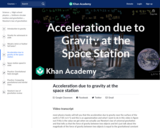
The American Space Program was experimenting with fitness in Space when a …
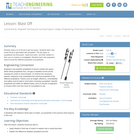
The American Space Program was experimenting with fitness in Space when a variable resistance rope friction device which was originally designed to lower people from a burning building.
This is the second undergraduate design studio. It introduces a full range …
This is the second undergraduate design studio. It introduces a full range of architectural ideas and issues through drawing exercises, analyses of precedents, and explored design methods. Students will develop design skills by conceptualizing and representing architectural ideas and making aesthetic judgments about building design. Discussions regarding architecture's role in mediating culture, nature and technology will help develop the students' architectural vocabulary.
The project for this studio is to design a demonstration project for …
The project for this studio is to design a demonstration project for a site near the French Quarter in New Orleans. The objectives of the project are the following:
To design more intense housing, community, educational and commercial facilities in four to six story buildings. To explore the "space between" buildings as a way of designing and shaping objects. To design at three scales - dwelling, cluster and overall. To design dwellings where the owners may be able to help build and gain a skill for employment. To provide/design facilities that can help the residents to gain education and skills.
This is the second undergraduate architecture design studio, which introduces design logic …
This is the second undergraduate architecture design studio, which introduces design logic and skills that enable design thinking, representation, and development. Through the lens of nano-scale machines, technologies, and phenomena, students are asked to explore techniques for describing form, space, and architecture. Exercises encourage various connotations of the "machine" and challenge students to translate conceptual strategies into more integrated design propositions through both digital and analog means.
This subject introduces skills needed to build within a landscape establishing continuities …
This subject introduces skills needed to build within a landscape establishing continuities between the built and natural world. Students learn to build appropriately through analysis of landscape and climate for a chosen site, and to conceptualize design decisions through drawings and models. This class was taught concurrently with course 4.125A. Some of the assignments are the same, some are different, and the sites for the final project are different. But since they were taught in tandem, it would be useful to look at both together.
This subject introduces skills needed to build within a landscape establishing continuities …
This subject introduces skills needed to build within a landscape establishing continuities between the built and natural world. Students learn to build appropriately through analysis of landscape and climate for a chosen site, and to conceptualize design decisions through drawings and models. This class was taught concurrently with 4.125B. Some of the assignments are the same, some are different, and the sites for the final project are different. But since they were taught in tandem, it would be useful to look at both together.
This is the second undergraduate design studio. It introduces a full range …
This is the second undergraduate design studio. It introduces a full range of architectural ideas and issues through drawing exercises, analyses of precedents, and explored design methods. Students will develop design skills by conceptualizing and representing architectural ideas and making aesthetic judgments about building design. Discussions regarding architecture's role in mediating culture, nature and technology will help develop the students' architectural vocabulary.
The year is 2032 and your class has successfully achieved a manned …
The year is 2032 and your class has successfully achieved a manned mission to Mars! After several explorations of the Red Planet, one question is still being debated: "Is there life on Mars?" The class is challenged with the task of establishing criteria to help look for signs of life. Student explorers conduct a scientific experiment in which they evaluate three "Martian" soil samples and determine if any contain life.
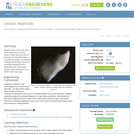
In this lesson, students learn some basic facts about asteroids in our …
In this lesson, students learn some basic facts about asteroids in our solar system. The main focus is on the size of asteroids and how that relates to the potential danger of an asteroid colliding with the Earth. Students are briefly introduced to the destruction that would ensue should a large asteroid hit, as it did 65 million years ago.
This is the 20th anniversary of the Beijing Urban Design Studio, which …
This is the 20th anniversary of the Beijing Urban Design Studio, which is a joint program between the MIT and Tsinghua University Schools of Architecture and Planning. The goal of the studio is to foster international cooperation through the undertaking of a joint urban design and planning initiative in the city of Beijing involving important, often controversial, sites and projects. Since 1995, almost 250 MIT and Tsinghua University students and faculty have participated in this annual studio, making it one of the most successful and enduring international academic programs between China and the U.S. It has received the Irwin Sizer Award from MIT for outstanding innovation in education. The studio takes place over five weeks in June and July including several weeks in residence at Tsinghua University and two brief study tours to locations and projects that inform the work. It will include 18-20 MIT and 10-15 Tsinghua Architecture and Planning students. The Beijing City Planning Institute, responsible for strategic planning in the city, participates in the studio as the client.
When we look at the night sky, we see stars and the …
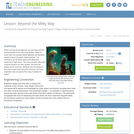
When we look at the night sky, we see stars and the nearby planets of our own solar system. Many of those stars are actually distant galaxies and glowing clouds of dust and gases called nebulae. The universe is an immense space with distances measured in light years. The more we learn about the universe beyond our solar system, the more we realize we do not know. Students are introduced to the basic known facts about the universe, and how engineers help us explore the many mysteries of space.
Rockets need a lot of thrust to get into space. In this …
Rockets need a lot of thrust to get into space. In this lesson, students learn how rocket thrust is generated with propellant. The two types of propellants are discussed and relation to their use on rockets is investigated. Students learn why engineers need to know the different properties of propellants.
No restrictions on your remixing, redistributing, or making derivative works. Give credit to the author, as required.
Your remixing, redistributing, or making derivatives works comes with some restrictions, including how it is shared.
Your redistributing comes with some restrictions. Do not remix or make derivative works.
Most restrictive license type. Prohibits most uses, sharing, and any changes.
Copyrighted materials, available under Fair Use and the TEACH Act for US-based educators, or other custom arrangements. Go to the resource provider to see their individual restrictions.