In this lesson, students will work in small groups to examine a …
In this lesson, students will work in small groups to examine a letter describing the environment of Alabama and identify reasons which might have encouraged settlers to move to Alabama in the early nineteenth century. Students will choose an interesting attraction of Alabama mentioned in the letter and design a postage stamp around that attraction. This lesson was created in partnership with the Alabama Department of Archives and History.
In this lesson, students will learn about the executive branch of government …
In this lesson, students will learn about the executive branch of government at the state level, especially related to the first governors of the state of Alabama. Their impact on the development of Alabama and Alabama's role in the United States will be discussed. Students will use research and note taking skills to gather information on an early governor. Then students will participate in jigsaw groups to share their information, discuss the importance of each governor, similarities, and impact. Finally, students will discuss the role of governor and how governors have an impact on the state and the impact these men had in Alabama and in other states. This lesson was created in partnership with the Alabama Department of Archives and History.
Students will read a description of the pine barrens by Basil Hall …
Students will read a description of the pine barrens by Basil Hall and analyze the text by using the 3-2-1 strategy. Students will discuss the life and work of Basil Hall, including his travels and journaling in North America. They will observe how a camera lucida functions and debate whether using a camera lucida is "cheating" in art. Next, students will venture outside to create a sketch of their environment while appropriately utilizing materials. They will compare and contrast their products to the sketches of Basil Hall and critique each other's work. This lesson was created in partnership with the Alabama Department of Archives and History.
This is for fourth-fifth grade social studies, which has vocabulary terms with …
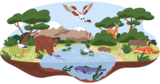
This is for fourth-fifth grade social studies, which has vocabulary terms with a quizlet attached. The picture is for one of the vocabulary terms, which is "Ecosystem".
Images can be a useful component in any subject. This lesson will …
Images can be a useful component in any subject. This lesson will guide students through an analysis of an image. Students will use critical thinksing skills to interpret an image. Students will then generate a hypothesis about the source and construct questions for further investigation.
These educational videos provide an invaluable resource on Ancient Nubia for Middle …
These educational videos provide an invaluable resource on Ancient Nubia for Middle and High School Ancient World History and Geography teachers and students. The video content aligns with Geography, Economics, Civics, and Historical Thinking Social Studies standards across the nation. Key concepts and inquiry skills from each content area weave seamlessly throughout the videos and associated lesson plans. This unit overview document links to developed resources on the Archeology in the Community site.
Learn about actress Anna May Wong—the first Chinese American Hollywood movie star, …
Learn about actress Anna May Wong—the first Chinese American Hollywood movie star, producer and one of the most influential style icons of her time, in this resource from Unladylike2020. Throughout Wong’s career, she encountered racism and stereotyping in the roles she was offered, but in the end she found a way to flourish as an actor on her own terms starring in 60 films. Using video, discussion questions, vocabulary, teaching tips, and an in-class activity, students learn about Wong’s place in Hollywood history and how she was impacted by important events in American history, like the Chinese Exclusion Act of 1882 and anti-miscegenation laws.
This inquiry is designed to be an overview of the governments described …
This inquiry is designed to be an overview of the governments described in the Articles of Confederation and the US Constitution for an 8th-grade social studies class. Both History and Geography are part of this inquiry. Students will examine the size and diversity of the 13 original American states. They will review the text of both documents. Students will evaluate the structures of government created and will prioritize those structures in relation to the historical period. Resource created by Jeff Hart, Boyd County Public Schools, as part of the Nebraska ESUCC Social Studies Special Projects 2022 - Inquiry Design Model (IDM).
This Wide Angle video segment illustrates Islamic and secular elements of life …
This Wide Angle video segment illustrates Islamic and secular elements of life in Turkey, and introduces Mustafa Kemal Ataturk, the first president of Turkey, and his reforms.
In this video from August Wilson: The Ground on Which I Stand …
In this video from August Wilson: The Ground on Which I Stand the playwright discusses the influence that the blues has had on his writing. The clip also features a performance from Ma Rainey’s Black Bottom and commentary from several theater scholars.
This audio excerpt captures the beginning of Bayard Rustin's 1967 "Freedom Budget" …
This audio excerpt captures the beginning of Bayard Rustin's 1967 "Freedom Budget" speech, describing the social and economic impact of racism over time.
Lesson outcomesSWBAT: demonstrate characteristics of good citizenship. AssessmentMonthly questionnaires and evidenceFinal presentation …
Lesson outcomesSWBAT: demonstrate characteristics of good citizenship. AssessmentMonthly questionnaires and evidenceFinal presentation and project showcaseState Standards, Indicator, ObjectiveDescribe the responsibilities of being an effective citizen, such as cleaning up your neighborhood, being informed, obeying rules and laws, participating I class decisions, and volunteering (3.1.0.1a)Describe rights and responsibilities of being a citizen in Maryland (4.1.0.1)Describe individual rights and responsibilities in the United States (5.1.01)Examine the rights and responsibilities of being a citizen in the world (7.1.0.1)
Students will discuss the definition of a biography and determine what elements …
Students will discuss the definition of a biography and determine what elements it contains. They will research a famous person and create a web graphic organizer with key achievements and personal information from their life. Peer feedback will be given on the web creation and then an oral presentation will be given.
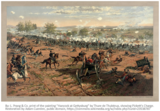
In this seminar you will learn about the Battle of Gettysburg, a …
In this seminar you will learn about the Battle of Gettysburg, a very bloody battle. You will use the habit of mind applying previous knowledge as you learn about the Civil War and apply it to this specific battle. You will get to choose whether you would like to read, watch, or explore the Battle of Gettysburg through a virtual tour. You will learn why this battle was such an important one and describe some of the events that took place in an informational project!Standards5.2.U.BAnalyze strategies used to resolve conflicts in society and government.
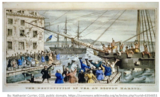
On July 4, 1776, our founding fathers signed the Declaration of Independence …
On July 4, 1776, our founding fathers signed the Declaration of Independence to relieve our country of British rule. The colonists were tired of being bossed around by King George. In this seminar you will learn about one of the ways the colonists rebelled against the high taxes from Great Britain--the Boston Tea Party. By the end of this seminar, you will be able to construct support for the Boston Tea Party as a necessary risk taken by the colonists on the road to freedom.Standards5.1.4 D Identify key ideas about government found in significant documents: Declaration of Independence, United States Constitution, Bill of Rights, Pennsylvania Constitution
As educators, it's essential to cultivate informed and engaged citizens who can …
As educators, it's essential to cultivate informed and engaged citizens who can participate actively in the democratic process. Integrating civics education into the curriculum can help students develop critical thinking, problem-solving, and decision-making skills to prepare them for active citizenship. This professional learning activity will explore various ways to integrate civics education into the curriculum and provide resources to support effective instruction.
In this problem-based learning module, students will use their knowledge of the ancient …
In this problem-based learning module, students will use their knowledge of the ancient Roman Empire and will work to analyze critical theories historians agree contributed to the fall of Rome. Students will then work to compare the problems faced by the Romans with problems citizens of the United States still largely face today. Through this investigation, students should recognize how modern technology, government agencies, laws and resources help to solve societal problems that could have once destroyed an empire. With this new understanding, students should work to present a solution to a major problem that plagued the Roman Empire during the years leading up to its collapse.
In this problem-based learning module, students will use their knowledge of the ancient …
In this problem-based learning module, students will use their knowledge of the ancient Roman Empire and will work to analyze critical theories historians agree contributed to the fall of Rome. Students will then work to compare the problems faced by the Romans with problems citizens of the United States still largely face today. Through this investigation, students should recognize how modern technology, government agencies, laws and resources help to solve societal problems that could have once destroyed an empire. With this new understanding, students should work to present a solution to a major problem that plagued the Roman Empire during the years leading up to its collapse.Remix Resource uses key South Carolina standards for 6th Grade Social Studies and Language ArtsOriginal Resource uses key Ohio standards for 7th Grade Social Studies and Language ArtsAuthor: Blended Learning Teacher Practice Network Date Added: 07/23/2018License: Creative Commons Attribution-NonCommercial 4.0 Language: English Media Format: Audio, Downloadable docs, Graphics/Photos, Text/HTML
In this lesson, students will define archaeology. Students will make inferences from …
In this lesson, students will define archaeology. Students will make inferences from observations by sorting through garbage to analyze clues about the people who left the garbage. Students will compare and contrast two artifacts looking for clues from the past. Students will write a narrative story of an artifact. This lesson was created in partnership with the Alabama Department of Archives and History.
No restrictions on your remixing, redistributing, or making derivative works. Give credit to the author, as required.
Your remixing, redistributing, or making derivatives works comes with some restrictions, including how it is shared.
Your redistributing comes with some restrictions. Do not remix or make derivative works.
Most restrictive license type. Prohibits most uses, sharing, and any changes.
Copyrighted materials, available under Fair Use and the TEACH Act for US-based educators, or other custom arrangements. Go to the resource provider to see their individual restrictions.