Only Sharing Permitted
CC BY-NC-ND
Draft of 1.1
- Subject:
- Applied Science
- Material Type:
- Activity/Lab
- Date Added:
- 05/31/2018
Draft of 1.1

1 mark questions are prepared on social science for class 10
Activity Sheet for Araling Panlipunan 8

Economists can’t agree on whether investors and markets are rational and efficient, as modern financial theory assumes, or irrational and inefficient, as behavioral economists believe. Drawing on psychology, evolutionary biology, neuroscience, artificial intelligence, and other fields, Prof. Lo cuts through the debate in this course with a new framework—the Adaptive Markets Hypothesis—in which rationality and irrationality coexist.
Topics:
Introduction and Financial Orthodoxy
Rejecting the Random Walk and Efficient Markets
Behavioral Biases and Psychology
The Neuroscience of Decision-Making
Evolution and the Origin of Behavior
The Adaptive Markets Hypothesis
Hedge Funds: The Galapagos Islands of Finance
Applications of Adaptive Markets
The Financial Crisis
Ethics and Adaptive Markets
The Finance of the Future and the Future of Finance
As part of the Open Learning Library (OLL), this course is free to use. You have the option to sign up and enroll if you want to track your progress, or you can view and use all the materials without enrolling. Resources on OLL allow learners to learn at their own pace while receiving immediate feedback through interactive content and exercises.

This course will explore the mutual influences of ideas of nature, theories of city design and planning, and practices of urban design, construction, and management. We will investigate how natural processes shape urban landscapes (from the scale of street corner to region) and how to intervene strategically in those processes in order to achieve certain goals. We will examine cases of cities that adapted successfully to natural processes and those that did not. Students will then have the opportunity to research a case of their choice and to present their findings for discussion. The subject may be historical or an an example of contemporary theory and practice. Additional information is also available at Professor Spirn’s class website.
This course examines the causes and consequences of American foreign policy since 1898. Course readings cover both substantive and methods topics. Four substantive topics are covered:
major theories of American foreign policy;
major episodes in the history of American foreign policy and historical/interpretive controversies about them;
the evaluation of major past American foreign policies--were their results good or bad? and
current policy controversies, including means of evaluating proposed policies.
Three methods topics are covered:
basic social scientific inference--what are theories? what are good theories? how should theories be framed and tested?
historical investigative methodology, including archival research, and, most importantly,
case study methodology.
Historical episodes covered in the course are used as raw material for case studies, asking "if these episodes were the subject of case studies, how should those studies be performed, and what could be learned from them?"
This text is a comprehensive introduction to the vital subject of American government and politics. Governments decide who gets what, when, how (See Harold D. Lasswell, Politics: Who Gets What, When, How, [New York: McGraw-Hill, 1936]); they make policies and pass laws that are binding on all a society’s members; they decide about taxation and spending, benefits and costs, even life and death.Governments possess power—the ability to gain compliance and to get people under their jurisdiction to obey them—and they may exercise their power by using the police and military to enforce their decisions. However, power need not involve the exercise of force or compulsion; people often obey because they think it is in their interest to do so, they have no reason to disobey, or they fear punishment. Above all, people obey their government because it has authority; its power is seen by people as rightfully held, as legitimate. People can grant their government legitimacy because they have been socialized to do so; because there are processes, such as elections, that enable them to choose and change their rulers; and because they believe that their governing institutions operate justly.Politics is the process by which leaders are selected and policy decisions are made and executed. It involves people and groups, both inside and outside of government, engaged in deliberation and debate, disagreement and conflict, cooperation and consensus, and power struggles.In covering American government and politics, this text introduces the intricacies of the Constitution, the complexities of federalism, the meanings of civil liberties, and the conflicts over civil rights;explains how people are socialized to politics, acquire and express opinions, and participate in political life; describes interest groups, political parties, and elections—the intermediaries that link people to government and politics; details the branches of government and how they operate; and shows how policies are made and affect people’s lives.
Angles is an annual online magazine of exemplary writing by MIT students. All of the works published in Angles since its first edition in 2008 were written by students in the introductory writing courses. These courses, designated as CI-HW (Communications-Intensive Humanities Writing) subjects, bring together students who love to write, students who struggle with writing, students who thrive in seminar-style classes, and students who just want a chance to develop their English skills. These students prosper together and produce some remarkable work. Angles has provided them with a public outlet for that work. It also provides the CI-HW instructors with material that inspires and guides their current students.
In these classes, students learn to read more critically, to address specific audiences for particular purposes, to construct effective arguments and narratives, and to use and cite source material properly. Students in these courses write a great deal; they prewrite, write, revise, and edit their work for content, clarity, tone, and grammar and receive detailed feedback from instructors and classmates. Assigned readings are related to the thematic focus of each course, and are used as demonstrations of writing techniques. The pieces in Angles may be used as teaching tools and practical examples for other students and self-learners to emulate.
You can find Angles Online.
This course applies the tools of anthropology to examine biology in the age of genomics, biotechnological enterprise, biodiversity conservation, pharmaceutical bioprospecting, and synthetic biology. It examines such social concerns such as bioterrorism, genetic modification, and cloning. It offers an anthropological inquiry into how the substances and explanations of biology — ecological, organismic, cellular, molecular, genetic, informatic — are changing. The course also examines such artifacts as cell lines, biodiversity databases, and artificial life models, and using primary sources in biology, social studies of the life sciences, and literary and cinematic materials, asks how we might answer Erwin Schrödinger's 1944 question, "What Is Life?", today.
This course examines the ways humans experience sound and how perceptions and technologies of sound emerge from cultural, economic, and historical worlds. It considers how the sound/noise/music boundaries have been imagined, created, and modeled across sociocultural and historical contexts. Students will learn how environmental, linguistic, and musical sounds are construed cross-culturally as well as the rise of telephony, architectural acoustics, sound recording, multi-channel and spatial mix performance, and the globalized travel of these technologies. Questions of sound ownership, property, authorship, remix, and copyright in the digital age are also addressed.
This course examines traditional performances of the Arabic-speaking populations of the Middle East and North Africa. Starting with the history of the ways in which the West has discovered, translated and written about the Orient, we will consider how power and politics play roles in the production of culture, narrative and performance. This approach assumes that performance, verbal art, and oral literature lend themselves to spontaneous adaptation and to oblique expression of ideas and opinions whose utterance would otherwise be censorable or disruptive. In particular we will be concerned with the way traditional performance practices are affected by and respond to the consequences of modernization.
Topics include oral epic performance, sacred narrative, Koranic chant performance, the folktale, solo performance, cultural production and resistance.
This course explores the physical, ecological, technological, political, economic, and cultural implications of big plans and mega-urban landscapes in a global context. It uses local and international case studies to understand the process of making major changes to urban landscape and city fabric, and to regional landscape systems. It includes lectures by leading practitioners. The assignments consider planning and design strategies across multiple scales and time frames.
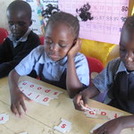
Open Textbooks for Rural Arizona participants are invited to remix this template to share their courses, textbooks, and other OER material on our Hub."Volunteers can work as support staff for the teachers at the Early Child Development Centre" by Moving Mountains Trust is licensed under CC BY 2.0.
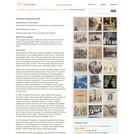
Starting with the Gold Rush, Chinese migrated to California and other regions of the United States in search of work. As several photographs show, many Chinese found work in the gold mines and on the railroads. They accepted $32.50 a month to work on the Union Pacific in Wyoming in 1870 for the same job that paid white workers $52 a month. This led to deep resentment by the whites, who felt the Chinese were competing unfairly for jobs. White labor unions blamed the Chinese for lower wages and lack of jobs, and anti-Chinese feelings grew. The cartoon "You Know How It Is Yourself" expresses this sentiment. Several political cartoons in this topic are graphic representations of racism and conflicts between whites and Chinese. "Won't They Remain Here in Spite of the New Constitution?" shows a demonized figure of political corruption protecting Chinese cheap labor, dirty politicians, capital, and financiers. "The Tables Turned" shows Denis Kearney (head of the Workingman's Party of California, a union that had criticized Chinese laborers) in jail, being taunted by Chinese men. In 1880, President Rutherford B. Hayes signed the Chinese Exclusion Treaty, which placed strict limitations on the number of Chinese allowed to enter the United States and the number allowed to become naturalized citizens. In 1882, Congress passed the Chinese Exclusion Act, which prohibited immigration from China (The Act was not repealed until 1943). The two-part cartoon from the July-December 1882 issue of The Wasp reflects how some citizens saw the situation. After the Act was passed, anti-Chinese violence increased. One illustration depicts the Rock Springs Massacre of 1885, a Wyoming race riot in which 28 Chinese were killed by British and Swedish miners. The "Certificate of Residence" document illustrates that Chinese individuals were required to prove their residence in the United States prior to the passage of the Exclusion Act. The poster offering a reward for Wong Yuk, a Chinese man, makes it clear that the United States was actively deporting Chinese. Despite discrimination and prejudice, this first wave of immigrants established thriving communities. Photographs taken in San Francisco's Chinatown show prosperous businesses, such as the "Chinese Butcher and Grocery Shop." Wealthy merchants formed active business associations, represented by the image "Officers of the Chinese Six Companies." The Chinese celebrated their heritage by holding cultural festivals, as shown in the photograph from 1896. The photographs "Children of High Class," "Golden Gate Park," and "Chinese Passengers on Ferry" are evidence that some Chinese adopted Western-style clothing while others wore more traditional attire.

A Project Based Learning Outline for Citizenship and Martin Luther King Jr. Day. To be used with Kindergarten, 1st or 2nd Grade, as fitted with standards.
This course surveys the social science literature on civil war. Students will study the origins of civil war, discuss variables that affect the duration of civil war, and examine the termination of conflict. This course is highly interdisciplinary and covers a wide variety of cases.
This course is an introduction to the history, theory, practice, and implications of rhetoric, the art and craft of persuasion through
Analyzing persuasive texts and speeches
Creating persuasive texts and speeches
Through class discussions, presentations, and written assignments, you will get to practice your own rhetorical prowess. Through the readings, you'll also learn some ways to make yourself a more efficient reader, as you turn your analytical skills on the texts themselves. This combination of reading, speaking, and writing will help you succeed in:
learning
to read and think critically
techniques of rhetorical analysis
techniques of argument
to enhance your written and oral discourse with appropriate figures of speech
some techniques of oral presentation and the use of visual aids and visual rhetoric.
This course explores how citizen science can support community actions to combat climate change. Participants will learn about framing problems, design ways to gather data, gather some of their own field data, and consider how the results can enable action. Leaks in the natural gas system—a major source of methane emissions, and a powerful contributor to climate change—will be a particular focus. The course was organized by ClimateX and Fossil Free MIT, with support from the National Science Foundation for the methane monitoring equipment. It was offered during the Independent Activities Period (IAP), which is a special 4-week January term at MIT.
This course explores how citizen science can support community actions to combat climate change. Participants will learn about framing problems, design ways to gather data, gather some of their own field data, and consider how the results can enable action. Leaks in the natural gas system—a major source of methane emissions, and a powerful contributor to climate change—will be a particular focus.
The course was organized by ClimateX and Fossil Free MIT, with support from the National Science Foundation for the methane monitoring equipment. It was offered during the Independent Activities Period (IAP), which is a special 4-week January term at MIT.
This course focuses on an exploration of the role that communication plays in the work of the contemporary engineering and science professional. Emphasis is placed on analyzing how composition and publication contribute to work management and knowledge production, as well as the "how-to" aspects of writing specific kinds of documents in a clear style. Topics include: communication as organizational process, electronic modes such as e-mail and the Internet, the informational and social roles of specific document forms, writing as collaboration, the writing process, the elements of style, methods of oral presentation, and communication ethics. Case studies used as the basis for class discussion and some writing assignments. Several short documents, a longer report or article, and a short oral presentation are required.