This article includes the URL and description of 100 free web tools …
This article includes the URL and description of 100 free web tools that can be used by all teachers. The tools are categorized into search engines, math and science, games, templates and lesson plans, and more.
This video adapted from the Valdez Museum & Historical Archive, explores what …
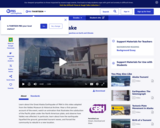
This video adapted from the Valdez Museum & Historical Archive, explores what happened during the Great Alaska Earthquake of 1964 through original footage, first-person accounts, and animations illustrating plate tectonics.
In this Wonder of the DayR, we learn about why flamingos are …
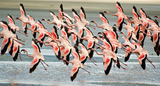
In this Wonder of the DayR, we learn about why flamingos are pink. Students have the opportunity to explore the Wonder either as a class or individually. With suggestions for different age groups, Wonder #1 has an activity to engage students with drawing, writing description, or both.
, We will learn about why flamingos are pink. Students have the opportunity …
, We will learn about why flamingos are pink. Students have the opportunity to explore as a class or individually. With suggestions for different age groups. This resource has some activities to engage students with drawing, writing descriptions, or both.
In this Wonder of the DayR, we learn about why flamingos are …
In this Wonder of the DayR, we learn about why flamingos are pink. Students have the opportunity to explore the Wonder either as a class or individually. With suggestions for different age groups, Wonder #1 has an activity to engage students with drawing, writing description, or both.
This resource was created by Judy Prewett, in collaboration with Dawn DeTurk, …
This resource was created by Judy Prewett, in collaboration with Dawn DeTurk, Hannah Blomstedt, and Julie Albrecht, as part of ESU2's Integrating the Arts project. This project is a four year initiative focused on integrating arts into the core curriculum through teacher education, practice, and coaching.
Students may recognize the importance of their senses, but they don't often …
Students may recognize the importance of their senses, but they don't often focus on them individually. Students will experiment with sounds made by leaves, feeling different textures, observing different colors, and much more.
In this unit students will build and construct an understanding of how …
In this unit students will build and construct an understanding of how matter and organisms interact creating change in our biosphere and in turn affect all types of ecosystems. Then using these skills and content they will be able to communicate, model and create solutions to phenomena, environmental emergencies or concerns. environmental concerns or endangered organisms.
In this course, you will learn the principles of genetics with application …
In this course, you will learn the principles of genetics with application to the study of biological function at the level of molecules, cells, and multicellular organisms, including humans. We will cover structure and function of genes, chromosomes, and genomes; biological variation resulting from recombination, mutation, and selection; population genetics; and the use of genetic methods to modify genes and genomes and analyze protein function, gene regulation, and inherited disease. This course, based on the MIT course 7.03 Genetics taken by enrolled MIT students, was organized as a three-part series on edX by MIT’s Department of Biology (Note: The third part of the course is not available yet). It is self-paced and free as long as you enroll in the Audit Track option, which you can select after creating a free account on edX.
In this course, you will engage in the biology of cells of …
In this course, you will engage in the biology of cells of higher organisms. You will study the structure, function, and biosynthesis of cellular membranes and organelles; cell growth and oncogenic transformation; transport, receptors, and cell signaling; the cytoskeleton, the extracellular matrix, and cell movements; cell division and cell cycle; functions of specialized cell types. This course emphasizes the current molecular knowledge of cell biological processes as well as the genetic, biochemical, and other experimental approaches that resulted in these discoveries. This course, based on the MIT course 7.06 Cell Biology taken by enrolled MIT students, was organized as a three-part series on edX by MIT’s Department of Biology. It is self-paced and free as long as you enroll in the Audit Track option, which you can select after creating a free account on edX.
This course is an in-depth adventure through the molecular mechanisms that control …
This course is an in-depth adventure through the molecular mechanisms that control the maintenance, expression, and evolution of prokaryotic and eukaryotic genomes. Through lectures and readings of relevant literature, students will explore gene regulation, DNA replication, genetic recombination, transcription, and mRNA translation. The quizzes are designed to build students' experimental design and data analysis skills. This course, based on the MIT course 7.28/7.58 Molecular Biology taken by enrolled MIT students, was organized as a three-part series on edX by MIT’s Department of Biology. It is self-paced and free as long as you enroll in the Audit Track option, which you can select after creating a free account on edX.
No restrictions on your remixing, redistributing, or making derivative works. Give credit to the author, as required.
Your remixing, redistributing, or making derivatives works comes with some restrictions, including how it is shared.
Your redistributing comes with some restrictions. Do not remix or make derivative works.
Most restrictive license type. Prohibits most uses, sharing, and any changes.
Copyrighted materials, available under Fair Use and the TEACH Act for US-based educators, or other custom arrangements. Go to the resource provider to see their individual restrictions.