The United States was founded on the principles of natural rights, equality, …
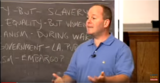
The United States was founded on the principles of natural rights, equality, and classical republicanism, but how well did it actually live up to these ideals? In this lecture, Professor Rob McDonald of the US Military Academy at West Point describes the conflict between the ideals of the American Revolution and the unfortunate realities of the time.
Have you ever stopped to think about the incredible risks the Founding …
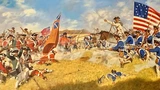
Have you ever stopped to think about the incredible risks the Founding Founders took when they rebelled against British authority? They were starting a war with the greatest military power of the time even though they did not have a mighty fighting force themselves. And they were fighting for a type of government that most people thought was impossible. In this video mini-course, Professor Sarah Burns of the Rochester Institute of Technology explains the historical and philosophical context of the American Revolution from the changing role of the British army in the colonies to Radical Whig theory.
Students are introduced to archaeology vocab through the case of "Barwick's Ordinary," a …
Students are introduced to archaeology vocab through the case of "Barwick's Ordinary," a historic tavern, gathering place, home, and center of business in 1700s Maryland. Students are briefly introduced to the story of the ordinary then explore a 3D "art gallery" with scans of artifacts from the site as well as maps, surveys, and drone photographs. Internet access is currently required. Paintings by John Lewis Krimmel help illustrate how things may have looked. An extension is to conduct some more detailed reading into the role of ordinaries, a ubiquituous feature of the European colonies in America. There are 3 activities to "meet" Barwick's, followed by 2 summative activities.
In this lesson, students will be required to to complete the Patriot vs. …
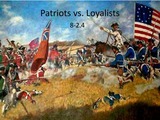
In this lesson, students will be required to to complete the Patriot vs. Loyalist Choiceboard. In the Choiceboard, students have to choose 3 out 6 options to help them learn about the economic, political, and social views of the side of the Patriots and Loyalists during the American Reovlutionary War. In addition, students should view the PowerPoint and answer the questions as they come to them on notebook paper. Students will allowed to research the content; however, I have also provided them with a series of sources to use as well.
Students will examine the life of Phillis Wheatley. They will explore how …
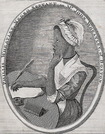
Students will examine the life of Phillis Wheatley. They will explore how as a woman, Phillis was able to fight for freedom during the American Revolution as enslaved, or formerly enslaved people. Students will analyze primary and secondary sources to learn more about the life and journey of Phillis, as well as her impact on historical events.
It is important for students to understand the steps leading up to …
It is important for students to understand the steps leading up to the war with Great Britain. This interactive video and assignment helps students understand all that took place in our fight for independence.
In this lesson, students will be required to to complete the Patriot vs. …
In this lesson, students will be required to to complete the Patriot vs. Loyalist Choiceboard. In the Choiceboard, students have to choose 3 out 6 options to help them learn about the economic, political, and social views of the side of the Patriots and Loyalists during the American Reovlutionary War. Students will allowed to research the content; however, I have also provided them with a series of sources to use as well.
This is a checklist meant to help guide students through their own …
This is a checklist meant to help guide students through their own Revolutionary War research project. Utilizing this checklist, students will be able to create a meaningful teaching tool (a timeline) to help others learn about the major events leading to the Revolutionary War as well as the major battles fought in South Carolina during the war.
This course uses readings and discussions to focus on a series of …
This course uses readings and discussions to focus on a series of short-term events that shed light on American politics, culture, and social organization. It emphasizes finding ways to make sense of these complicated, highly traumatic events, and on using them to understand larger processes of change in American history. The class also gives students experience with primary documentation research through a term paper assignment.
Students will examine the life of Crispus Attucks and/or James Lafayette. They …
Students will examine the life of Crispus Attucks and/or James Lafayette. They will explore how both men were able to fight for their freedom as enslaved, or formerly enslaved people. Students will analyze primary and secondary sources to learn more about the life and journey of both of these men, as well as their impact on historical events.
This section contains reproducible copies of primary documents from the holdings of …
This section contains reproducible copies of primary documents from the holdings of the National Archives of the United States, teaching activities correlated to the National History Standards and National Standards for Civics and Government and cross-curricular connections.
Students will be able to infer arguments both for and against the …
Students will be able to infer arguments both for and against the Colonies going to war and not going to war with Great Britain based on a short video clip from the movie "The Patriot."
No restrictions on your remixing, redistributing, or making derivative works. Give credit to the author, as required.
Your remixing, redistributing, or making derivatives works comes with some restrictions, including how it is shared.
Your redistributing comes with some restrictions. Do not remix or make derivative works.
Most restrictive license type. Prohibits most uses, sharing, and any changes.
Copyrighted materials, available under Fair Use and the TEACH Act for US-based educators, or other custom arrangements. Go to the resource provider to see their individual restrictions.