Religion is a significant aspect of human cultures everywhere. In these lessons, …
Religion is a significant aspect of human cultures everywhere. In these lessons, we explore questions such as: What are the main elements of religion? Why is believing in a higher power important to human beings across cultures? How is religion related to our social orders? How is religion related to the politics of today's world?This resource is comprised of 7 lessons based on online modules, plus a final presentation assignment. Each lesson includes a discussion or written assignment. This class was originally taught by Huma Mohibullah at Renton Technical College.
A non-linear interactive presentation for students to discover why studying religino is …
A non-linear interactive presentation for students to discover why studying religino is important and how to approach the study of religion from a nonsectarian view.
Sometime after 1492, the concept of the New World or America came …
Sometime after 1492, the concept of the New World or America came into being, and this concept appeared differently - as an experience or an idea - for different people and in different places. This semester, we will read three groups of texts: first, participant accounts of contact between native Americans and French or English speaking Europeans, both in North America and in the Caribbean and Brazil; second, transformations of these documents into literary works by contemporaries; third, modern texts which take these earlier materials as a point of departure for rethinking the experience and aftermath of contact. The reading will allow us to compare perspectives across time and space, across the cultural geographies of religion, nation and ethnicity, and finally across a range of genres - reports, captivity narratives, essays, novels, poetry, drama, and film. Some of the earlier authors we will read are Michel Montaigne, William Shakespeare, Jean de Léry, Daniel Defoe and Mary Rowlandson; more recent authors include Derek Walcott, and J. M. Coetzee.
This class examines how anthropology and speculative fiction (SF) each explore ideas …
This class examines how anthropology and speculative fiction (SF) each explore ideas about culture and society, technology, morality, and life in "other" worlds. We investigate this convergence of interest through analysis of SF in print, film, and other media. Concepts include traditional and contemporary anthropological topics, including first contact; gift exchange; gender, marriage, and kinship; law, morality, and cultural relativism; religion; race and embodiment; politics, violence, and war; medicine, healing, and consciousness; technology and environment. Thematic questions addressed in the class include: what is an alien? What is "the human"? Could SF be possible without anthropology?
This webpage provides elementary information on aspects of Arab culture and history, …
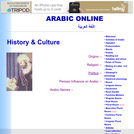
This webpage provides elementary information on aspects of Arab culture and history, including religion, politics, naming conventions, and Persian influence on Arab culture and language. The information seems to have been authored by the site's administrator, and contains no references or citations.
"The Art of the Probable" addresses the history of scientific ideas, in …
"The Art of the Probable" addresses the history of scientific ideas, in particular the emergence and development of mathematical probability. But it is neither meant to be a history of the exact sciences per se nor an annex to, say, the Course 6 curriculum in probability and statistics. Rather, our objective is to focus on the formal, thematic, and rhetorical features that imaginative literature shares with texts in the history of probability. These shared issues include (but are not limited to): the attempt to quantify or otherwise explain the presence of chance, risk, and contingency in everyday life; the deduction of causes for phenomena that are knowable only in their effects; and, above all, the question of what it means to think and act rationally in an uncertain world. Our course therefore aims to broaden students' appreciation for and understanding of how literature interacts with – both reflecting upon and contributing to – the scientific understanding of the world. We are just as centrally committed to encouraging students to regard imaginative literature as a unique contribution to knowledge in its own right, and to see literary works of art as objects that demand and richly repay close critical analysis. It is our hope that the course will serve students well if they elect to pursue further work in Literature or other discipline in SHASS, and also enrich or complement their understanding of probability and statistics in other scientific and engineering subjects they elect to take.
This Wide Angle video segment illustrates Islamic and secular elements of life …
This Wide Angle video segment illustrates Islamic and secular elements of life in Turkey, and introduces Mustafa Kemal Ataturk, the first president of Turkey, and his reforms.
Welcome to Beliefs: An Open Invitation to Anthropology of Magic, Witchcraft and …
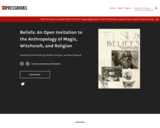
Welcome to Beliefs: An Open Invitation to Anthropology of Magic, Witchcraft and Religion. This book was the combined efforts of the authors, contributors and editors who have been teaching these concepts to students for a number of years. While there are many great textbooks that teach the concepts covered in this textbook, there was a need for an Open Educational Resource (OER) for students. The success of Perspectives: An Open Invitation to Cultural Anthropology and Explorations: An Open Invitation to Biological Anthropology inspired this project in 2020, when the authors began curating the OER at Los Angeles Valley College. The project quickly grew over the next two years to include many talented anthropology instructors, thanks to the support and guidance of ASCCC.
Buddhism is one of the world’s largest religions and originated 2,500 years …
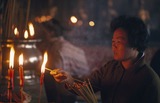
Buddhism is one of the world’s largest religions and originated 2,500 years ago in India. Buddhists believe that the human life is one of suffering, and that meditation, spiritual and physical labor, and good behavior are the ways to achieve enlightenment, or nirvana.
Christian Parables is a resource for use by school teachers that has …
Christian Parables is a resource for use by school teachers that has been developed as part of Dr Naomi Appleton and Dr Alison Jack’s project Approaching Religion Through Story at the University of Edinburgh School of Divinity.
Structured to meet Education Scotland’s Curriculum for Excellence standard for Religious Moral Education (RME), the resource is divided according to the three structuring principles of the experiences and outcomes for RME in Scotland: Beliefs, Values and Issues, and Practices and Traditions. Keywords are also provided to indicate the particular relevance of the story.
The file contains six parables in PDF format, sorted by the principles stated above, and an introduction to parables.
Resources provided as part of the project ‘Approaching Religion Through Story’ are licensed under a Creative Commons Attribution-NonCommercial 4.0 International Licence.
This site offers a brief list of words that relate to Christianity, …
This site offers a brief list of words that relate to Christianity, including a number of terms that are specific to Christianity as it is practiced in the Middle East. Many of the words are accompanied by brief explanations of their significance. The glossary is preceded by a brief introduction.
The traditional religions of Great Britain's North American colonies had difficulty maintaining …
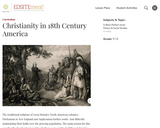
The traditional religions of Great Britain's North American colonies had difficulty maintaining their holds over the growing population. This did not, however, result in a wholesale decline in religiosity among Americans. In fact, the most significant religious development of 18th century America took place along the frontier, in the form of the Great Awakening. This curriculum unit will, through the use of primary documents, introduce students to the First Great Awakening, as well as to the ways in which religious-based arguments were used both in support of and against the American Revolution.
The collection of documents brought together in this project begins to tell …
The collection of documents brought together in this project begins to tell the story of the growth of Protestant religion among African Americans during the nineteenth century, and of the birth of what came to be known as the "Black Church" in the United States. This development continues to have enormous political, spiritual, and economic consequences. But perhaps what is most apparent in these texts is the diversity of ways in which that religious tradition was envisioned, experienced, and implemented. From the white Baptist and Methodist missionaries sent to convert enslaved Africans, to the earliest pioneers of the independent black denominations, to black missionaries in Africa, to the eloquent rhetoric of W.E.B. DuBois, the story of the black church is a tale of variety and struggle in the midst of constant racism and oppression. It is also a story of constant change, and of the coincidence of cultural cohesion among enslaved Africans and the introduction of Protestant evangelicalism to their communities.
This collection uses primary sources to explore religion during the Colonial period …
This collection uses primary sources to explore religion during the Colonial period of US History. Digital Public Library of America Primary Source Sets are designed to help students develop their critical thinking skills and draw diverse material from libraries, archives, and museums across the United States. Each set includes an overview, ten to fifteen primary sources, links to related resources, and a teaching guide. These sets were created and reviewed by the teachers on the DPLA's Education Advisory Committee.
This collection uses primary sources to explore the motivations and realities behind …
This collection uses primary sources to explore the motivations and realities behind life in the American colonies. Digital Public Library of America Primary Source Sets are designed to help students develop their critical thinking skills and draw diverse material from libraries, archives, and museums across the United States. Each set includes an overview, ten to fifteen primary sources, links to related resources, and a teaching guide. These sets were created and reviewed by the teachers on the DPLA's Education Advisory Committee.
In Communicating in American Culture(s), bilingual students examine how various aspects of …
In Communicating in American Culture(s), bilingual students examine how various aspects of American culture—history, geography, institutions, traditions, values—have shaped dominant Anglo-American communication norms and responses to critical events in the world. In addition, you can expect to practice and strengthen your analytical and communication skills in a carefully scaffolded manner, starting with frequent short writing and speaking tasks and progressing to longer, more formal tasks.
This course surveys both classic and cutting-edge work on the politics of …
This course surveys both classic and cutting-edge work on the politics of the Middle East, broadly defined. Topics include the causes and consequences of political and economic development, authoritarianism and democratization, the influence of social movements, the role of women in Middle Eastern politics, regional inter-state relations, Islamism, terrorism, colonialism and foreign occupation, state-building, resistance and rebellion, and the Arab uprisings.
No restrictions on your remixing, redistributing, or making derivative works. Give credit to the author, as required.
Your remixing, redistributing, or making derivatives works comes with some restrictions, including how it is shared.
Your redistributing comes with some restrictions. Do not remix or make derivative works.
Most restrictive license type. Prohibits most uses, sharing, and any changes.
Copyrighted materials, available under Fair Use and the TEACH Act for US-based educators, or other custom arrangements. Go to the resource provider to see their individual restrictions.