Students engage in hands-on, true-to-life research experiences on air quality topics chosen …
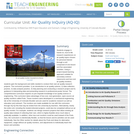
Students engage in hands-on, true-to-life research experiences on air quality topics chosen for personal interest through a unit composed of one lesson and five associated activities. Using a project-based learning approach suitable for secondary science classrooms and low-cost air quality monitors, students gain the background and skills needed to conduct their own air quality research projects. The curriculum provides: 1) an introduction to air quality science, 2) data collection practice, 3) data analysis practice, 4) help planning and conducting a research project and 5) guidance in interpreting data and presenting research in professional poster format. The comprehensive curriculum requires no pre-requisite knowledge of air quality science or engineering. This curriculum takes advantage of low-cost, next-generation, open-source air quality monitors called Pods. These monitors were developed in a mechanical engineering lab at the University of Colorado Boulder and are used for academic research as well as education and outreach. The monitors are made available for use with this curriculum through AQ-IQ Kits that may be rented from the university by teachers. Alternatively, nearly the entire unit, including the student-directed projects, could also be completed without an air quality monitor. For example, students can design research projects that utilize existing air quality data instead of collecting their own, which is highly feasible since much data is publically available. In addition, other low-cost monitors could be used instead of the Pods. Also, the curriculum is intentionally flexible, so that the lesson and its activities can be used individually. See the Other section for details about the Pods and ideas for alternative equipment, usage without air quality monitors, and adjustments to individually teach the lesson and activities.
This text is a complete team-based and project-based learning course focused on …
This text is a complete team-based and project-based learning course focused on the application of the World Health Organization’s International Classification of Functioning, Disability and Health (ICF) to unique groups of program clients and patients. It is designed to engage undergraduate students in exploration of the different facets of the ICF, in how the ICF differs from medical and social models because of these facets, and how each applies to, and ensures, an awareness of all of the ways in which health affects and is affected by peoples’ characteristics and environments. The text includes readings, digital links, readiness assurance elements, and guidelines for individual and team deliverables, but can also be used as a stand-alone text to provide a rich constructivist approach to understanding the structure of the ICF and how to use it for problem solving and decision-making with a patient/client population.
It is the author’s intention that the text be used as suits the instructor, and modified to fit the pre-professional or paraprofessional healthcare students being taught, so while case study examples for rehabilitation are include, the text will lend itself to any patient or client group.
This article provides an overview of using rubrics as a method of …
This article provides an overview of using rubrics as a method of assessment and discusses technological tools that facilitate the creation of rubrics.
STEM focused lesson that incorporates hands on and computer based 3D design. …
STEM focused lesson that incorporates hands on and computer based 3D design. Grade specific math concepts such as budgets, percentages, and square footage is applied.
This Project has been completed as part of a standard 10 weeks …
This Project has been completed as part of a standard 10 weeks Calculus 3 asynhronous online course with optional WebEx office hours during Summer 2022 semester at MassBay Community College, Wellesley Hills, MA.
This Project has been completed as part of a standard 10 weeks …
This Project has been completed as part of a standard 10 weeks Calculus 3 asynhronous online course with optional WebEx office hours during Summer 2022 semester at MassBay Community College, Wellesley Hills, MA.
In this course, students will develop their abilities to expose ways that …
In this course, students will develop their abilities to expose ways that scientific knowledge has been shaped in contexts that are gendered, racialized, economically exploitative, and hetero-normative. This happens through a sequence of four projects that concern:
Interpretation of the cultural dimension of sciences Climate change futures Genomic citizenry Students' plans for ongoing practice
The course uses a Project-Based Learning format that allows students to shape their own directions of inquiry in each project, development of skills, and collegial support. Students' learning will be guided by individualized bibliographies co-constructed with the instructors, the inquiries of the other students, and a set of tools and processes for literary analysis, inquiry, reflection, and support. Acknowledgement Professor Peter Taylor spent several years crafting the unique structure of the course, which is crucial to the way it was taught. The Consortium for Graduate Studies in Gender, Culture, Women, and Sexuality This course was taught as part of the Consortium for Graduate Studies in Gender, Culture, Women, and Sexuality (GCWS) at MIT. The GCWS brings together scholars and teachers at nine degree-granting institutions in the Boston area who are devoted to graduate teaching and research in Women's Studies and to advance interdisciplinary Women's Studies scholarship.
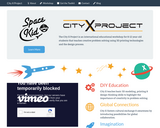
The City X Project is an international educational workshop for 8-12 year-old …
The City X Project is an international educational workshop for 8-12 year-old students that teaches creative problem solving using 3D printing technologies and the design process. This 6-10 hour workshop is designed for 3rd-6th grade classrooms but can be adapted to fit a variety of environments. Read a full overview of the experience here: http://www.cityxproject.com/workshop/
The second of this series, this video features Georgetown University faculty and …
The second of this series, this video features Georgetown University faculty and administrators exploring the interdisciplinarity of climate change and its implications for education, including the need for project-based learning.
The following Problem Based Learning (PrBL) curriculum maps are based on the …
The following Problem Based Learning (PrBL) curriculum maps are based on the Math Common Core State Standards and the associated scope and sequences. The problems and tasks have been scoured from thoughtful math bloggers who have advanced math educator practice by posting their materials online.
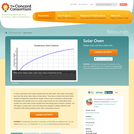
Elementary grade students investigate heat transfer in this activity to design and …
Elementary grade students investigate heat transfer in this activity to design and build a solar oven, then test its effectiveness using a temperature sensor. It blends the hands-on activity with digital graphing tools that allow kids to easily plot and share their data. Included in the package are illustrated procedures and extension activities. Note Requirements: This lesson requires a "VernierGo" temperature sensing device, available for ~ $40. This item is part of the Concord Consortium, a nonprofit research and development organization dedicated to transforming education through technology. The Consortium develops digital learning innovations for science, mathematics, and engineering.
Reading and creating comic strips and comic books are engaging ways to …
Reading and creating comic strips and comic books are engaging ways to promote literacy at any grade level and across content areas. The students in this video are members of a high school comic book club and have access to drawing tablets and Adobe Photoshop, so they can achieve sophisticated results. Even without such software, however, teachers can still integrate digital comics into a wide range of teaching situations.
There are a number of comic books, especially contemporary ones, that are not “school appropriate,” so you might want to guide students’ web research on comic books.
Student teams design and then create small-size models of working filter systems …
Student teams design and then create small-size models of working filter systems to simulate multi-stage wastewater treatment plants. Drawing from assorted provided materials (gravel, pebbles, sand, activated charcoal, algae, coffee filters, cloth) and staying within a (hypothetical) budget, teams create filter systems within 2-liter plastic bottles to clean the teacher-made simulated wastewater (soap, oil, sand, fertilizer, coffee grounds, beads). They aim to remove the water contaminants while reclaiming the waste material as valuable resources. They design and build the filtering systems, redesigning for improvement, and then measuring and comparing results (across teams): reclaimed quantities, water quality tests, costs, experiences and best practices. They conduct common water quality tests (such as turbidity, pH, etc., as determined by the teacher) to check the water quality before and after treatment.
Students learn about the controversial history of a mural in Anacortes, WA, …
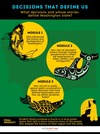
Students learn about the controversial history of a mural in Anacortes, WA, and consider what it would take to create a more inclusive and accurate mural in Anacortes today. Then students learn about the tribes, immigrants, and settlers in the region where they live and how their stories are represented in local murals in public spaces. Students draw on what they have learned to respond to the unit driving question: What decisions and whose stories define Washington state? Then, drawing on local resources such as tribal members, historical societies, and museums, students work in teams to propose a new mural that tells an inclusive story of the people and place where they live.
Emphasizing the design, build, and test steps of the engineering design process, …
Emphasizing the design, build, and test steps of the engineering design process, groups create a ping-pong paddle. After building their paddle, students conduct tests and compare their design to a store-bought paddle and use a Venn diagram to organize their information. Based on their results, students write product reviews for their paddle. This project allows students to build and test a design, iterate upon that design as well as explore how data analysis of a product works.
This Super Lesson utilizes Project Based Learning to assist learners with designing, …
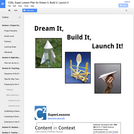
This Super Lesson utilizes Project Based Learning to assist learners with designing, building, and testing flying contraptions as an introduction to Engineering. The goal of this project is to engage students in collaborative team work and to introduce students to the Science and Engineering Practices: Asking Questions and Defining Problems, Planning and Carrying Out Investigations, and Constructing Explanations and Designing Solutions.
We have offered this Super Lesson as an 8-week elective course, developing and strengthening student interest in applied Math and Science topics. It could also be offered within upper elementary or middle school Science and Math courses. In addition, each week’s topic could be used as a stand alone mini-lesson if time is limited. We have worked to include multiple options within this unit to make it accessible to both general education and special education programs, including recommendations for modifications and extensions.
This project is a science based unit that incorporates using a makerspace. …
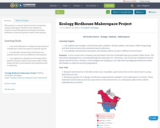
This project is a science based unit that incorporates using a makerspace. Students work together to research a local bird species and design and build a birdhouse to meet the specific needs of their species.
This integrated 3rd grade unit addresses the NGSS Life Science bundles for …
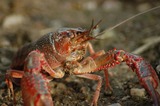
This integrated 3rd grade unit addresses the NGSS Life Science bundles for Interdependent Relationships in Ecosystems (3-LS2-1, 3-LS4-3, and 3-LS4-4) and Inheritance and Variation of Traits: Life Cycles and Traits (3-LS1-1, 3-LS3-1, 3-LS3-2, and 3-LS4-2). Students embark on a mission to protect their native plants and animals by devising a plan to regulate and prevent the spread of invasive species in the area. Through a series of FOSS investigations and other OER (open educational resource) lessons and activities, students learn about how an organism’s traits aid in survival, how parents pass on traits to their offspring, and how the environment influences plant and animal traits and behaviors.
No restrictions on your remixing, redistributing, or making derivative works. Give credit to the author, as required.
Your remixing, redistributing, or making derivatives works comes with some restrictions, including how it is shared.
Your redistributing comes with some restrictions. Do not remix or make derivative works.
Most restrictive license type. Prohibits most uses, sharing, and any changes.
Copyrighted materials, available under Fair Use and the TEACH Act for US-based educators, or other custom arrangements. Go to the resource provider to see their individual restrictions.