The lethal poison Ricin (best known as a weapon of bioterrorism), Diphtheria …
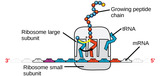
The lethal poison Ricin (best known as a weapon of bioterrorism), Diphtheria toxin (the causative agent of a highly contagious bacterial disease), and the widely used antibiotic tetracycline have one thing in common: They specifically target the cell's translational apparatus and disrupt protein synthesis. In this course, we will explore the mechanisms of action of toxins and antibiotics, their roles in everyday medicine, and the emergence and spread of drug resistance. We will also discuss the identification of new drug targets and how we can manipulate the protein synthesis machinery to provide powerful tools for protein engineering and potential new treatments for patients with devastating diseases, such as cystic fibrosis and muscular dystrophy. This course is one of many Advanced Undergraduate Seminars offered by the Biology Department at MIT. These seminars are tailored for students with an interest in using primary research literature to discuss and learn about current biological research in a highly interactive setting. Many instructors of the Advanced Undergraduate Seminars are postdoctoral scientists with a strong interest in teaching.
Biology is designed for multi-semester biology courses for science majors. It is …
Biology is designed for multi-semester biology courses for science majors. It is grounded on an evolutionary basis and includes exciting features that highlight careers in the biological sciences and everyday applications of the concepts at hand. To meet the needs of today’s instructors and students, some content has been strategically condensed while maintaining the overall scope and coverage of traditional texts for this course. Instructors can customize the book, adapting it to the approach that works best in their classroom. Biology also includes an innovative art program that incorporates critical thinking and clicker questions to help students understand—and apply—key concepts.
By the end of this section, you will be able to:Describe the …
By the end of this section, you will be able to:Describe the structure of nucleic acids and define the two types of nucleic acidsExplain the structure and role of DNAExplain the structure and roles of RNA
The goal of this course is to teach both the fundamentals of …
The goal of this course is to teach both the fundamentals of nuclear cell biology as well as the methodological and experimental approaches upon which they are based. Lectures and class discussions will cover the background and fundamental findings in a particular area of nuclear cell biology. The assigned readings will provide concrete examples of the experimental approaches and logic used to establish these findings. Some examples of topics include genome and systems biology, transcription, and gene expression.
As a class, students work through an example showing how DNA provides …
As a class, students work through an example showing how DNA provides the "recipe" for making our body proteins. They see how the pattern of nucleotide bases (adenine, thymine, guanine, cytosine) forms the double helix ladder shape of DNA, and serves as the code for the steps required to make genes. They also learn some ways that engineers and scientists are applying their understanding of DNA in our world.
This course will explore the current frontiers of the world of RNA …
This course will explore the current frontiers of the world of RNA biology with primary research papers to trace how the original odd detail sometimes leads to major discoveries. As we discuss the different transcripts and processing events that enable this exciting diversity of RNA functions, we invite you to read landmark papers with us, think critically, and ask new questions, as we marvel at the wonders of RNA. This course is one of many Advanced Undergraduate Seminars offered by the Biology Department at MIT. These seminars are tailored for students with an interest in using primary research literature to discuss and learn about current biological research in a highly interactive setting. Many instructors of the Advanced Undergraduate Seminars are postdoctoral scientists with a strong interest in teaching.
The course applies molecular biology and reverse genetics approaches to the study …
The course applies molecular biology and reverse genetics approaches to the study of apoptosis, or programmed cell death (PCD), in Drosophila cells. RNA interference (RNAi), or double stranded RNA-mediated gene silencing, will be used to inhibit expression of candidate apoptosis-related genes in cultured Drosophila cells. Teams of 2 or 3 students will design and carry out experiments to address questions about the genes involved in the regulation and execution of PCD in this system. Some projects involve the use of DNA damaging agents or other cytotoxic chemicals or drugs to help understand the pathways that control a cell's decision to undergo apoptosis. Instruction and practice in written and oral communication are provided.
This resource is a video abstract of a research paper created by …
This resource is a video abstract of a research paper created by Research Square on behalf of its authors. It provides a synopsis that's easy to understand, and can be used to introduce the topics it covers to students, researchers, and the general public. The video's transcript is also provided in full, with a portion provided below for preview:
"Hepatocellular carcinoma, or HCC, is the second deadliest form of cancer. One protein that helps HCC cells grow and proliferate is c-Myc. But exactly how has remained unclear. Now, researchers have identified a separate protein that, with c-Myc, forms a positive feedback loop to keep HCC cells thriving. The protein is called FBXL6 and was identified by transcriptome RNA sequencing. Experiments showed that FBXL6 was significantly increased in HCC compared with normal tissues and correlated positively with c-Myc expression. Further tests revealed that FBXL6 stabilizes the heat shock protein HSP90AA1, which activates c-Myc. In turn, c-Myc binds to the promoter region of FBXL6 and activates its expression. This newly discovered FBXL6-HSP90AA1-c-MYC axis could play a critical role in sustaining HCC. Drugs designed to suppress this feedforward loop could help patients living with hepatocellular carcinoma..."
The rest of the transcript, along with a link to the research itself, is available on the resource itself.
Fundamentals of Biology focuses on the basic principles of biochemistry, molecular biology, …
Fundamentals of Biology focuses on the basic principles of biochemistry, molecular biology, genetics, and recombinant DNA. These principles are necessary to understanding the basic mechanisms of life and anchor the biological knowledge that is required to understand many of the challenges in everyday life, from human health and disease to loss of biodiversity and environmental quality. Course Format
This course has been designed for independent study. It consists of four units, one for each topic. The units can be used individually or in combination. The materials for each unit include:
Lecture Videos by MIT faculty. Learning activities, including Interactive Concept Quizzes, designed to reinforce main concepts from lectures. Problem Sets you do on your own and check your answers against the Solutions when you're done. Problem Solving Video help sessions taught by experienced MIT Teaching Assistants. Lists of important Terms and Definitions. Suggested Topics and Links for further study. Exams with Solution Keys.
Content Development
Eric Lander Robert Weinberg Tyler Jacks Hazel Sive Graham Walker Sallie Chisholm Dr. Michelle Mischke
This course discusses the principles of genetics with application to the study …
This course discusses the principles of genetics with application to the study of biological function at the level of molecules, cells, and multicellular organisms, including humans. The topics include: structure and function of genes, chromosomes and genomes, biological variation resulting from recombination, mutation, and selection, population genetics, use of genetic methods to analyze protein function, gene regulation and inherited disease.
The MIT Biology Department core courses, 7.012, 7.013, and 7.014, all cover …
The MIT Biology Department core courses, 7.012, 7.013, and 7.014, all cover the same core material, which includes the fundamental principles of biochemistry, genetics, molecular biology, and cell biology. Biological function at the molecular level is particularly emphasized and covers the structure and regulation of genes, as well as, the structure and synthesis of proteins, how these molecules are integrated into cells, and how these cells are integrated into multicellular systems and organisms. In addition, each version of the subject has its own distinctive material. 7.012 focuses on the exploration of current research in cell biology, immunology, neurobiology, genomics, and molecular medicine. Acknowledgments The study materials, problem sets, and quiz materials used during Fall 2004 for 7.012 include contributions from past instructors, teaching assistants, and other members of the MIT Biology Department affiliated with course #7.012. Since the following works have evolved over a period of many years, no single source can be attributed.
The MIT Biology Department core Introductory Biology courses, 7.012, 7.013, 7.014, 7.015, …
The MIT Biology Department core Introductory Biology courses, 7.012, 7.013, 7.014, 7.015, and 7.016 all cover the same core material, which includes the fundamental principles of biochemistry, genetics, molecular biology, and cell biology. The focus of 7.013 is on genomic approaches to human biology, including neuroscience, development, immunology, tissue repair and stem cells, tissue engineering, and infectious and inherited diseases, including cancer.
The MIT Biology Department core courses, 7.012, 7.013, and 7.014, all cover …
The MIT Biology Department core courses, 7.012, 7.013, and 7.014, all cover the same core material, which includes the fundamental principles of biochemistry, genetics, molecular biology, and cell biology. 7.013 focuses on the application of the fundamental principles toward an understanding of human biology. Topics include genetics, cell biology, molecular biology, disease (infectious agents, inherited diseases and cancer), developmental biology, neurobiology and evolution. Biological function at the molecular level is particularly emphasized in all courses and covers the structure and regulation of genes, as well as, the structure and synthesis of proteins, how these molecules are integrated into cells, and how these cells are integrated into multicellular systems and organisms. In addition, each version of the subject has its own distinctive material.
The MIT Biology Department core courses, 7.012, 7.013, and 7.014, all cover …
The MIT Biology Department core courses, 7.012, 7.013, and 7.014, all cover the same core material, which includes the fundamental principles of biochemistry, genetics, molecular biology, and cell biology. Biological function at the molecular level is particularly emphasized and covers the structure and regulation of genes, as well as, the structure and synthesis of proteins, how these molecules are integrated into cells, and how these cells are integrated into multicellular systems and organisms. In addition, each version of the subject has its own distinctive material. 7.014 focuses on the application of these fundamental principles, toward an understanding of microorganisms as geochemical agents responsible for the evolution and renewal of the biosphere and of their role in human health and disease. Acknowledgements The study materials, problem sets, and quiz materials used during Spring 2005 for 7.014 include contributions from past instructors, teaching assistants, and other members of the MIT Biology Department affiliated with course 7.014. Since the following works have evolved over a period of many years, no single source can be attributed.
In this activity, learners explore the "nuts and bolts" of gene chips. …
In this activity, learners explore the "nuts and bolts" of gene chips. Learners construct a simple model of a DNA microarray (also known as gene chips) and learn how microarrays can be used to identify and treat disease--including cancer. This resource includes references and an explanation of microarrays.
This resource is a video abstract of a research paper created by …
This resource is a video abstract of a research paper created by Research Square on behalf of its authors. It provides a synopsis that's easy to understand, and can be used to introduce the topics it covers to students, researchers, and the general public. The video's transcript is also provided in full, with a portion provided below for preview:
"Microbiome research has consistently been placed in the spotlight over the past two decades, and has shown tremendous promise in the fields of medicine, environmental science, food production, and agriculture. Life on Earth does not exist without microbes, and we may benefit from learning more about them. Yet, there is no common understanding amongst researchers of what a 'microbiome’ actually is. Researchers are now proposing a common definition of ‘microbiome’ to ensure better, more robust research across different disciplines. The authors build on the historical definition offered by Whipps and colleagues in 1988 using new research insights. Additionally, they highlight the importance of microbiomes as drivers for the health of many eukaryotic hosts, including humans and plants. The proposed amendments to the definition specify the elements of microbiome composition and their interactions..."
The rest of the transcript, along with a link to the research itself, is available on the resource itself.
This resource is a video abstract of a research paper created by …
This resource is a video abstract of a research paper created by Research Square on behalf of its authors. It provides a synopsis that's easy to understand, and can be used to introduce the topics it covers to students, researchers, and the general public. The video's transcript is also provided in full, with a portion provided below for preview:
"Antibiotic-resistant bacteria like carbapenem-resistant Enterobacteriaceae (CRE) pose a serious threat to human health. Some resistant pathogens can exist alongside our commensal microbiota at undetectable levels. Antibiotic use can lead to outgrowth of these subclinically colonized bacteria. A recent study sought to better understand the interaction between the gut microbiota and CRE during subclinical colonization and outgrowth. First, researchers exposed wild-type mice to the CRE _K. pneumoniae_. While the levels of _K. pneumoniae_ were not detectable after exposure, the post-exposure microbiome was disrupted. Then, administration of an antibiotic cocktail, ampicillin, vancomycin, or azithromycin induced _K. pneumoniae_ outgrowth while reducing overall microbial diversity. Vancomycin only induced outgrowth in a subset of mice. The researchers found these outgrowth-susceptible mice had differences in mRNA stability pathways and xylose abundance..."
The rest of the transcript, along with a link to the research itself, is available on the resource itself.
No restrictions on your remixing, redistributing, or making derivative works. Give credit to the author, as required.
Your remixing, redistributing, or making derivatives works comes with some restrictions, including how it is shared.
Your redistributing comes with some restrictions. Do not remix or make derivative works.
Most restrictive license type. Prohibits most uses, sharing, and any changes.
Copyrighted materials, available under Fair Use and the TEACH Act for US-based educators, or other custom arrangements. Go to the resource provider to see their individual restrictions.