The properties of organic molecules depend on the structure, and knowing the …
The properties of organic molecules depend on the structure, and knowing the names of organic compounds allow us to communicate with other chemists. We'll be learning about different aspects of molecular structure, including common functional groups and conformations.
Biology is designed for multi-semester biology courses for science majors. It is …
Biology is designed for multi-semester biology courses for science majors. It is grounded on an evolutionary basis and includes exciting features that highlight careers in the biological sciences and everyday applications of the concepts at hand. To meet the needs of today’s instructors and students, some content has been strategically condensed while maintaining the overall scope and coverage of traditional texts for this course. Instructors can customize the book, adapting it to the approach that works best in their classroom. Biology also includes an innovative art program that incorporates critical thinking and clicker questions to help students understand—and apply—key concepts.
By the end of this section, you will be able to:Discuss the …
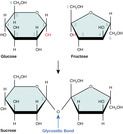
By the end of this section, you will be able to:Discuss the role of carbohydrates in cells and in the extracellular materials of animals and plantsExplain the classifications of carbohydratesList common monosaccharides, disaccharides, and polysaccharides
By the end of this section, you will be able to:Discuss the …
By the end of this section, you will be able to:Discuss the role of carbohydrates in cells and in the extracellular materials of animals and plantsExplain the classifications of carbohydratesList common monosaccharides, disaccharides, and polysaccharides
Chemistry: Atoms First is a peer-reviewed, openly licensed introductory textbook produced through …
Chemistry: Atoms First is a peer-reviewed, openly licensed introductory textbook produced through a collaborative publishing partnership between OpenStax and the University of Connecticut and UConn Undergraduate Student Government Association.
This title is an adaptation of the OpenStax Chemistry text and covers scope and sequence requirements of the two-semester general chemistry course. Reordered to fit an atoms first approach, this title introduces atomic and molecular structure much earlier than the traditional approach, delaying the introduction of more abstract material so students have time to acclimate to the study of chemistry. Chemistry: Atoms First also provides a basis for understanding the application of quantitative principles to the chemistry that underlies the entire course.
This interactive activity helps learners visualize the role of electrons in the …
This interactive activity helps learners visualize the role of electrons in the formation of ionic and covalent chemical bonds. Students explore different types of chemical bonds by first viewing a single hydrogen atom in an electric field model. Next, students use sliders to change the electronegativity between two atoms -- a model to help them understand why some atoms are attracted. Finally, students experiment in making their own models: non-polar covalent, polar covalent, and ionic bonds. This item is part of the Concord Consortium, a nonprofit research and development organization dedicated to transforming education through technology.
In this interactive activity, learners explore factors that cause atoms to form …
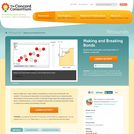
In this interactive activity, learners explore factors that cause atoms to form (or break) bonds with each other. The first simulation depicts a box containing 12 identical atoms. Using a slider to add heat, students can see the influence of temperature on formation of diatomic bonds. Simulations #2 and #3 introduce learners to reactions involving two types of atoms. Which atom forms a diatomic molecule more easily, and why? The activity concludes as students explore paired atoms (molecules). In this simulation they compare the amount of energy needed to break the molecular bonds to the energy needed to form the bonds. This item is part of the Concord Consortium, a nonprofit research and development organization dedicated to transforming education through technology.
This is the first semester in a two-semester introductory course focused on …
This is the first semester in a two-semester introductory course focused on current theories of structure and mechanism in organic chemistry, their historical development, and their basis in experimental observation. The course is open to freshmen with excellent preparation in chemistry and physics, and it aims to develop both taste for original science and intellectual skills necessary for creative research.
This chemistry activity was created to enhance student learning about molecular structure. …
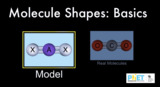
This chemistry activity was created to enhance student learning about molecular structure. It guides students through Phet simulations and then asks comprehension questions thereafter.
This course, intended for both graduate and upper level undergraduate students, will …
This course, intended for both graduate and upper level undergraduate students, will focus on understanding of the basic molecular structural principles of biological materials. It will address the molecular structures of various materials of biological origin, such as several types of collagen, silk, spider silk, wool, hair, bones, shells, protein adhesives, GFP, and self-assembling peptides. It will also address molecular design of new biological materials applying the molecular structural principles. The long-term goal of this course is to teach molecular design of new biological materials for a broad range of applications. A brief history of biological materials and its future perspective as well as its impact to the society will also be discussed. Several experts will be invited to give guest lectures.
An intensive survey of structure, reactions and synthesis of the main classes …
An intensive survey of structure, reactions and synthesis of the main classes of organic compounds. Laboratory illustrates the preparation, purification and identification of organic compounds by classical and instrumental methods.
This subject deals primarily with the basic principles to understand the structure …
This subject deals primarily with the basic principles to understand the structure and reactivity of organic molecules. Emphasis is on substitution and elimination reactions and chemistry of the carbonyl group. The course also provides an introduction to the chemistry of aromatic compounds.
This course is an introduction to quantum mechanics for use by chemists. …
This course is an introduction to quantum mechanics for use by chemists. Topics include particles and waves, wave mechanics, semi-classical quantum mechanics, matrix mechanics, perturbation theory, molecular orbital theory, molecular structure, molecular spectroscopy, and photochemistry. Emphasis is on creating and building confidence in the use of intuitive pictures.
This course presents an introduction to quantum mechanics. It begins with an …
This course presents an introduction to quantum mechanics. It begins with an examination of the historical development of quantum theory, properties of particles and waves, wave mechanics and applications to simple systems — the particle in a box, the harmonic oscillator, the rigid rotor and the hydrogen atom. The lectures continue with a discussion of atomic structure and the Periodic Table. The final lectures cover applications to chemical bonding including valence bond and molecular orbital theory, molecular structure, spectroscopy. Acknowledgements The material for 5.61 has evolved over a period of many years, and, accordingly, several faculty members have contributed to the development of the course contents. The original version of the lecture notes that are available on OCW was prepared in the early 1990's by Prof. Sylvia T. Ceyer. These were revised and transcribed to electronic form primarily by Prof. Keith A. Nelson. The current version includes additional contributions by Professors Moungi G. Bawendi, Robert W. Field, Robert G. Griffin, Robert J. Silbey and John S. Waugh, all of whom have taught the course in the recent past.
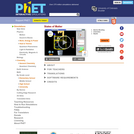
Watch different types of molecules form a solid, liquid, or gas. Add …
Watch different types of molecules form a solid, liquid, or gas. Add or remove heat and watch the phase change. Change the temperature or volume of a container and see a pressure-temperature diagram respond in real time. Relate the interaction potential to the forces between molecules.
All cells, organs and tissues of a living organism are built of …
All cells, organs and tissues of a living organism are built of molecules. Some of them are small, made from only a few atoms. There is, however, a special class of molecules that make up and play critical roles in living cells. These molecules can consist of many thousands to millions of atoms. They are referred to as macromolecules (or large biomolecules).
No restrictions on your remixing, redistributing, or making derivative works. Give credit to the author, as required.
Your remixing, redistributing, or making derivatives works comes with some restrictions, including how it is shared.
Your redistributing comes with some restrictions. Do not remix or make derivative works.
Most restrictive license type. Prohibits most uses, sharing, and any changes.
Copyrighted materials, available under Fair Use and the TEACH Act for US-based educators, or other custom arrangements. Go to the resource provider to see their individual restrictions.