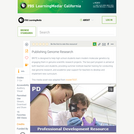
In this activity, students are assigned different alleles of the gene for …
In this activity, students are assigned different alleles of the gene for phenylalanine hydroxylase to research using OMIM (Online Mendelian Inheritance in Man). They are then asked to both explain and illustrate how this mutation may cause the disease phenylketonuria (PKU).
Short Description: Goal: To practice, develop, and share protocols to go from …
Short Description: Goal: To practice, develop, and share protocols to go from sample to data insights with nanopore sequencing.
Long Description: As part of the NIH-funded IPERT MBLEM program at NC State, we are offering our first Enhanced Summer Workshops on Nanopore Sequencing for ten undergraduate students. This two-week residential experience is for undergraduates interested in learning laboratory and bioinformatics skills focusing on the long-read sequencing technologies developed by Oxford Nanopore Technologies. Nanopore offers direct single-molecule sequencing through the use of engineered pores. Changes in current are interpreted by software to determine the genetic sequences. The technology is portable (often hand-held!), accessible to numerous labs and institutions, and quickly expanding. PORES: Promoting Open Research Experiences with (long-read) Sequencing. The PORES logo was created with BioRender.com.
Word Count: 3867
(Note: This resource's metadata has been created automatically by reformatting and/or combining the information that the author initially provided as part of a bulk import process.)
Watch how NJ high school students apply basic principles of molecular biology …
Watch how NJ high school students apply basic principles of molecular biology to solve real research problems, and publish their own genome research at GenBank, the international genomic sequence database.
Students are given a figure from a journal article of a northern …
Students are given a figure from a journal article of a northern blot, and are asked to interpret the results, demonstrating an understanding of both the northern blot technique and RNA processing in eukaryotic cells.
By examining the progress of a genetic eye disease, students learn about …
By examining the progress of a genetic eye disease, students learn about eyes, genetic disorders, and neurons in this case designed for clickers and large lecture sections.
The Software Tools for Academics and Researchers (STAR) program at MIT seeks …
The Software Tools for Academics and Researchers (STAR) program at MIT seeks to bridge the divide between scientific research and the classroom. Understanding and applying research methods in the classroom setting can be challenging due to time constraints and the need for advanced equipment and facilities. The multidisciplinary STAR team collaborates with faculty from MIT and other educational institutions to design software exploring core scientific research concepts. The goal of STAR is to develop innovative and intuitive teaching tools for classroom use. All of the STAR educational tools are freely available. To complement the educational software, the STAR website contains curriculum components/modules which can facilitate the use of STAR educational tools in a variety of educational settings. Students, teachers, and professors should feel welcome to download software and curriculum modules for their own use. Online Publication
An interactive lecture that uses flash animations showing the researcher and their …
An interactive lecture that uses flash animations showing the researcher and their experiments that were used to develop the basic concepts in Mendelian genetics. Includes multiple choice questions students can answer in class.
Did you know that we have approximately 2 meters of DNA packed …
Did you know that we have approximately 2 meters of DNA packed in our cells, which are less than 10 μm diameter? Or that to replicate DNA it is copied at a rate of 70,000 basepairs per second by a cellular apparatus that coordinates at least six different enzymes? Or that microtubules form greater than 1 meter long “railways” upon which molecular machines transport cargo within nerve cells? In this course, we will explore how single-molecule imaging techniques capture the mega-cellular machines working in real-time. This course is one of many Advanced Undergraduate Seminars offered by the Biology Department at MIT. These seminars are tailored for students with an interest in using primary research literature to discuss and learn about current biological research in a highly interactive setting. Many instructors of the Advanced Undergraduate Seminars are postdoctoral scientists with a strong interest in teaching.
Our brains are remarkably adaptable throughout our lives. Individual brain cells called …
Our brains are remarkably adaptable throughout our lives. Individual brain cells called neurons form synapses, sites of physical connection and communication between neurons, and then repeatedly rewire those connections in response to new experiences or to neuronal cell death caused by injury, disease, or aging. In this course, we will explore how neurons establish their synapses in the healthy brain during childhood and later in life, and how this process goes awry in disease states. More specifically, we will discuss how the brain forms its synapses early in life, stabilizes a subset of those synapses for long-term maintenance, and continues to add and remove synapses throughout life. We will then explore synapse dysfunction in diseases such as autism and Alzheimer’s disease, which involve abnormal increases or losses of synaptic connections, respectively. We will also consider synapse remodeling, a process of adding and removing synaptic connections to optimize our brain network, in the context of neuroinflammation, recovery from traumatic brain injury, and psychological trauma following prolonged stress. This course is one of many Advanced Undergraduate Seminars offered by the Biology Department at MIT. These seminars are tailored for students with an interest in using primary research literature to discuss and learn about current biological research in a highly interactive setting. Many instructors of the Advanced Undergraduate Seminars are postdoctoral scientists with a strong interest in teaching.
This module introduces students to the basics behind translation of a messenger …
This module introduces students to the basics behind translation of a messenger RNA sequence into protein. In addition to text and movies, there are interactive shockwave animations that allow students to move ribosomes and tRNAs to perform translation.
All cells, organs and tissues of a living organism are built of …
All cells, organs and tissues of a living organism are built of molecules. Some of them are small, made from only a few atoms. There is, however, a special class of molecules that make up and play critical roles in living cells. These molecules can consist of many thousands to millions of atoms. They are referred to as macromolecules (or large biomolecules).
This course will cover the many ways in which we have realized …
This course will cover the many ways in which we have realized evolution in the laboratory toward functional biomolecules, such as protein and nucleic-acid-based therapeutics, enzymes that catalyze production of synthetic drugs, and carbon-dioxide capture molecules to lessen the impact of climate change. Students will both become familiar with the field of directed molecular evolution and learn how to critically analyze primary research papers, design research experiments, and present data relating to molecular biology and evolution. The importance of directed evolution in biomedical and biotechnological careers, both academic and industrial, will be highlighted. This course is one of many Advanced Undergraduate Seminars offered by the Biology Department at MIT. These seminars are tailored for students with an interest in using primary research literature to discuss and learn about current biological research in a highly interactive setting. Many instructors of the Advanced Undergraduate Seminars are postdoctoral scientists with a strong interest in teaching.
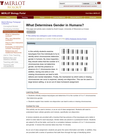
In this activity students examine karyotypes from five individuals to try to …
In this activity students examine karyotypes from five individuals to try to identify which chromosomes determine gender in humans. This activity is also a good illustration of meiotic non-disjunction.
This lesson guides students to examine the potential benefits, risks, and ethical …
This lesson guides students to examine the potential benefits, risks, and ethical concerns of designer drugs. Students begin by reading an article titled Ethical Issues in Pharmacogenetics by Carol Isaacson Barash, an ActionBioscience.org original article. Next they will read information on the National Human Genome Research Institute on Pharmacogenetics: Frequently Asked Questions about Pharmacogenomics. Instructors can then use the lesson to guide students through shorter activities and/or one main activity. The smaller activities involve students in describing the research behind the issue, making it accessible to a less-informed audience, and in exploring the ethical issues outlined in the article to support various points of view. The larger activity is for upper level students to gather evidence to support particular perspectives so that they can present different views about the ownership of human DNA information.
This resource is a video abstract of a research paper created by …
This resource is a video abstract of a research paper created by Research Square on behalf of its authors. It provides a synopsis that's easy to understand, and can be used to introduce the topics it covers to students, researchers, and the general public. The video's transcript is also provided in full, with a portion provided below for preview:
"In nerve cells, the waxy molecule ceramide plays roles in both cellular differentiation and death, but a new study shows those roles could vary based on how ceramide is formed. Ceramide is generated via 3 pathways: newly from palmitoyl-CoA and serine, from the breakdown of sphingomyelin, and through the endosomal salvage pathway. Experiments showed that blocking ceramide synthesis did not alter ceramide levels in PC12 cells, which require nerve growth factor (NGF) to survive and differentiate, but blocking synthesis did decrease ceramide levels in TrkA cells, which differentiate spontaneously. Blocking sphingomyelin breakdown, however, inhibited differentiation and reduced ceramide in both cell lines. Without NGF, PC12 cells begin to atrophy and die, and preventing sphingomyelin breakdown did not protect them, but it did suppress rising ceramide levels to some degree versus controls..."
The rest of the transcript, along with a link to the research itself, is available on the resource itself.
No restrictions on your remixing, redistributing, or making derivative works. Give credit to the author, as required.
Your remixing, redistributing, or making derivatives works comes with some restrictions, including how it is shared.
Your redistributing comes with some restrictions. Do not remix or make derivative works.
Most restrictive license type. Prohibits most uses, sharing, and any changes.
Copyrighted materials, available under Fair Use and the TEACH Act for US-based educators, or other custom arrangements. Go to the resource provider to see their individual restrictions.