This course introduces scholarly debates about the sociocultural practices through which individuals …
This course introduces scholarly debates about the sociocultural practices through which individuals and societies create, sustain, recall, and erase memories. Emphasis is given to the history of knowledge, construction of memory, the role of authorities in shaping memory, and how societies decide on whose versions of memory are more "truthful" and "real." Other topics include how memory works in the human brain, memory and trauma, amnesia, memory practices in the sciences, false memory, sites of memory, and the commodification of memory. Students taking the graduate version complete additional assignments.
The grade level is 6.4 according to the Flesch-Kincaid readability analysis. Editorial …
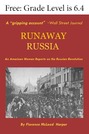
The grade level is 6.4 according to the Flesch-Kincaid readability analysis.
Editorial Review A “Gripping Account” —The Wall Street Journal
Florence Harper was the first American female journalist in Petrograd. Sure that trouble was coming, she waited “as I would for a circus parade.” From the women’s bread protests of the heady first days when the mob seemed “good-natured” to the later horror of the “Marseillaise”-singing crowds being mowed down by machine guns, she remained undaunted, repeatedly returning to the streets despite the dangers she courted daily. She searched the morgues so that she could do a story on the victims. ‘‘I did not wait to count the coffins. It was too harrowing,” she reports. She did watch the hated police being thrown off roofs and also ran the gantlet of the mutinous Kronstadt sailors, who she recalls “all looked like cutthroats.” Allied officers at her hotel smashed the contents of its cellars till they were “literally knee deep in everything from champagne to vodka” to prevent the mob from getting at them. The stoicism and sympathy with which she endured it all shine forth from this gripping account. Helen Rappaport, The Wall Street Journal, January 28, 2017
his kit helps decode the messages of political posters created by Soviet …
his kit helps decode the messages of political posters created by Soviet regimes from Lenin and Stalin through Brezhnev and Gorbachev. Teachers lead students through the interactive process of applying their historical knowledge to the analysis of these documents using background and additional information and carefully selected probe questions. Students will learn core information and vocabulary about the history of the USSR, political and historical perspectives as communicated through visual media, visual literacy and media literacy skills, especially the ability to identify bias in art and propaganda.
This course explores the political and historical evolution of the Soviet state …
This course explores the political and historical evolution of the Soviet state and society from the 1917 Revolution to the present. It covers the creation of a revolutionary regime, causes and nature of the Stalin revolution, post-Stalinist efforts to achieve political and social reform, and causes of the Soviet collapse. It also examines current developments in Russia in light of Soviet history.
This seminar examines a number of famous trials in European and American …
This seminar examines a number of famous trials in European and American history. It considers the salient issues (political, social, cultural) of several trials, the ways in which each trial was constructed and covered in public discussions at the time, the ways in which legal reasoning and storytelling interacted in each trial and in the later retellings of the trial, and the ways in which trials serve as both spectacle and a forum for moral and political reasoning. Students have an opportunity to study one trial in depth and present their findings to the class.
No restrictions on your remixing, redistributing, or making derivative works. Give credit to the author, as required.
Your remixing, redistributing, or making derivatives works comes with some restrictions, including how it is shared.
Your redistributing comes with some restrictions. Do not remix or make derivative works.
Most restrictive license type. Prohibits most uses, sharing, and any changes.
Copyrighted materials, available under Fair Use and the TEACH Act for US-based educators, or other custom arrangements. Go to the resource provider to see their individual restrictions.