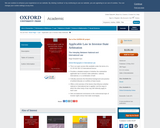
The emergence of the Internet and the digital world has changed the way people access produce and share information and knowledge Yet people in Africa face challenges in accessing scholarly publications journals and learning materials in general At the heart of these challenges and solutions to them is copyright the branch of intellectual property rights that covers written and related works This book gives the reader an understanding of the legal and practical issues posed by copyright for access to learning materials in Africa and identifies the relevant lesson best policies and best practices that would broaden and deepen this access This book is based on the work of the African Copyright and Access to Knowledge ACA2K research network launched in late 2007 as a network of researchers committed to probing the relationship between copyright and learning materials access in eight African countries Egypt Ghana Kenya Morocco Mozambique Senegal South Africa and Uganda
"The American Jury: Bulwark of Democracy" is a project of the Constitutional Rights Foundation Chicago and is the national expansion of "The American Jury: Past and Present," conducted in Illinois during 1998-1999. Beginning with a two-week institute in July 1999, "The American Jury" focused on the jury system in the United States. its role in American legal, social, and political life; its origins and history; its adaptations to changes in law and American society; its strengths and limitations; and its function as a mediating institution between the people and their government. Participating teachers field-tested in their classrooms both materials from the institute and lessons they developed from their own research. Participants also presented information from the project at local, state, regional, and national staff development conferences.
This course will acquaint the student with some of the ancient Greek contributions to the Western philosophical and scientific tradition. We will examine a broad range of central philosophical themes concerning: nature, law, justice, knowledge, virtue, happiness, and death. There will be a strong emphasis on analyses of arguments found in the texts.
Mr. Rens is the Legal Lead for Creative Commons South Africa, and currently resides in San Francisco where he works on issues around access to knowledge, collaborative creative works and the Digital Divide.
Agha Ibrahim Akram was a lieutenant general who served in the Pakistan Army during the 1965 and 1971 wars with India. In this video segment, Akram recalls 1974 as the watershed year when India detonated a nuclear explosive and took one step toward becoming a nuclear power in hopes of enhancing its global status. That moment also coincided with skyrocketing oil prices, which stiffened Pakistan's resolve to develop nuclear energy for electricity and, if need be, weapons. The interview Akram conducted for War and Peace in the Nuclear Age: 'The Haves and Have-Nots' concentrates on the history of tension and conflict between Pakistan and India. He reviews the three wars: the devastating bloodshed that followed partition in 1947, the pride he felt in 1965 as chief of staff of an infantry division along the West Pakistan border, and his bitterness toward India over the Bangladesh war in 1971. Despite the persistence of tension between Pakistan and India, Akram recognizes circumstances in which their perspectives and geopolitical positions meet. For instance, he fully supports India's critique of the Nuclear Non-Proliferation Treaty: that the major nuclear powers only selectively enforce and adhere to its provisions. He wishes that South Asia could be a nuclear-weapons-free zone but is willing to settle for India and Pakistan's interdependence: 'The two countries are the protagonists of South Asia. We'll actually cross the threshold together or not cross it at all.'
Subject:
Humanities, Science and Technology, Social Sciences
From 1969 to 1973, Paul Nitze served as a member of the U.S. delegation to the Strategic Arms Limitations Talks (SALT). In this video segment, Nitze describes the useful role that 'back channel' negotiations can play and discusses the particular problems with national security adviser Henry Kissinger's negotiations in the final days of SALT I. The second part of the segment addresses Watergate's impact on Nitze's participation in SALT II.Nitze's interview conducted for War and Peace in the Nuclear Age: 'One Step Forward' focuses on SALT I and SALT II. He recounts how he became part of the SALT I delegation, the key issues within the negotiating process, and the initial position statements he drafted for the Soviet delegation. Increasingly critical of U.S. arms policy, Nitze re-formed the Committee on Present Danger, which argued for a massive military buildup of U.S. forces in the post-Vietnam period. He spends considerable time in his interview going over the then-persistent threat of Soviet expansionism. Nitze explains his objection to President Jimmy Carter's nomination of Paul Warnke as his chief arms negotiator. He also explains his opposition to the SALT II Treaty, which he saw as codifying Soviet superiority in missile megatonnage and throw-weight.
The Berkman Center is a research program founded to explore cyberspace, share in its study, and help pioneer its development. We represent a network of faculty, students, fellows, entrepreneurs, lawyers, and virtual architects working to identify and engage with the challenges and opportunities of cyberspace.
We investigate the real and possible boundaries in cyberspace between open and closed systems of code, of commerce, of governance, and of education, and the relationship of law to each. We do this through active rather than passive research, believing that the best way to understand cyberspace is to actually build out into it.
Carmen Fields reports that the Ballot Commission must determine whether several dozen signatures included in the nominating papers of Bill Owens (candidate for State Senate) are valid. Fields notes that if the signatures are invalidated, Owens' name will not appear on the primary ballot for the second Suffolk County seat, the only district ever to be held by an African American. Fields interviews Owens about his nomination papers and about the race. Fields' report includes footage of Owens at a hearing of the Ballot Commission. Fields reports that the name of Owens's main rival for the seat, Royal Bolling, Sr. (State Senator) will not appear on the ballot, because Bolling did not file nominating papers on time. Fields interviews Bolling, Sr. about his failure to file nomination papers on time. Fields notes the ongoing political competition between the Owens and Bolling families. She adds that both candidates deny that the rivalry between the families is serious. Fields' report includes footage of Owens and Bolling, Sr. at a campaign debate in 1986 and footage of Bolling, Sr. at a legislative hearing. Fields' report also includes footage of Shirley Owens Hicks (sister of Bill Owens) at a Boston School Committee meeting and footage of Royal Bolling, Jr. at a press conference with Byron Rushing (State Representative) and Andrew Jones (community activist). This edition of the Ten O'Clock News also included the following item: Hope Kelly interviews Barbara Arnwine about housing desegregation in Boston. Barbara Arnwine
In this lesson, students will examine a copy of twelve possible amendments to the United States Constitution as originally sent to the states for their ratification in September of 1789. Students will debate and vote on which of these amendments they would ratify and compare their resulting “Bill of Rights” to the ten amendments ratified by ten states that have since been known by this name.
Feelings of exclusion from the political process in the African American Community. Program analyzes why African American candidates were unable to win appointment to either Boston's School Committee or City Council in the 1975 elections. Guest host James Rowe of WILD Radio News speaks with Clarence Dilday (attorney and unsuccessful candidate for City Council), John O'Bryant (Director of the Dimock Community Health Center and unsuccessful candidate for School Committee), Richard Taylor (John O'Bryant's campaign manager), and Luix Overbea (reporter for the Christian Science Monitor) about why African Americans in Boston were unable to elect Dilday and O'Bryant, what the election says about the African American community's commitment to getting people in office, if election results would have been better if it had been an 'off' year election, if an organization for raising funds to support African American candidates is in the making, and what African Americans can do to heighten their political sophistication. Additional segments include a survey of Boston's voting statistics for 1969, 1971 and 1975, an interview conducted by writer/researcher Dighton Spooner with Dr. Ronald Walters (Associate Professor of Political Science at Howard University) about African Americans and the 1976 presidential election, 'Information' on registering to vote, 'Access' (on the Roxbury-Dorchester JCs), and the 'Community Calendar.' Produced by Marita Muhammad Rivero. Directed by Conrad White.
Law, in its simplest form, is used to protect one party from another. For instance, laws protect customers from being exploited by companies. Laws protect companies from other companies. Laws even protect citizens and corporations from the government. However, law is neither perfect nor all encompassing. This course will introduce the student to the laws and ethical standards that managers must abide by in the course of conducting business. Laws and ethics almost always shape a company's decision-making process; a bank cannot charge any interest rate it wants to charge that rate must be appropriate. By the end of this course, the student will have a clear understanding of the legal and ethical environment in which businesses operate. Upon successful completion of this course, the student will be able to: Identify sources of law in the United States; Describe the function and role of courts in the US legal system; Differentiate litigation from methods of alternative dispute resolution; List the elements of the major torts; List the essential elements of a valid contract; Describe how a contract can fail; Summarize the remedies available for breach of contract; Distinguish between real and personal property; Identify the various interests in real property and how they pass; Identify the requirements to hold various rights under intellectual property laws; Analyze the impact of the digital era on intellectual property rights; Distinguish between at-will employment and contractual employment; Identify laws that generally regulate the employer-employee relationship; Identify criminal acts related to the business world; Define white collar crime; Describe the various forms of business organization; Identify the major laws regulating business in the United States; Identify major ethical concerns in business today. (Business Administration 205)
Dr. Randall Forsberg is executive director of the Institute for Defense and Disarmament Studies, a think tank she founded in 1980 with the aim of reducing the risk of war and minimizing the burden of U.S. military spending. In this video segment, she describes the reach of grassroots activism at the height of 1982's national Nuclear Weapons Freeze Campaign, which called for a bilateral, verifiable halt to new production of nuclear weapons. In the interview she conducted for War and Peace in the Nuclear Age: 'Visions of War and Peace,' Forsberg describes the genesis of the movement, which was born from the failure of Strategic Arms Limitation Talks (SALT) II and from public awareness of the development of a new generation of war-fighting systems. Forsberg traces the town-by-town growth of the anti-nuclear petition, which began in 1980 with the four-page document 'Call to Halt the Nuclear Arms Race,' and the referendum process that fanned out across the nation but remained largely ignored by the national media. Forsberg details the negative reaction by President Ronald Reagan's administration and the ensuing support on Capitol Hill, which passed a freeze resolution. This was followed just weeks later by congressional approval of the MX missile by an equally large margin-a vote that Forsberg says 'tore up the movement.' Soon afterward, President Reagan suddenly announced the Strategic Defense Initiative-a program that Forsberg critiques at the end of her interview-and he agreed to negotiate with the Soviet Union, which was a key goal of 'Call to Halt the Nuclear Arms Race.' The lasting impact of the nuclear-freeze movement, says Forsberg, has been a shift away from public protest and toward grassroots, long-term education. She concludes that this new 'institutionalized peace movement' will re-emerge more informed and cohesive than the last, with the determination to change 'the direction of the permanent peacetime policy of the United States.'
David Boeri reports that the state of Massachusetts has lost a seat in the US House of Representatives because of a decline in the population according to the 1990 census. Boeri notes that Ray Flynn (Mayor of Boston ) and others are calling for a recount because they believe that the census undercounts urban residents. Boeri's report is accompanied by footage of census workers going from door to door. Boeri reports on speculation that Joe Early (US Congressman) may retire and on speculation that a redistricting plan would force congressmen Chester Atkins and Barney Frank to run against one another. Boeri's report is accompanied by a photo of Early and by footage of Atkins and Frank. Boeri reports that William Weld (governor of Massachusetts) has proposed a redistricting plan under which the city of Boston is represented by one congressman. Boeri's report includes footage from an interview with Peter Forman (state representative). Forman says that suburban areas are unfairly represented and that the city of Boston would represent a 'minority seat.' Boeri interviews Jim Brett (state represtentative). Brett discusses options for possible redistricting plans. Boeri's report is accompanied by footage of Weld. Boeri reports that the proposal to limit Boston to one Congressional seat will probably fail.
General Pierre-Marie Gallois, often regarded as the 'father' of the French nuclear strategy, served with the Supreme Headquarters Allied Powers Europe (SHAPE) and with French president Charles de Gaulle. In this video segment, Gallois provides a perspective that was shared by many Europeans, including General de Gaulle: that to replace the strategy of 'massive retaliation' with 'flexible response' meant a weakening of the United States' commitment to defend Europe with nuclear weapons. In his interview conducted for War and Peace in the Nuclear Age: 'The Education of Robert McNamara,' Gallois expands upon tensions within French-American relations in the critical post-war period. He also discusses the dynamics among European nations as they faced economic reconstruction, Soviet forces, and the prospect of Germany's rearmament. Gallois recounts his late-night conversations with French prime minister Guy Mollet and with General de Gaulle, when, as a young member of the planning group at SHAPE, he presented his case for France developing its own atomic bomb. At various points he explores the origins of the North Atlantic Treaty Organization (NATO) and SHAPE, shares why the U.S.-proposed Multilateral Force was nicknamed the Multilateral Farce, and explains his support for limited nuclear proliferation in order to keep the peace.
In 1998, UNICEF thought of a creative way to help educate the world about children’s rights. UNICEF asked directors around the world to make a 30-second animated film illustrating one of the rights spelled out in the Convention of the Rights of the Child. Since then, over 70 studios in 32 countries have created cartoons for this project. The cartoons have been shown on television to over 1 billion people worldwide and are still on TV today in many countries. Click on these images to watch a cartoon version of the articles of the CRC.
The goal of this WebQuest is to answer one big question: What should be done about child soldiers? While students grapple with this question, they will be asked to make the connection between their own lives and the lives of child soldiers. In addition, they will approach this issue from different perspectives within a given society and to make recommendations on what should be done to resolve it. A WebQuest is an inquiry-based activity in which most of the information that students use to complete a task comes from resources on the Internet. Students analyze information, transform it in some way, and then demonstrate knowledge of the material by creating something to which others can respond.
This document is a code of best practices that helps educators using media literacy concepts and techniques to interpret the copyright doctrine of fair use. Fair use is the right to use copyrighted material without permission or payment under some circumstances—especially when the cultural or social benefits of the use are predominant. It is a general right that applies even in situations where the law provides no specific authorization for the use in question—as it does for certain narrowly defined classroom activities.
This guide identifies five principles that represent the media literacy education community’s current consensus about acceptable practices for the fair use of copyrighted materials, wherever and however it occurs: in K–12 education, in higher education, in nonprofit organizations that offer programs for children and youth, and in adult education.
Subject:
Arts, Business, Humanities, Mathematics and Statistics, Science and Technology, Social Sciences
This document is a code of best practices that helps creators, online providers, copyright holders, and others interested in the making of online video interpret the copyright doctrine of fair use. Fair use is the right to use copyrighted material without permission or payment under some circumstances.
Subject:
Arts, Business, Humanities, Mathematics and Statistics, Science and Technology, Social Sciences
No restrictions on your remixing, redistributing, or making derivative works.
Give credit to the author, as required.
Your remixing, redistributing, or making derivatives works comes with some
restrictions, including how it is shared.
Your redistributing comes with some restrictions. Do not remix or make
derivative works.
Copyrighted materials, available under Fair Use and the TEACH Act for US-based
educators, or other custom arrangements. Go to the resource provider to see
their individual restrictions.