This resource is a video abstract of a research paper created by …
This resource is a video abstract of a research paper created by Research Square on behalf of its authors. It provides a synopsis that's easy to understand, and can be used to introduce the topics it covers to students, researchers, and the general public. The video's transcript is also provided in full, with a portion provided below for preview:
"Since 1991, the international Banff Classification has been revisited every 2 years to integrate advances in clinical research into best-treatment practices for organ transplantation. At the 2017 Banff conference, 479 delegates from 23 countries reviewed two seminal concerns in the kidney-transplant field: how T cell-mediated rejection is related to inflammation in areas of interstitial fibrosis and tubular atrophy, and the evolution of molecular diagnostics, particularly for identifying antibody-mediated rejection. These discussions prompted significant updates to the Banff scheme. The relationship between i-IFTA severity and graft survival has been well established. Despite this, i-IFTA has previously been excluded as a diagnostic criterion of TCMR. Recent findings, however, suggest that inflammation in IFTA can be a manifestation of chronic active TCMR, particularly when other features of T cell-mediated alloimmunity, such as tubulitis, are present..."
The rest of the transcript, along with a link to the research itself, is available on the resource itself.
This resource is a video abstract of a research paper created by …
This resource is a video abstract of a research paper created by Research Square on behalf of its authors. It provides a synopsis that's easy to understand, and can be used to introduce the topics it covers to students, researchers, and the general public. The video's transcript is also provided in full, with a portion provided below for preview:
"The gut microbiome interacts intimately with its human host, both in health and in disease. A recent study examined how different states of the gut microbiome might be linked to varying degrees of disease in rats. Researchers exposed rats to different concentrations of dextran sodium sulfate (DSS), a polysaccharide known to induce human-like colitis. The effects on the intestinal microbiome over time were tracked by gene profiling. The results provide some of the first experimental evidence of “alternative states” in the rat intestinal ecosystem. These are distinct microbial profiles related to markers of disease. Importantly, these alternative states were found to be tied to both the host and microbiome, rather than one or the other. That led to a conceptual model of how host inflammatory status and microbiome status interact and how the whole ecosystem may slip into and out of different states of disease..."
The rest of the transcript, along with a link to the research itself, is available on the resource itself.
This resource is a video abstract of a research paper created by …
This resource is a video abstract of a research paper created by Research Square on behalf of its authors. It provides a synopsis that's easy to understand, and can be used to introduce the topics it covers to students, researchers, and the general public. The video's transcript is also provided in full, with a portion provided below for preview:
"Human gut microbes are critical for maintaining the integrity of the GI tract, immune system homeostasis, and host energy metabolism. Alterations in this network can have health consequences, including inflammatory bowel disease (IBD). Antibiotic treatment compromises the composition of the gut microbiome, affecting microbial function and resulting in long-lasting detrimental effects on the host. A recent study examined how different antibiotics affect the ability of gut microbes to control intestinal inflammation. Researchers treated mice with antibiotics prior to fecal microbiota transplantation. They found that antibiotic pre-treatment significantly altered the ability of the microbiota to control intestinal inflammation. Streptomycin- and vancomycin-treated microbes failed to control inflammation, and pathobionts associated with IBD thrived. In contrast, microbes treated with metronidazole were able to control inflammation, and beneficial microbial species were enriched..."
The rest of the transcript, along with a link to the research itself, is available on the resource itself.
This resource is a video abstract of a research paper created by …
This resource is a video abstract of a research paper created by Research Square on behalf of its authors. It provides a synopsis that's easy to understand, and can be used to introduce the topics it covers to students, researchers, and the general public. The video's transcript is also provided in full, with a portion provided below for preview:
"Crohn’s disease is an incredibly painful inflammatory bowel disease that frequently reoccurs after treatment. The growth of a certain type of abdominal fat has been associated with Crohn's disease recurrence. This fat, called mesenteric adipose tissue, is tucked up against the membrane connecting the intestines to the abdominal wall. Microbes can escape the intestines in Crohn's disease and may affect the mesenteric fat. Recently, researchers explored this relationship by investigating the mesenteric microbiome of patients with Crohn’s disease. Crohn’s disease patients had distinct mesenteric microbiomes, host gene expression patterns, and metabolites compared to controls. To explore the specifics, the researchers isolated bacterial strains from the mesenteric microbiome of these patients. In a mouse model of colitis, introducing a mixture of five of the isolated bacterial strains made disease symptoms worse. One of these strains, _A..."
The rest of the transcript, along with a link to the research itself, is available on the resource itself.
This course illustrates how knowledge and principles of biology, biochemistry, and engineering …
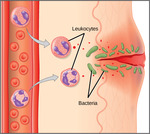
This course illustrates how knowledge and principles of biology, biochemistry, and engineering are integrated to create new products for societal benefit. It uses a case study format to examine recently developed products of pharmaceutical and biotechnology industries: how a product evolves from initial idea, through patents, testing, evaluation, production, and marketing. Emphasizes scientific and engineering principles; the responsibility scientists, engineers, and business executives have for the consequences of their technology; and instruction and practice in written and oral communication. The topic focus of this class will vary from year to year. This version looks at inflammation underlying many diseases, specifically its role in cancer, diabetes, and cardiovascular disease.
Biology is designed for multi-semester biology courses for science majors. It is …
Biology is designed for multi-semester biology courses for science majors. It is grounded on an evolutionary basis and includes exciting features that highlight careers in the biological sciences and everyday applications of the concepts at hand. To meet the needs of today’s instructors and students, some content has been strategically condensed while maintaining the overall scope and coverage of traditional texts for this course. Instructors can customize the book, adapting it to the approach that works best in their classroom. Biology also includes an innovative art program that incorporates critical thinking and clicker questions to help students understand—and apply—key concepts.
By the end of this section, you will be able to:Describe physical …
By the end of this section, you will be able to:Describe physical and chemical immune barriersExplain immediate and induced innate immune responsesDiscuss natural killer cellsDescribe major histocompatibility class I moleculesSummarize how the proteins in a complement system function to destroy extracellular pathogens
This resource is a video abstract of a research paper created by …
This resource is a video abstract of a research paper created by Research Square on behalf of its authors. It provides a synopsis that's easy to understand, and can be used to introduce the topics it covers to students, researchers, and the general public. The video's transcript is also provided in full, with a portion provided below for preview:
"Membrane-enclosed extracellular vesicles, exosomes, are a critical part of intercellular communication in many biological systems. However, the regulation and biological implications of exosome excretion and uptake remain unclear. A recent study examined the role of cellular retinoic acid (RA) binding protein (Crabp1) in exosome secretion and its relationship to receptor interacting protein 140 (RIP140), a pro-inflammatory transcription co-regulator. Crabp1 knockout mice consistently showed deficits in negative control of exosome secretion and exhibited increased vulnerability to systemic inflammation. Crabp1 knockout mice had significantly elevated RIP140-containing exosomes in their blood and cerebrospinal fluid. Cell culture experiments suggested that exosome secretion can transfer RIP140 from neurons to macrophages, where it promotes macrophage inflammatory polarization..."
The rest of the transcript, along with a link to the research itself, is available on the resource itself.
This resource is a video abstract of a research paper created by …
This resource is a video abstract of a research paper created by Research Square on behalf of its authors. It provides a synopsis that's easy to understand, and can be used to introduce the topics it covers to students, researchers, and the general public. The video's transcript is also provided in full, with a portion provided below for preview:
"Many chronic diseases lead to organ fibrosis due to repeated tissue damage and repair cycles. Fibrosis stiffens the organs and causes inflammation that worsens disease, so new ways to diagnose and mitigate organ fibrosis are urgently needed. Circular RNAs (circRNAs) alter protein levels by binding to microRNAs and causing them to degrade. They also regulate transcription, interact with proteins, and even encode proteins themselves, as well as mediating crosstalk among organs as cargo in exosomes. Different circRNAs have a variety of roles in organ fibrosis, and exosomal circRNAs are potentially useful biomarkers and therapeutic targets. Aberrant circRNA expression is involved in fibrotic diseases including cardiac, liver, pulmonary, renal, and skin fibrosis. Although finding precise circRNA targets and developing treatments will require additional research, interfering with these circRNAs and delivering synthetic circRNAs is a promising strategy to reduce organ fibrosis in the future..."
The rest of the transcript, along with a link to the research itself, is available on the resource itself.
This resource is a video abstract of a research paper created by …
This resource is a video abstract of a research paper created by Research Square on behalf of its authors. It provides a synopsis that's easy to understand, and can be used to introduce the topics it covers to students, researchers, and the general public. The video's transcript is also provided in full, with a portion provided below for preview:
"A recent case study reports the apparent benefits of classical homeopathy for people with varying severities of psoriasis. Their conclusion: a more holistic approach that goes beyond skin clearance might be one solution for certain sufferers of the disease. Psoriasis is a chronic inflammatory disease affecting more than 125 million people worldwide. In addition to its effect on the skin, psoriasis can take a psychological toll due to its appearance. And if tied to systemic inflammation, it can even cause serious morbidity or death. Modern treatment options for psoriasis, such as the use of biologics, are designed to block the inflammatory factors that give rise to disease symptoms. While generally effective, these agents can actually weaken a patient’s immune system, making their prolonged use risky. That has many researchers exploring alternative routes for treatment that go beyond clear skin to achieve a better quality of life..."
The rest of the transcript, along with a link to the research itself, is available on the resource itself.
This resource is a video abstract of a research paper created by …
This resource is a video abstract of a research paper created by Research Square on behalf of its authors. It provides a synopsis that's easy to understand, and can be used to introduce the topics it covers to students, researchers, and the general public. The video's transcript is also provided in full, with a portion provided below for preview:
"Adherent-invasive E. coli, or AIEC, are bacteria that are abnormally abundant in the gut of individuals with Crohn’s disease, a chronic inflammatory disease that affects the lining of the gastrointestinal tract. To determine whether targeting AIEC could help relieve symptoms of Crohn’s disease, researchers recently explored the possibility of simply making these bacteria less sticky. The team applied a compound known as TAK-018 to gut samples gathered from patients. TAK-018 binds to the bacterial adhesin FimH, blocking bacteria clinging and interaction with cells along the intestinal wall. Tests revealed that TAK-018 not only prevented AIEC bacteria from adhering to intestinal tissue but also reduced inflammation, helping preserve the integrity of this important barrier. While more work is needed to understand how TAK-018 operates in the body, the drug is known to be safe and well-tolerated in patients and is currently undergoing phase II testing for the treatment of Crohn’s disease..."
The rest of the transcript, along with a link to the research itself, is available on the resource itself.
Students demonstrate the erythrocyte sedimentation rate test (ESR test) using a blood …
Students demonstrate the erythrocyte sedimentation rate test (ESR test) using a blood model composed of tomato juice, petroleum jelly and olive oil. They simulate different disease conditions, including rheumatoid arthritis, anemia, leukocytosis and sickle-cell anemia, by making appropriate variations in the particle as well as in the fluid matrix. Students measure the ESR for each sample blood model, correlate the ESR values with disease conditions and confirm that diseases alter blood composition and properties. During the activity, students learn that when non-coagulated blood is let to stand in a tube, the red blood cells separate and fall to the bottom of the tube, resulting in a sediment and a clear liquid called serum. The height in millimeters of the clear liquid on top of the sediment in a time period of one hour is taken as the sedimentation rate. If a disease is present, this ESR value deviates from the normal, disease-free value. Different diseases cause different ESR values because blood composition and properties, such as density and viscosity, are altered differently by different diseases. Thus, the ESR test serves as a real-world diagnostic screening test to identify indications of the presence of any diseases in people.
This resource is a video abstract of a research paper created by …
This resource is a video abstract of a research paper created by Research Square on behalf of its authors. It provides a synopsis that's easy to understand, and can be used to introduce the topics it covers to students, researchers, and the general public. The video's transcript is also provided in full, with a portion provided below for preview:
"What we eat can affect the body’s immune response, and in extreme cases, food intolerance, diabetes, or inflammatory diseases can occur. Metabolites found in dairy products or fermented food are sensed by two receptor proteins involved in immune function. One of these proteins, HCA₃, has an anti-inflammatory effect, while the other, GPR84, activates the immune response. Unfortunately, the mechanism underlying these different processes is unclear. A recent study investigated whether differences in the proteins’ signaling kinetics and trafficking could explain their different effects. Using a label-free technique based on dynamic mass redistribution inside the cell, they found that the receptors HCA₃ and GPR84 had distinct signaling kinetics upon activation with different metabolites. Signaling was affected by the receptors’ localization, which depends on proteins such as dynamin-2 and β-arrestin-2..."
The rest of the transcript, along with a link to the research itself, is available on the resource itself.
This resource is a video abstract of a research paper created by …
This resource is a video abstract of a research paper created by Research Square on behalf of its authors. It provides a synopsis that's easy to understand, and can be used to introduce the topics it covers to students, researchers, and the general public. The video's transcript is also provided in full, with a portion provided below for preview:
"Our biological clock regulates everything from our body temperature to our eating habits. So much so that anything that throws it off beat could allow diseases to set in, including osteoarthritis. Muscle, bone, cartilage, and the tissue in between are reported to have regular rhythms that maintain joint health, and studies suggest that disturbances in the genes that regulate these rhythms could make symptoms of osteoarthritis worse. These disturbances affect the cells responsible for creating cartilage, increasing their breakdown while slowing their buildup. They lead to abnormal remodeling of bone tissue. They cause muscle fibers to age faster and become weaker. And they lead to inflammation in surrounding tissue, which aggravates joint pain and damage. Research that examines the relationship between rhythmic disturbances and osteoarthritis could lead to new ways of understanding joint degeneration and could inspire the development of new drugs that target the mechanisms underlying osteoarthritis..."
The rest of the transcript, along with a link to the research itself, is available on the resource itself.
This resource is a video abstract of a research paper created by …
This resource is a video abstract of a research paper created by Research Square on behalf of its authors. It provides a synopsis that's easy to understand, and can be used to introduce the topics it covers to students, researchers, and the general public. The video's transcript is also provided in full, with a portion provided below for preview:
"Microbe-host epithelial cell interactions can promote or diminish the health of an epithelial barrier. The microbes and cells of the cervix and vagina are no exception. For example, high levels of Gardnerella vaginalis can lead to bacterial vaginosis, STDs, and preterm birth, while the presence of Lactobacillus species is usually associated with a healthy reproductive system. The host-microbiome interactions affecting cervicovaginal (CV) epithelial function were studied using CV epithelial cells mixed with G. vaginalis or Lactobacillus crispatus. G. vaginalis, but not L. crispatus, increased CV epithelial cell death. and G. vaginalis mediated an immune response in CV cells, partially through TLR2-dependent signaling pathways. In human CV fluid, cytokine immune profiling showed distinctive clustering of cytokines by Gardnerella spp. abundance and birth outcome..."
The rest of the transcript, along with a link to the research itself, is available on the resource itself.
This resource is a video abstract of a research paper created by …
This resource is a video abstract of a research paper created by Research Square on behalf of its authors. It provides a synopsis that's easy to understand, and can be used to introduce the topics it covers to students, researchers, and the general public. The video's transcript is also provided in full, with a portion provided below for preview:
"Dietary fiber is an important part of a healthy diet, but how it interacts with our gut microbiome and the mechanisms underlying its benefits are poorly understood in humans. A recent exploratory trial examined how two structurally distinct purified fibers affected adults with excess weight. One of the dietary fibers, arabinoxylan (AX), was fermentable by the microbiome, while the second, microcrystalline cellulose (MCC), was not fermentable. An innovative technique called biorthogonal non-canonical amino acid tagging (BONCAT) was also used to identify specific microbes involved in AX fermentation. AX supplementation increased satiety after a meal compared to non-fermentable MCC. Using machine learning models, these effects on satiety could be predicted by BONCAT identified microbes that fermented AX. AX also attenuated insulin resistance relative to MCC, but the effects were not linked to the microbiome..."
The rest of the transcript, along with a link to the research itself, is available on the resource itself.
This resource is a video abstract of a research paper created by …
This resource is a video abstract of a research paper created by Research Square on behalf of its authors. It provides a synopsis that's easy to understand, and can be used to introduce the topics it covers to students, researchers, and the general public. The video's transcript is also provided in full, with a portion provided below for preview:
"Immunoglobulin A (IgA) plays a key role in maintaining a healthy intestinal microbiome. However, its interaction with the vaginal microbiome and other local immunoglobulins is not well understood. New research examining the vaginal microbiome of 25 women found that most of their vaginal bacteria were coated in IgA, IgG, or both. In microbiota dominated by _L. crispatus_ (LC) more bacteria were coated with IgA, but the amount of IgA per bacterium was lower than in other microbiota compositions. LC-dominated microbiota were also associated with a predominantly IgA coated population during the two non-menses time phases, but unbound immunoglobulin and bound IgG levels were not associated with microbiota composition in any comparison. While studies with larger sample sizes are needed, these results suggest that LC-dominated microbiota were associated with increased bacterial IgA coating..."
The rest of the transcript, along with a link to the research itself, is available on the resource itself.
No restrictions on your remixing, redistributing, or making derivative works. Give credit to the author, as required.
Your remixing, redistributing, or making derivatives works comes with some restrictions, including how it is shared.
Your redistributing comes with some restrictions. Do not remix or make derivative works.
Most restrictive license type. Prohibits most uses, sharing, and any changes.
Copyrighted materials, available under Fair Use and the TEACH Act for US-based educators, or other custom arrangements. Go to the resource provider to see their individual restrictions.