This resource is a video abstract of a research paper created by …
This resource is a video abstract of a research paper created by Research Square on behalf of its authors. It provides a synopsis that's easy to understand, and can be used to introduce the topics it covers to students, researchers, and the general public. The video's transcript is also provided in full, with a portion provided below for preview:
"Parasitic infections affect nearly 1 in 6 people worldwide. These infections thrive when parasites are able to evade, inhibit, or disrupt host defense mechanisms. One way parasites avoid the immune response is to disguise themselves as dying host cells. Normal host cells undergoing apoptosis expose a molecule called phosphatidylserine (PS) on the plasma membrane as a signal to surrounding cells. This signal is detected by phagocytic immune cells, which engulf the dying cell and reduce inflammation. The system is co-opted by parasites, who use PS as a Trojan horse to enter phagocytic immune cells, infecting the host. This process, known as “apoptotic mimicry, ”takes several forms. Classical apoptotic mimicry - where the PS comes from the challenger - is used by the parasites that cause leishmaniasis, American trypanosomiasis, and toxoplasmosis; while non-classical apoptotic mimicry, which co-opts PS exposed by dying host cells, is used by the parasites that cause malaria and amebiasis..."
The rest of the transcript, along with a link to the research itself, is available on the resource itself.
Biology is designed for multi-semester biology courses for science majors. It is …
Biology is designed for multi-semester biology courses for science majors. It is grounded on an evolutionary basis and includes exciting features that highlight careers in the biological sciences and everyday applications of the concepts at hand. To meet the needs of today’s instructors and students, some content has been strategically condensed while maintaining the overall scope and coverage of traditional texts for this course. Instructors can customize the book, adapting it to the approach that works best in their classroom. Biology also includes an innovative art program that incorporates critical thinking and clicker questions to help students understand—and apply—key concepts.
By the end of this section, you will be able to:Explain adaptive …
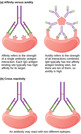
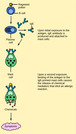
By the end of this section, you will be able to:Explain adaptive immunityCompare and contrast adaptive and innate immunityDescribe cell-mediated immune response and humoral immune responseDescribe immune tolerance
By the end of this section, you will be able to:Describe physical …
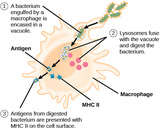
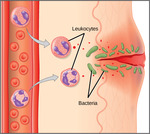
By the end of this section, you will be able to:Describe physical and chemical immune barriersExplain immediate and induced innate immune responsesDiscuss natural killer cellsDescribe major histocompatibility class I moleculesSummarize how the proteins in a complement system function to destroy extracellular pathogens
Life as an emergent property of networks of chemical reactions involving proteins …
Life as an emergent property of networks of chemical reactions involving proteins and nucleic acids. Mathematical theories of metabolism, gene regulation, signal transduction, chemotaxis, excitability, motility, mitosis, development, and immunity. Applications to directed molecular evolution, DNA computing, and metabolic and genetic engineering.
This course covers cells and tissues of the immune system, lymphocyte development, …
This course covers cells and tissues of the immune system, lymphocyte development, the structure and function of antigen receptors, the cell biology of antigen processing and presentation, including molecular structure and assembly of MHC molecules, the biology of cytokines, leukocyte-endothelial interactions, and the pathogenesis of immunologically mediated diseases. The course is structured as a series of lectures and tutorials in which clinical cases are discussed with faculty tutors. Lecturers Frederick W. Alt, Marcus Altfeld, Paul Anderson, Jon C. Aster, Hugh Auchincloss, Steven P. Balk, Samuel M. Behar, Richard S. Blumberg, Francisco Bonilla, Bobby Cherayil, Benjamin Davis, David Hafler, Nir Harcohen, Bruce Horwitz, David M. Lee, Andrew Lichtman, Diane Mathis, Richard Mitchell, Hidde Ploegh, Emmett Schmidt, Arlene Sharpe, Megan Sykes, Shannon Turley, Dale T. Umetsu, Ulrich von Andrian, Bruce Walker, Kai Wucherpfennig, Ramnik Xavier, Sarah Henrickson
This resource is a video abstract of a research paper created by …
This resource is a video abstract of a research paper created by Research Square on behalf of its authors. It provides a synopsis that's easy to understand, and can be used to introduce the topics it covers to students, researchers, and the general public. The video's transcript is also provided in full, with a portion provided below for preview:
"The skin is the interface between the human body and the environment, and the different features in distinct skin regions, such as different temperatures, humidity levels, gland densities, and pH values, create a variety of niches that can support a diverse skin microbiome. This microbiome includes bacteria, archaea, viruses, fungi, and even mites. A healthy skin microbiome helps maintain skin homeostasis, protects against pathogens, communicates with and trains the immune system, and affects wound healing. However, the skin microbiome can be influenced by many factors, including intrinsic factors like aging and extrinsic factors like cosmetic. Recent advances in molecular biology techniques and next-generation sequencing have drastically increased our understanding of the microorganisms that live on our skin, but the microbes are often still difficult to culture and study..."
The rest of the transcript, along with a link to the research itself, is available on the resource itself.
This course addresses the challenges of defining a relationship between exposure to …
This course addresses the challenges of defining a relationship between exposure to environmental chemicals and human disease. Course topics include epidemiological approaches to understanding disease causation; biostatistical methods; evaluation of human exposure to chemicals, and their internal distribution, metabolism, reactions with cellular components, and biological effects; and qualitative and quantitative health risk assessment methods used in the U.S. as bases for regulatory decision-making. Throughout the term, students consider case studies of local and national interest.
This course addresses the challenges of defining a relationship between exposure to …
This course addresses the challenges of defining a relationship between exposure to environmental chemicals and human disease. Course topics include epidemiological approaches to understanding disease causation; biostatistical methods; evaluation of human exposure to chemicals, and their internal distribution, metabolism, reactions with cellular components, and biological effects; and qualitative and quantitative health risk assessment methods used in the U.S. as bases for regulatory decision-making. Throughout the term, students consider case studies of local and national interest.
This resource is a video abstract of a research paper created by …
This resource is a video abstract of a research paper created by Research Square on behalf of its authors. It provides a synopsis that's easy to understand, and can be used to introduce the topics it covers to students, researchers, and the general public. The video's transcript is also provided in full, with a portion provided below for preview:
"The immune systems of fish and other animals follow circadian rhythms related to light/dark cycles. In aquaculture, the light period is commonly lengthened to enhance growth and control reproduction, but the effects on fish immunity are unclear and parasite infestations and infectious diseases remain major challenges to the industry, so a better understanding of fish immunity is needed. Microbial communities living on fish's skin - their microbiome - can help defend against parasites and pathogens, but it is currently unknown if they too have daily rhythms. To learn more, researchers recently characterized the circadian dynamics of clock genes, immune genes, and microbes in the skin of rainbow trout. They found that skin immune gene expression and the skin microbiome exhibited daily rhythms. These rhythms were affected by both a change in photoperiod and infestation with lice (Argulus foliaceus), and fish under constant light were less able to defend themselves against lice infestation..."
The rest of the transcript, along with a link to the research itself, is available on the resource itself.
Complement is so called because it complements the function of antibody. It …
Complement is so called because it complements the function of antibody. It is a triggered enzyme cascade and there are more than 20 different proteins in the complement cascades, with most being enzymes or pro-enzymes. It can be activated by both the innate and adaptive immune systems and is one of the main innate protective mechanisms of invertebrates. Due to its destructive potential the complement system is heavily regulated but when activated it works largely by forming pore complexes as well as triggering acute inflammation and by promoting phagocytosis by macrophages and neutrophils.
This resource is a video abstract of a research paper created by …
This resource is a video abstract of a research paper created by Research Square on behalf of its authors. It provides a synopsis that's easy to understand, and can be used to introduce the topics it covers to students, researchers, and the general public. The video's transcript is also provided in full, with a portion provided below for preview:
"Genetics can affect many aspects of human health, in part by influencing the composition of the gut microbiome. The associations between genetic variants and individual microbial taxa are often investigated with genome-wide association studies (GWASs). However, typical GWASs have low statistical power, because they require extensive multiple testing and can’t account for inherent data structure. To help solve this problem, researchers recently developed a new approach: a covariate-adjusted kernel RV (KRV) framework. This framework compares pairwise similarity in genetic profiles to pairwise similarity in microbial profiles therefore reducing the multiple testing burden without obscuring the data structure. In simulation studies, the KRV framework had greater statistical power than other microbiome GWAS approaches in a range of scenarios..."
The rest of the transcript, along with a link to the research itself, is available on the resource itself.
This resource is a video abstract of a research paper created by …
This resource is a video abstract of a research paper created by Research Square on behalf of its authors. It provides a synopsis that's easy to understand, and can be used to introduce the topics it covers to students, researchers, and the general public. The video's transcript is also provided in full, with a portion provided below for preview:
"It might not be your first choice for a meal, but many mammals appear to find earth an appetizing addition to their diet Known as geophagy, scientists still aren’t sure what causes the surprisingly common urge to eat soil or clay To understand soil eating and its causes, researchers reviewed every documented case of soil eating in monkeys and apes They identified cases of soil eating in 136 species – over half of all monkeys and apes found around the globe – suggesting the behavior is more common than previously thought Evidence from the 287 articles reviewed also suggests that geophagy is a form of self-medication Geophagy may provide protection against disease-causing pathogens and supplement essential nutrients Although more research is needed, the work lays a foundation for future investigations into the causes and health impacts of geophagy The findings could also reveal new ways to promote the health of both wild and captive primate populations Pebsworth PA, et al..."
The rest of the transcript, along with a link to the research itself, is available on the resource itself.
Dr. Stephen O'Brien of the National Cancer Institute discovers a 700-year-old mutation …
Dr. Stephen O'Brien of the National Cancer Institute discovers a 700-year-old mutation that makes a person resistant to HIV infection. From Evolution: "Evolutionary Arms Race."
No restrictions on your remixing, redistributing, or making derivative works. Give credit to the author, as required.
Your remixing, redistributing, or making derivatives works comes with some restrictions, including how it is shared.
Your redistributing comes with some restrictions. Do not remix or make derivative works.
Most restrictive license type. Prohibits most uses, sharing, and any changes.
Copyrighted materials, available under Fair Use and the TEACH Act for US-based educators, or other custom arrangements. Go to the resource provider to see their individual restrictions.