After the Philippine-American War ended in 1902, Americans became fascinated by the …
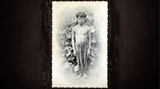
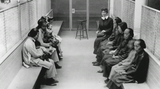
After the Philippine-American War ended in 1902, Americans became fascinated by the natives of the newly acquired territory, which led to the development of anthropological exhibits showcasing what “primitive” life was like in the Philippines. During this time period, anthropologists adopted an evolutionary perspective rooted in white superiority. One of the exhibits featured the Igorot people, who anthropologist Albert Jenks believed were the most uncivilized tribe in the Philippines. These exhibits/human zoos sparked the creation of negative stereotypes of both the Igorot people and the Filipino community. Students will view the video segment from Asian Americans and engage in activities and discussions to explore the power of perception and its impact on shaping the identities of Asian Americans. Students will also examine the U.S. politics and scientific theories that shaped the perception of Americans and sought to justify U.S. colonization in the Pacific and the mistreatment of the Filipino community.
Through this unit, students will explore Asian American and Pacific Islander (“AAPI”) …
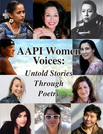
Through this unit, students will explore Asian American and Pacific Islander (“AAPI”) women’s poetry in order to craft and inspire their own poetry. After analyzing and interpreting poems, students recognize poetry as a vehicle to express their own untold stories about events small and large. This unit will expose students to voices of AAPI women poets. Their experiences will help facilitate a dialogue of identity, beauty, tradition and activism. Many students face these issues during this pivotal time of their development. Furthermore, this unit will help students explore their viewpoints as they craft and design their own poems and explore the readings. This unit allows students of all abilities and intersectionalities to make their voices heard and draw from their unique perspectives.
2021 Social Science Standards Integrated with Ethnic Studies: Civics and Government: 7.5, HS.2, HS.11 Geography: 6.14, HS.51 Historical Knowledge: 6.21, 8.22, 8.25, HS.63, HS.64, HS.65, HS.66 Historical Thinking: 7.25, 8.32 Social Science Analysis: 6.24, 6.27, 7.28, 7.29, 8.36, HS.78
This collection uses primary sources to explore The Absolutely True Diary of …
This collection uses primary sources to explore The Absolutely True Diary of a Part-Time Indian by Sherman Alexie. Digital Public Library of America Primary Source Sets are designed to help students develop their critical thinking skills and draw diverse material from libraries, archives, and museums across the United States. Each set includes an overview, ten to fifteen primary sources, links to related resources, and a teaching guide. These sets were created and reviewed by the teachers on the DPLA's Education Advisory Committee.
This lesson focuses on teaching students to understand the role of identity …
This lesson focuses on teaching students to understand the role of identity in the online marketplace and online advertising, and advertisers’ intent to manipulate consumers.
America by the Numbers with Maria Hinojosa, a PBS documentary series produced …
America by the Numbers with Maria Hinojosa, a PBS documentary series produced by the Harlem-based Futuro Media Group, reveals how dramatic changes in the composition and demographics of the United States are playing out across the country.
This collection uses primary sources to explore American Indian boarding schools. Digital …
This collection uses primary sources to explore American Indian boarding schools. Digital Public Library of America Primary Source Sets are designed to help students develop their critical thinking skills and draw diverse material from libraries, archives, and museums across the United States. Each set includes an overview, ten to fifteen primary sources, links to related resources, and a teaching guide. These sets were created and reviewed by the teachers on the DPLA's Education Advisory Committee.
These activities ask students to engage with the question of what an …
These activities ask students to engage with the question of what an equitable school calendar looks like and how to make their own school calendar more inclusive.
This course elaborates the history of Ancient Greece from the Bronze Age …
This course elaborates the history of Ancient Greece from the Bronze Age to the death of Alexander. It covers major social, economic, political, and religious trends. It also includes discussions on Homer, heroism, and the Greek identity; the hoplite revolution and the rise of the city-state; Herodotus, Persia, and the (re)birth of history; Empire, Thucydidean rationalism, and the Peloponnesian War; Platonic constructs; Aristotle, Macedonia, and Hellenism. Emphasis is on use of primary sources in translation.
This lesson provides students with an introduction to Angel Island. The lesson …
This lesson provides students with an introduction to Angel Island. The lesson begins with students completing a timeline of Chinese immigration to America. The progression of events will help them understand the escalation of anti-Chinese sentiment in America culminating with the Chinese Exclusion Act of 1882, the first law that restricted immigration based on nationality.
2021 Social Science Standards Integrated with Ethnic Studies: Civics and Government: 8.7, 8.8, HS.1, HS.2 Historical Knowledge: 8.22, 8.25, HS.52, HS.63, HS.64, HS.65 Historical Thinking: 7.25, 8.30, 8.31, 8.32, HS.67, HS.69 Social Science Analysis: 7.28, 8.33, 8.36, HS.72, HS.73, HS.74
With the United States and the Soviet Union in a Cold War, …
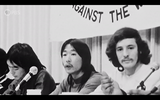
With the United States and the Soviet Union in a Cold War, fears of Southeast Asia falling to communism led to America’s increasing involvement with political and military matters in Vietnam, which was split between the communist North and anti-communist South in 1954. This lesson will address the U.S. government’s economic and tactical support of the conflict in Vietnam, and atrocities committed by American troops against Vietnamese civilians, which later became public. Domestically, an anti-war movement in the U.S. began to grow, with people questioning America’s involvement overseas—the money spent and the lives lost—which later impacted the war itself, including the withdrawal of troops and policies passed to prevent future U.S. military action without congressional approval.
2021 Social Science Standards Integrated with Ethnic Studies: Civics and Government: 8.10, HS.10 Historical Thinking: 7.25 Social Science Analysis: 7.29, 8.33, 8.36, HS.72, HS.74, HS.77, HS.78
The lesson focuses on the first Asian Americans to run for Congress …
The lesson focuses on the first Asian Americans to run for Congress - Patsy Mink and Daniel Inouye - who paved the way for future generations of Asian Americans to be politically active.
Asian Americans who served in the U.S. military during war in Vietnam …
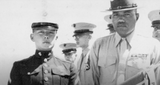
Asian Americans who served in the U.S. military during war in Vietnam were confronted not only by the harsh realities of war, but also with their racial and national identities. Asian American military service officers faced racism from their superiors and fellow U.S. soldiers, and were challenged by Vietnamese citizens and soldiers who saw a connection to them. This lesson explores some of the ways in which Asian Americans in the military experienced the war in Vietnam and the ways they negotiated their identities with being seen by both sides as “foreign invaders.”
2021 Social Science Standards Integrated with Ethnic Studies: Historical Knowledge: HS.60, HS.64 Historical Thinking: HS.70 Social Science Analysis: HS.72, HS.74, HS.76, HS.77
Stereotyping is a form of systemic racism for Asian Americans, who have …
Stereotyping is a form of systemic racism for Asian Americans, who have historically been stereotyped in the United States through “Yellow Peril” fearmongering—economic and societal threats. Viewed as perpetual foreigners, no matter their duration living here or whether they were American-born, Asian males are often characterized as scheming, weak, ignorant, and undesirable, while Asian females are exotic, cunning, and subservient. This perpetual foreigner stereotype is maintained by institutions from Hollywood, private and public sectors to elected public servants. Asian Americans have been fighting against stereotypes since the 1920s, and continue to do so, on- and off-screen.
2021 Social Science Standards Integrated with Ethnic Studies: Civics and Government: 6.4, 7.5 Historical Knowledge: 6.20, 6.21, 8.25, 8.27, HS.63, HS.64, HS.65 Historical Thinking: 7.25, 8.32 Social Science Analysis: 6.26, 6.27, 7.29, 8.34, HS.71, HS.73, HS.74
Short Description: This open access textbook was developed as an upper division …
Short Description: This open access textbook was developed as an upper division undergraduate textbook for theories of personality. Its intended audience are students from Portland State University enrolled in Psychology 432 Personality course. The chapters are shorter than some personality textbooks and in this particular course Psy 432 the textbook is combined with other readings including scientific articles on personality.
Word Count: 104891
(Note: This resource's metadata has been created automatically by reformatting and/or combining the information that the author initially provided as part of a bulk import process.)
The shift from apartheid to a constitutional democracy in South Africa brought …
The shift from apartheid to a constitutional democracy in South Africa brought with it a plethora of questions concerning ideas of nationhood, citizenship, and organisational transformation. Integrally caught up in the revolution, the South African Police Service (SAPS) faces transformative challenges on scales far larger than most other organisations in the country. From being the strong arm of the oppressive elite, it has had to restructure and rearticulate its function, while simultaneously attempting to maintain law and order. Like many other corporations and organisations, the SAPS has engaged in interventions aimed at aiding the fluidity of this process. This report is an analysis of one such intervention. It attempts to ascertain the extent to which members are changing as a result of particular diversity workshops conducted in a region of the Western Cape. The analysis focuses on members at one particular station.
In this second of three lessons on the film ‘Bibi,’ students will …
In this second of three lessons on the film ‘Bibi,’ students will apply the concepts of intersectionality, privilege and oppression to characters from the film ‘Bibi.’
In this second of three lessons on the film ‘Bibi,’ students will …
In this second of three lessons on the film ‘Bibi,’ students will apply the concepts of intersectionality, privilege and oppression to characters from the film.
In this third and final lesson on the film ‘Bibi,’ students will …
In this third and final lesson on the film ‘Bibi,’ students will write a letter to Ernesto explaining the concepts of intersectionality, privilege and oppression.
No restrictions on your remixing, redistributing, or making derivative works. Give credit to the author, as required.
Your remixing, redistributing, or making derivatives works comes with some restrictions, including how it is shared.
Your redistributing comes with some restrictions. Do not remix or make derivative works.
Most restrictive license type. Prohibits most uses, sharing, and any changes.
Copyrighted materials, available under Fair Use and the TEACH Act for US-based educators, or other custom arrangements. Go to the resource provider to see their individual restrictions.