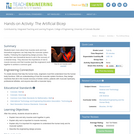
Test your knowledge of the digestive, respiratory, and other human body systems in this interactive game from Kinetic City. Race the clock to put Arnold's organs back into his body one system at a time.
Students learn more about how muscles work and how biomedical engineers can help keep the muscular system healthy. Following the engineering design process, they create their own biomedical device to aid in the recovery of a strained bicep. They discover the importance of rest to muscle recovery and that muscles (just like engineers!) work together to achieve a common goal.
Subject:
Mathematics and Statistics, Science and Technology
A work in progress, CK-12 Biology I Honors - Teacher's Edition complements CK-12''s Biology I Honors book covering: Introduction to Life Science; Cells; Genetics; Evolution; Ecology; and Human Biology.
A work in progress, CK-12 Biology I Honors Workbook complements its Biology I Honors FlexBook covering: Introduction to Life Science; Cells; Genetics; Evolution; Ecology; and Human Biology.
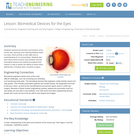
Students examine the structure and function of the human eye, learning some amazing features about our eyes, which provide us with sight and an understanding of our surroundings. Students also learn about some common eye problems and the biomedical devices and medical procedures that resolve or help to lessen the effects of these vision deficiencies, including vision correction surgery.
Subject:
Mathematics and Statistics, Science and Technology
Human beings are fascinating and complex living organisms a symphony of different functional systems working in concert. Through a nine-lesson series with hands-on activities students are introduced to seven systems of the human body skeletal, muscular, circulatory, respiratory, digestive, sensory, and reproductive as well as genetics. At every stage, they are also introduced to engineers' creative, real-world involvement in caring for the human body.
Subject:
Mathematics and Statistics, Science and Technology
Students are introduced to the respiratory system, the lungs and air. They learn about how the lungs and diaphragm work, how air pollution affects lungs and respiratory functions, some widespread respiratory problems, and how engineers help us stay healthy by designing machines and medicines that support respiratory health and function.
Subject:
Mathematics and Statistics, Science and Technology
Submitted as part of the California Learning Resource Network (CLRN) Phase 3 Digital Textbook Initiative (CA DTI3), CK-12 Foundation’s high school Biology I - Honors FlexBook covers Cell Biology, Genetics, Evolution, Ecology, and Physiology.
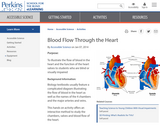
Following the engineering design process and acting as biomedical engineers, student teams use everyday materials to design and develop devices and approaches to unclog blood vessels. They learn about the circulatory system, biomedical engineering, and conditions that lead to heart attacks and strokes.
Subject:
Mathematics and Statistics, Science and Technology
Students reinforce their knowledge that DNA is the genetic material for all living things by modeling it using toothpicks and gumdrops that represent the four biochemicals (adenine, thiamine, guanine, and cytosine) that pair with each other in a specific pattern, making a double helix. They investigate specific DNA sequences that code for certain physical characteristics such as eye and hair color. Student teams trade DNA "strands" and de-code the genetic sequences to determine the physical characteristics (phenotype) displayed by the strands (genotype) from other groups. Students extend their knowledge to learn about DNA fingerprinting and recognizing DNA alterations that may result in genetic disorders.
Subject:
Mathematics and Statistics, Science and Technology
As a class, students work through an example showing how DNA provides the "recipe" for making our body proteins. They see how the pattern of nucleotide bases (adenine, thymine, guanine, cytosine) forms the double helix ladder shape of DNA, and serves as the code for the steps required to make genes. They also learn some ways that engineers and scientists are applying their understanding of DNA in our world.
Subject:
Mathematics and Statistics, Science and Technology
Yoga is a multi-purpose type of exercise. It can help relieve mental and physical stresses, increase flexibility, increase muscle tone, and burn calories. As you can see, yoga is a cardio workout, but it can provide various other benefits.
To reinforce students' understanding of the human digestion process, the functions of several stomach and small intestine fluids are analyzed, and the concept of simulation is introduced through a short, introductory demonstration of how these fluids work. Students learn what simulation means and how it relates to the engineering process, particularly in biomedical engineering. The teacher demo requires vinegar, baking soda, water and aspirin.
Subject:
Mathematics and Statistics, Science and Technology
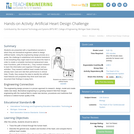
Students extend their knowledge of the skeletal system to biomedical engineering design, specifically the concept of artificial limbs. Students relate the skeleton as a structural system, focusing on the leg as structural necessity. They learn about the design considerations involved in the creation of artificial limbs, including materials and sensors.
Subject:
Mathematics and Statistics, Science and Technology
The Engineering and the Human Body unit covers the broad spectrum of topics that make-up our very amazing human body. Students are introduced to the space environment and learn the major differences between the environment on Earth and that of outer space. The engineering challenges that arise because of these discrepancies are also discussed. Then, students dive into the different components that make up the human body: muscles, bones and joints, the digestive and circulatory systems, the nervous and endocrine systems, the urinary system, the respiratory system, and finally the immune system. Students learn about the different types of muscles in the human body and the effects of microgravity on muscles. Also, they learn about the skeleton, the number of and types of bones in the body, and how outer space affects astronauts' bones. In the lessons on the digestive, circulatory, nervous and endocrine systems, students learn how these vital system work and the challenges faced by astronauts whose systems are impacted by spaceflight. And lastly, advances in engineering technology are discussed through the lessons on the urinary, respiratory and immune systems while students learn how these systems work with all the other body components to help keep the human body healthy.
Subject:
Mathematics and Statistics, Science and Technology
This site features dozens of online learning activities and exhibits. Make a mold terrarium, pinhole projector, telescope, or hair hygrometer. Explore the brain, biodiversity, Antarctica, DNA, frogs, structures, or illusions. Learn about magnetism, electricity, motors, eyeballs, perception, Mars, chocolate, seasonings, or the science of cooking, sports, and music. Search over 3,000 photos and movies. Watch webcasts of science demonstrations by teachers.
Humans are able to hear through their ears. Sounds are made and travel through the air as vibration waves. These waves reach the human ear and go through a series of routes before the brain interprets them as sounds.
No restrictions on your remixing, redistributing, or making derivative works.
Give credit to the author, as required.
Your remixing, redistributing, or making derivatives works comes with some
restrictions, including how it is shared.
Your redistributing comes with some restrictions. Do not remix or make
derivative works.
Copyrighted materials, available under Fair Use and the TEACH Act for US-based
educators, or other custom arrangements. Go to the resource provider to see
their individual restrictions.