Only Sharing Permitted
CC BY-NC-ND
Draft of 1.1
- Subject:
- Applied Science
- Material Type:
- Activity/Lab
- Date Added:
- 05/31/2018
Draft of 1.1
Preventing the spread of diseases is not only an Indiana Academic Standard that is required, but is applicable to keep schools and students healthy. This lesson plan is perfect for a heath teacher or general educator regarding grade 2. While this lesson is intended for Grade 2, it can be easily modified to reach younger grades or made more challenging and/or in-depth for older grades.

Course Syllabus for Medical Terminology Course
This short commentary about the African Health OER Network was published by the African Journal of Health Professions Education, December 2010, Vol. 2, No. 2.

In this unit, students learn about the form and function of the human heart through lecture, research and dissection. Following the steps of the Legacy Cycle, students brainstorm, research, design and present viable solutions to various heart conditions as presented through a unit challenge. Additionally, students study how heart valves work and investigate how faulty valves can be replaced with new ones through advancements in engineering and technology. This unit demonstrates to students how and why the heart is such a powerful organ in our bodies
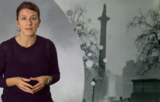
This presentation aims to increase the students’ knowledge about environmental epidemiology, by introducing different study designs used to study health effects of exposure to outdoor air pollution. All study designs are illustrated by examples, starting with the Great Smog (Killer Fog) of London in 1952, one of the landmarks in environmental epidemiology.
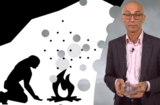
Nearly one third of the world’s population are exposed to high levels of indoor air pollution from the household’s use of solid fuel. The fuel is mainly biomass burning under poor combustion conditions
in open fires or primitive stoves and with low ventilation. This costs more than 4 million lives every year and enormous suffering in particular among women and children.
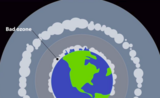
What is air pollution? What is it in the air that is harmful? This lecture focuses on air pollution, where it occur, and how it spread.
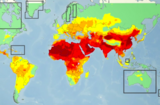
In this presentation, we will describe the global levels and trends in major air pollutants and related health burden. Air pollution is an important global risk factor for disease. People who live in more polluted areas develop more often chronic and infectious disease and die prematurely as compared to people living in areas with low air pollution.
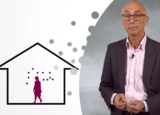
In large part of the World, people spend more than 90 percent of the time in indoor environments, where air quality is important for health. The environment outside the building, what goes on inside the building and the exchange of air pollutants affects the indoor air. Tight buildings can reduce energy consumption and entry of outdoor air pollutants, but unless ventilation is right indoor air pollutants from combustion processes, dampness, microbes, the dwellers bio effluents,
appliances, care and cleaning products, clothing, furniture, building materials, the underground and many other sources will build up indoors causing important health effects.
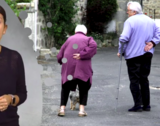
In this presentation, we will discuss how we can know whether one individual is more susceptible to harmful effect of air pollution than others are. Everyone is exposed, but some groups may be more susceptible to the harmful effect of air pollution than others may.

In this lecture, we will describe the mechanisms by which air pollution causes pulmonary health effects in the human population. The pulmonary health effects include exacerbation of asthma and chronic obstructive pulmonary diseases (COPD), increased risk of lower
respiratory tracts infections and lung cancer.
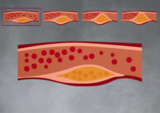
In this presentation, we will describe the mechanisms by which air pollution causes health effects in other parts of the body than the lungs. In continuation of this, we will discuss the important mechanisms of extra pulmonary health effect.

There is a long way before the whole world complies with the WHO guidelines for air quality, but the enormous burden of disease from outdoor air pollution forces us to increase action to come as far as possible. In continuation of this, we will discuss what we can do about air pollution at global, international, national, city and individual levels. Most of the actions to reduce air pollution also mitigates climate change and/or promote health in other ways – so there are many win-win and
win-win-win situations
The Maryland State Department of Education is working to prevent the misuse and abuse of opioids. This is a student-centered lesson for the 9-12 grade band. This lesson can be modified or remixed to meet the needs of the students you teach. The content of this lesson includes students identifying and analyzing influences that could lead to drug use. Students are then tasked with forming strategies to overcome factors and influences that could lead to drug use.
You probably have a general understanding of how your body works. But do you fully comprehend how all of the intricate functions and systems of the human body work together to keep you healthy? This course will provide that insight. By approaching the study of the body in an organized way, you will be able to connect what you learn about anatomy and physiology to what you already know about your own body.
By taking this course, you will begin to think and speak in the language of the domain while integrating the knowledge you gain about anatomy to support explanations of physiological phenomenon. The course focuses on a few themes that, when taken together, provide a full view of what the human body is capable of and of the exciting processes going on inside of it.
Topics covered include: Structure and Function, Homeostasis, Levels of Organization, and Integration of Systems.
Note: This free course requires registration
This lab activity will not only draw on students' real life experiences but will also draw on student's previous lab experiences in proper laboratory techniques and data analysis performed in previous activities. The lab will incorporate the use of scientific inquiry methods and strategies while students develop reasonable answers to the questions asked.
The Maryland State Department of Education is working to prevent the misuse and abuse of opioids. This is a student-centered lesson for the K-2 grade band. This lesson can be modified or remixed to meet the needs of the students you teach. The content of this lesson includes teaching students the ground rules for taking medicine as well as having student identify under what circumstances they should be taking medicine.

This resource is a video abstract of a research paper created by Research Square on behalf of its authors. It provides a synopsis that's easy to understand, and can be used to introduce the topics it covers to students, researchers, and the general public. The video's transcript is also provided in full, with a portion provided below for preview:
"Consuming high amounts of red meat is commonly linked to an increased risk of developing cancer, especially colorectal cancer. At the same time, antibodies against Neu5Gc , a carbohydrate derived from red meat, have been observed to worsen cancer in “human-like” mice. While these antibodies and red meat consumption are each believed to increase cancer risk, it remains unknown how diet affects the antibodies. Now, research suggests that consuming Neu5Gc from red meat and dairy can modulate the amounts and properties of anti-Neu5Gc antibodies in humans, providing clues to how the carbohydrate might be linked to cancer. The team behind the study calculated daily intake of Neu5Gc for more than 19,000 subjects aged 18 years or older. These participants provided regular logs of food consumed over 24-hour periods as part of the NutriNet-Santé study, which was designed to investigate relationships between nutrition and health status..."
The rest of the transcript, along with a link to the research itself, is available on the resource itself.

In this simulation of a doctor's office, students play the roles of physician, nurse, patients, and time-keeper, with the objective to improve the patient waiting time. They collect and graph data as part of their analysis. This serves as a hands-on example of using engineering principles and engineering design approaches (such as models and simulations) to research, analyze, test and improve processes.