This site contains links to thousands of the most famous documentary photographs …
This site contains links to thousands of the most famous documentary photographs ever produced. The Farm Security Administrations's photographs cover the Great Depression, while the Office of War Administration's photographs look at the mobilization effort for World War II.
This course focuses on the Great Depression and World War II and …
This course focuses on the Great Depression and World War II and how they led to a major reordering of American politics and society. We will examine how ordinary people experienced these crises and how those experiences changed their outlook on politics and the world around them.
This course examines the social, cultural, political, and economic history of the …
This course examines the social, cultural, political, and economic history of the United States, from the Civil War to the present. It uses secondary analysis and primary documents, such as court cases, personal accounts, photographs, and films, to examine some of the key issues in the shaping of modern America, including industrialization and urbanization, immigration, the rise of a mass consumer society, the emergence of the US as a global power, and the development of civil rights activism and other major social movements.
In an increasingly digital world in which pedagogical trends are de-emphasizing rote …
In an increasingly digital world in which pedagogical trends are de-emphasizing rote learning and professors are increasingly turning toward active-learning exercises, scholars are fleeing traditional textbooks. Yet for those that still yearn for the safe tether of a synthetic text, as either narrative backbone or occasional reference material, The American Yawp offers a free and online, collaboratively built, open American history textbook designed for college-level history courses. Unchecked by profit motives or business models, and free from for-profit educational organizations, The American Yawp is by scholars, for scholars. All contributors—experienced college-level instructors—volunteer their expertise to help democratize the American past for twenty-first century classrooms.
The stock market crash on October 29, 1929 -- known as Black …
The stock market crash on October 29, 1929 -- known as Black Tuesday -- was the "worst economic collapse in the history of the modern industrial world." It spread from the United States to national economies across the globe. It ended a decade known for its high-spirited free-spending, called the Roaring 20s, and began almost 10 years of financial desperation that would touch nearly every citizen of the United States. The Great Depression caused bank closures and business failures and by its end, saw "more than 15 million Americans (one-quarter of the workforce)" unemployed. Herbert Hoover, president at the time, did not acknowledge the depth of the crisis and assumed that the American characteristics of individualism and self reliance would quickly bring the nation out of the disaster without a need for federal intervention. But, layoffs and financial desperation at the personal level were growing: "an empty pocket turned inside out was called a 'Hoover flag' [and] the decrepit shanty towns springing up around the country were called 'Hoovervilles'." Three years into the financial crisis, Franklin Delano Roosevelt, running on a platform of federal recovery programs called the "New Deal," easily took the presidential election of 1932.
Using "The Grapes of Wrath" as a backdrop, students conduct research on …
Using "The Grapes of Wrath" as a backdrop, students conduct research on issues that the novel addresses, publishing their findings in a multigenre museum exhibit.
In this activity students read two letters (one from Hoover, one from …
In this activity students read two letters (one from Hoover, one from FDR) to determine different political beliefs that guided the presidents in their responses to the Great Depression.
The Dust Bowl is an important part of the study of the …
The Dust Bowl is an important part of the study of the Great Depression and New Deal. However, there is not always a lot of time to spend for an in-depth study. This allows for students to get an overview of what it is, what caused it, devistation it causes, and the consequences. Students also look at two primary sources - a photograph and a quote - and analyze.
In 1931, a severe drought hit the Southern and Midwestern plains. As …
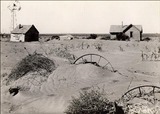
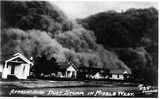
In 1931, a severe drought hit the Southern and Midwestern plains. As crops died and winds picked up, dust storms began. As the "Dust Bowl" photograph shows, crops literally blew away in "black blizzards" as years of poor farming practices and over-cultivation combined with the lack of rain. By 1934, 75% of the United States was severely affected by this terrible drought.The one-two punch of economic depression and bad weather put many farmers out of business. In the early 1930s, thousands of Dust Bowl refugees ? mainly from Oklahoma, Texas, Colorado, Kansas, and New Mexico ? packed up their families and migrated west, hoping to find work. Entire families migrated together (such as the men shown in "Three generations of Texans now Drought Refugees") in search of a better life. Images such as "Midcontinent ? Family Standing on the Road with Car," "Drought Refugees," and "Untitled, ca. 1935 (Worn-Down Family in Front of Tent)" offer a glimpse into their experience on the road, and show that cars provided many families both transportation and shelter on the road. About 200,000 of the migrants headed for California. The state needed to figure out how to absorb the thousands of destitute people crossing its borders daily. One of their tactics was to document the plight of the refugees. In 1935, photographer Dorothea Lange joined the Rural Rehabilitation Division of the California State Emergency Relief Administration (SERA), a section of the Federal Emergency Relief Administration. She was assigned the job of using her camera to document the growing number of homeless Dust Bowl refugees migrating to California. She worked with Paul S. Taylor, a professor at the University of California, Berkeley, who was researching conditions of rural poverty in order to make recommendations on how to improve the workers' conditions. The work by Taylor and Lange played an important role in helping to raise public awareness of the crisis. The reports they made for the government included both data and striking images that revealed the desperate conditions in which the migrants lived and confirmed the need for government intervention. Stark images such as "Home of Oklahoma Drought Refugees" resonated with the public, and portraits of drought refugees like "Ruby from Arkansas" and others shown in this topic humanized the migrants for more fortunate citizens. In March 1936, Lange took what became one of her most famous images, "Migrant Mother." This image of a 32-year-old woman became an icon for the suffering of ordinary people during Great Depression.
The Great Depression was a trying time for multitudes of Americans during …
The Great Depression was a trying time for multitudes of Americans during the 1930s. Some could argue, though, that it was America's farmers that suffered the most. Farmers began to feel the economic crisis after World War One ended and the demand for their crops, produce, and livestock dropped dramatically. For the farmers of the Midwest, they faced an environmental, as well as, an economic crisis throughout the 1930s. The resources featured here can be used independently by students or in small-or-whole group instruction.
History teaches us that properous advanced national economies like the U.S. share …
History teaches us that properous advanced national economies like the U.S. share a common institutional framework conducive to creativity, production, and exchange. That institutional framework of individual freedom, rule of law, clearly stated rights to private property, and open competitive markets shapes incentives to encourage material advance. The multiple perspectives approach to historical-scholarship requires viewing events, trends, and developments through a variety of analytical lenses. Often overlooked in traditional history curricula are the insights that the economic way of thinking adds to social, political, and geographic perspectives. Emphasizing the role of institutions, Economic Forces in American History looks at the impact of seven key forces in shaping the development of the United States.
Students analyze Dorothea Lange's photographs and identify key themes in her work. …
Students analyze Dorothea Lange's photographs and identify key themes in her work. They then create a thematic exhibition pairing Lange's work with work by artists who explore the same themes in other media.
In this activity students learn about the goals of the Civilian Conservation …
In this activity students learn about the goals of the Civilian Conservation Corps and the opportunities it provided for young men. Students create poster presentations about different aspects of the CCC by combining photographs and quotes from primary sources. Students will need poster-making supplies (including poster board or paper, markers, scissors, and glue/markers).
This course explores how gender shaped the historical experiences and cultural productions …
This course explores how gender shaped the historical experiences and cultural productions in the North American West during the time it was being explored, settled, and imagined. The North American West of the late nineteenth and early twentieth centuries provides a fascinating case study of the shifting meanings of gender, race, citizenship, and power in border societies. As the site of migration, settlement, and displacement, it spawned contests over land, labor disputes, inter-ethnic conflicts and peaceful relations, and many kinds of cultural productions. The Graduate Consortium in Women's Studies (GCWS) This course is part of the Graduate Consortium in Women's Studies. The GCWS at MIT brings together scholars and teachers at nine degree-granting institutions in the Boston area who are devoted to graduate teaching and research in Women's Studies and to advancing interdisciplinary Women's Studies scholarship. Learn more about the GCWS.
This course will focus on the emergence and evolution of industrial societies …
This course will focus on the emergence and evolution of industrial societies around the world. The student will begin by comparing the legacies of industry in ancient and early modern Europe and Asia and examining the agricultural and commercial advances that laid the groundwork for the Industrial Revolution. The student will then follow the history of industrialization in different parts of the world, taking a close look at the economic, social, and environmental effects of industrialization. This course ultimately examines how industrialization developed, spread across the globe, and shaped everyday life in the modern era. Upon successful completion of this course, students will be able to: identify key ideas and events in the history of industrialization; identify connections between the development of capitalism and the development of modern industry; use analytical tools to evaluate the factors contributing to industrial change in different societies; identify the consequences of industrialization in the 19th and 20th centuries in different societies; critique historical interpretations of the causes and effects of industrialization; and analyze and interpret primary source documents describing the process of industrialization and life in industrial societies. (History 363)
Tuning into the radio is now an integrated part of our everyday …
Tuning into the radio is now an integrated part of our everyday lives. We tune in while we drive, while we work, while we cook in our kitchens. Just 100 years ago, it was a novelty to turn on a radio. The radio emerged at the turn of the twentieth century, the result of decades of scientific experimentation with the theory that information could be transmitted over long distances. Radio as a medium reached its peakthe so-called Radio Golden Ageduring the Great Depression and World War II. This was a time when the world was rapidly changing, and for the first time Americans experienced those history-making events as they happened. The emergence and popularity of radio shifted not just the way Americans across the country experienced news and entertainment, but also the way they communicated. This exhibition explores the development, rise, and adaptation of the radio, and its impact on American culture.
This collection uses primary sources to explore John Steinbeck's novel, The Grapes …
This collection uses primary sources to explore John Steinbeck's novel, The Grapes of Wrath. Digital Public Library of America Primary Source Sets are designed to help students develop their critical thinking skills and draw diverse material from libraries, archives, and museums across the United States. Each set includes an overview, ten to fifteen primary sources, links to related resources, and a teaching guide. These sets were created and reviewed by the teachers on the DPLA's Education Advisory Committee.
Learn about the Great Depression using a crossword puzzle and word search. …
Learn about the Great Depression using a crossword puzzle and word search. You can play online or print the activities. Also included are printable teacher's guides.
No restrictions on your remixing, redistributing, or making derivative works. Give credit to the author, as required.
Your remixing, redistributing, or making derivatives works comes with some restrictions, including how it is shared.
Your redistributing comes with some restrictions. Do not remix or make derivative works.
Most restrictive license type. Prohibits most uses, sharing, and any changes.
Copyrighted materials, available under Fair Use and the TEACH Act for US-based educators, or other custom arrangements. Go to the resource provider to see their individual restrictions.