Author: Daniel Shogan, Danville Museum of Fine Arts and History Students will learn …
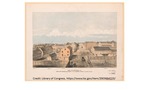
Author: Daniel Shogan, Danville Museum of Fine Arts and History Students will learn about the 1883 Massacre in Danville, Virginia as an example of racist mob violence against African Americans. Within the context of the massacre, they will be shown primary documents from the event. These documents will provide the students with not only a lens into the Danville of the nineteenth century, but also provide them with an opportunity to think critically about the biases present in some of the documents. After careful discussion of the events and outcomes of the massacre, the students will be given vocabulary worksheets that help to define and underline the most important elements of the narrative.
Manuscripts, images, and historic newspapers document the life and accomplishments of Alexander …
Manuscripts, images, and historic newspapers document the life and accomplishments of Alexander Hamilton. This set also includes a Teacher's Guide with historical context and teaching suggestions. Manuscripts, images, and historic newspapers document the life and accomplishments of Alexander Hamilton'
This course introduces the unique characteristics of militaries and explores the roles …
This course introduces the unique characteristics of militaries and explores the roles they play in the societies they are constructed to defend, with a special focus on the relationships between the military and their civilian leaders and popular publics. Topics include a modern history of relations between US presidents and the military, coups and military governments, public trust in the military, racial integration of the military, and the military-industrial (and tech!) complex.
The United States was founded on the principles of natural rights, equality, …
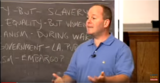
The United States was founded on the principles of natural rights, equality, and classical republicanism, but how well did it actually live up to these ideals? In this lecture, Professor Rob McDonald of the US Military Academy at West Point describes the conflict between the ideals of the American Revolution and the unfortunate realities of the time.
American Government is designed to meet the scope and sequence requirements of …
American Government is designed to meet the scope and sequence requirements of the single-semester American government course. This title includes innovative features designed to enhance student learning, including Insider Perspective features and a Get Connected Module that shows students how they can get engaged in the political process. The book provides an important opportunity for students to learn the core concepts of American government and understand how those concepts apply to their lives and the world around them. American Government includes updated information on the 2016 presidential election.Senior Contributing AuthorsGlen Krutz (Content Lead), University of OklahomaSylvie Waskiewicz, PhD (Lead Editor)
American Government is designed to meet the scope and sequence requirements of …
American Government is designed to meet the scope and sequence requirements of the single-semester American government course. This title includes innovative features designed to enhance student learning, including Insider Perspective features and a Get Connected Module that shows students how they can get engaged in the political process. The book provides an important opportunity for students to learn the core concepts of American government and understand how those concepts apply to their lives and the world around them. American Government includes updated information on the 2016 presidential election.
This set of materials can be used to generate discussion amongst students …
This set of materials can be used to generate discussion amongst students that will connect material from the textbook to current events. These articles can be used for both in-person discussion or online discussion forums.
In this learning experience, the students will complete a primary source inquiry …
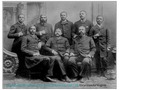
In this learning experience, the students will complete a primary source inquiry into the impacts of Reconstruction on Black experiences in Virginia and the South. The students will use the Claim-Evidence-Reasoning structure to defend one of two claims.Students will analyze sources that depict/detail Black experiences and perspectives before, during, and after the Reconstruction. This learning experience will be most effective after students have been introduced to the what and when of Reconstruction.
Created through a partnership between the National Endowment for the Humanities and …
Created through a partnership between the National Endowment for the Humanities and the Library of Congress, Chronicling America offers visitors the ability to search and view newspaper pages from 1690-1963 and to find information about American newspapers published between 1690"“present using the National Digital Newspaper Program.
Not all people are born equal or free but there is an …
Not all people are born equal or free but there is an expectation of both when you are a citizen of the United States. Our struggles to earn the base level of representation are quickly forgotten as we look for another group to demonize. In my unit we will discover why George Washington was ahead of his time with his warning about "factions" and how their existence makes freedom and equality harder to bridge. As we trek through time highlighting issues such as the abolition of slavery, support for women's suffrage, and the challenges that face Asian and LGBTQIA communities my hope is that student understand the sacrifices made to be accepted and to earn the right to vote but more importantly the difficulty in being welcomed into American society.
The “Citizenship Complex” is the process by which groups gain full inclusion. To understand it, one must look to the intersection of law, citizenship and the Constitution. The unit aims to provide a more complex history of our nation, to tell a more earnest story of how the American identity became a mosaic of human struggle, and to offer a more robust and enlightening study of these issues so that as students recognize the power of citizenship they will take a more hopeful view of what our nation will look like in the future. By engaging in the sophisticated discussions of the past, identifying why some groups supported each other and scapegoated others, and learning about the importance of supporting efforts at inclusion, our students should become more informed, open-minded, and ready for the globalized world of the 21 st Century.
The unit will focus on four groups that have experienced the “Citizenship Complex”: African-American slaves, women, Asian immigrants, and the LGBTQIA community. By comparing these groups over time, we will really be able to unearth the cycles behind the Citizenship Complex and understand that American citizenship means at different times in our country’s history.
Civics is the study of our national government, constitution, and the rights …
Civics is the study of our national government, constitution, and the rights and responsibilities of citizenship. Topics include democracy and other forms of government; legislative, executive, and judicial functions; the political process; and foreign and domestic policies. It also includes a summary of Washington State History and local native sovereignty.
Social Studies Targets:Forms of governmentNature/Purposes of governmentIdeologies of governmentComparative governmentEconomic systems and …
Social Studies Targets:Forms of governmentNature/Purposes of governmentIdeologies of governmentComparative governmentEconomic systems and governmentLearning Targets:Understand how the world is organized politically and nations interact (civics)Identify the differences in philosophy, structure, and the nature of different types of government (civics)Understand the role of sovereignty in the development of different governments and within governments (civics)Compare and contrast democracies with other forms of government.(civics)Understand individual rights and their accompanying responsibilities including problem solving and decision making at the local, state, and international level. (civics)Understand how cultural forces and factors influenced and were influenced by changes in government (Cultural Geography)Identify ways that power can be distributed geographically within a state (Physical Geography)Identify the different types of economic systems (Economics)Understand how different government and economic systems influence one another (Economics)Students will recognize and analyze the ideologies inherent in different economic systems. (Economics)
From: University of Virginia Center for PoliticsThe Key to John LockePurpose: The …
From: University of Virginia Center for PoliticsThe Key to John LockePurpose: The student will understand some of the basic theories of John Locke including limited government, unalienable rights, equal rights, and authority from consent of the governed.Objectives:Students will interpret the ideas of John Locke as they relate to limited government, unalienable rights, equal rights, and authority from the consent of the governed.Students will apply their interpretations of specific quotations from Locke to contemporary paintings by Norman Rockwell, The Problem We All Live With, by Dave Cutler, Flag With Male Symbol, and to a photograph from the 1989 revolt in Tiananmen Square.Key Words:consent of the governed natural rights treatise state of nature unalienable rights
This lesson combines two readings from the iCivics Influence Library and adds …
This lesson combines two readings from the iCivics Influence Library and adds activities that bridge the two topics: Thomas Hobbes and John Locke.Learning Objectives. Students will be able to:Identify the basic ideas on government from Thomas Hobbes and John Locke.Define the terms: state of nature, natural rights, sovereign.Trace the development of the idea of the social contract from Thomas Hobbes to John Locke.
These lessons concern the United States Constitution Article 1 concerning the establishment …
These lessons concern the United States Constitution Article 1 concerning the establishment and purpose of the Legislative Branch of the three branches of the US Government.
No restrictions on your remixing, redistributing, or making derivative works. Give credit to the author, as required.
Your remixing, redistributing, or making derivatives works comes with some restrictions, including how it is shared.
Your redistributing comes with some restrictions. Do not remix or make derivative works.
Most restrictive license type. Prohibits most uses, sharing, and any changes.
Copyrighted materials, available under Fair Use and the TEACH Act for US-based educators, or other custom arrangements. Go to the resource provider to see their individual restrictions.