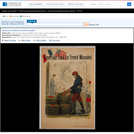
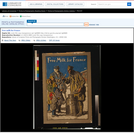
A French soldier picking up medical supplies from the Red Cross. Two …
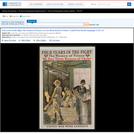
A French soldier picking up medical supplies from the Red Cross. Two nurses in background. The Red Cross was one of three official charitable organizations of the war and the Red Cross was the only one allowed at the front. Picture caption: Paris-D_Ęp't. Promotional goal: Fr. G2. 1917. Item is no. 195 in a printed checklist available in the Library of Congress Prints and Photographs Reading Room.
In this activity, students will be learning about Arabic countries in addition …
In this activity, students will be learning about Arabic countries in addition to European and South American countries. Also, practice asking and answering questions about various nationalities. Using feminine and masculine forms.Can-Do Statements:I can identify the names of Arabic countries.I can ask someone where they are from and say where am I from?I can use either feminine or masculine to describe my nationality.
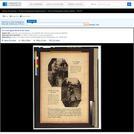
Exhibit poster showing two scenes "At work again" and "Back to the …
Exhibit poster showing two scenes "At work again" and "Back to the farm" in which men using "working protheses" perform manual labor in a woodworking shop and on a farm. Poster caption: Physical handicaps are made up for so far as possible by modern artificial appliances - "Working prostheses" they are called - which replace the missing limb. Men in the mechanical trades are fitted with chucks in which can be fitted interchangeably the various tools of their calling. Exhibit of the Red Cross Institute for Crippled and Disabled Men and the Red Cross Institute for the Blind.
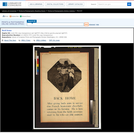
Exhibit poster showing a disabled veteran in a field with his wife. …
Exhibit poster showing a disabled veteran in a field with his wife. Poster caption: After giving both arms in service this French lieutenant cheerfully carries on his farming. He is here returning from the fields accompanied by his wife, an able assistant. Exhibit of the Red Cross Institute for Crippled and Disabled Men and the Red Cross Institute for the Blind.
Childhood is a source of fascination in most Western cultures. It is …
Childhood is a source of fascination in most Western cultures. It is both a major inspiration for artistic creation and a political ideal, which aims at protecting future generations. Which role does it play in French society and in other francophone areas? Why is the French national anthem ("La Marseillaise") addressed to its "children"? This course will study the transformation of childhood since the 18th century and the development of sentimentality within the family. We will examine various representations of childhood in literature (e.g. Pagnol, Proust, Sarraute, Laye, Morgièvre), movies (e.g. Truffaut), and songs (e.g. Brel, Barbara). Course taught in French.
The decades leading up to the Atlantic revolutions of the late eighteenth …
The decades leading up to the Atlantic revolutions of the late eighteenth century were formative moments in the rise of capitalism. The novel instruments of credit, debt, and investment fashioned during this period proved to be enduring sources of financial innovation, but they also generated a great deal of political conflict, particularly during the revolutionary era itself. This seminar examines the debates surrounding large-scale financial and trading corporations and considers the eighteenth century as a period of recurring financial crisis in which corporate power came into sustained and direct contact with emerging republican norms. The seminar ends with a look at the relationship between slavery and the rise of “modern” or “industrial” capitalism in the nineteenth century, as well as some of the critiques of capitalism that emerged out of that experience.
This course will conduct a comparative study of the grand strategies of …
This course will conduct a comparative study of the grand strategies of the great powers (Britain, France, Germany and Russia) competing for mastery of Europe from the late nineteenth to the mid-twentieth century. Grand strategy is the collection of political and military means and ends with which a state attempts to achieve security. We will examine strategic developments in the years preceding World Wars I and II, and how those developments played themselves out in these wars. The following questions will guide the inquiry: What is grand strategy and what are its critical aspects? What recurring factors have exerted the greatest influence on the strategies of the states selected for study? How may the quality of a grand strategy be judged? What consequences seem to follow from grand strategies of different types? A second theme of the course is methodological. We will pay close attention to how comparative historical case studies are conducted.
This course covers issues in contemporary French society as expressed through movies …
This course covers issues in contemporary French society as expressed through movies made in the 2000s. Topics include France's national self-image, the women's movement, sexuality and gender, family life and class structure, post-colonialism and immigration, and American cultural imperialism. Films by Lelouch, Audiard, Doillon, Denis, Klapisch, Resnais, Rouan, Balasko, Collard, Dridi, Kassovitz, and others. Readings from French periodicals. Films shown with English subtitles. Taught in French.
Charles Bargue Drawing Course introductionThe Charles Bargue Drawing Course was a highly …
Charles Bargue Drawing Course introductionThe Charles Bargue Drawing Course was a highly influential guide to art instruction in the 19th century, which has recently returned to prominence in the Realist painting movement. This module introduces students to the fundamental drawing skills covered in the Charles Bargue Drawing Course, and leads them through the process of completing a Bargue plate copy.
This is a module framework. It can be viewed online or downloaded …
This is a module framework. It can be viewed online or downloaded as a zip file.
As taught in Spring Semester 2010,
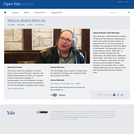
This module examines the founding first decade of the Fifth Republic by focusing principally, though not exclusively, on the personality and political ideas of Charles de Gaulle.
It begins by examining his emergence as the providential leader of the Resistance, to the frustrations of the Liberation and his thwarted plans for the constitutional renaissance of France, through the Fourth Republic and the wilderness years to his return in 1958, before turning to focus on the new regime and tracing the political history of the Fifth Republic between 1958 and 1969: the period Pierre Viansson-Ponté christened ‘la République gaullienne’.
The main, though by no means exclusive axes of enquiry will be the constitutional mutation of the regime and the political narrative in the period.
This module is suitable for undergraduate level 3 study.
Dr Paul Smith.
Dr Smith is a historian who specialises in 19th and 20th century French politics, political institutions and political culture. He has particular research interests in the French Senate, Feminism in France 1914-1945, French local government, and Contemporary French Politics in general. Recent research and publication outputs have concentrated on the French Senate, from 1870 to the present day.
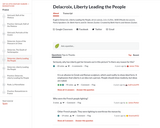
Eugène Delacroix, Liberty Leading the People, oil on canvas, 2.6 x 3.25m, …
Eugène Delacroix, Liberty Leading the People, oil on canvas, 2.6 x 3.25m, 1830 (Musée du Louvre, Paris) Speakers: Dr. Beth Harris and Dr. Steven Zucker. Created by Beth Harris and Steven Zucker.
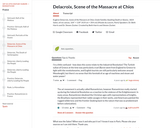
Eugène Delacroix, Scene of the Massacre at Chios; Greek Families Awaiting Death …
Eugène Delacroix, Scene of the Massacre at Chios; Greek Families Awaiting Death or Slavery, 1824 Salon, oil on canvas, 164" × 139" (419 cm × 354 cm) (Musée du Louvre, Paris) Speakers: Dr. Beth Harris and Dr. Steven Zucker. Created by Beth Harris and Steven Zucker.
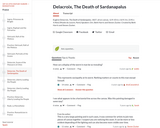
Eugène Delacroix, The Death of Sardanapalus, 1827, oil on canvas, 12 ft …
Eugène Delacroix, The Death of Sardanapalus, 1827, oil on canvas, 12 ft 10 in x 16 ft 3 in. (3.92 x 4.96m) (Musée du Louvre, Paris) Speakers: Drs. Beth Harris and Steven Zucker. Created by Beth Harris and Steven Zucker.
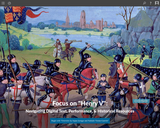
"Focus on 'Henry V'" is a peer-reviewed, multimedia, digital Open Educational Resource …
"Focus on 'Henry V'" is a peer-reviewed, multimedia, digital Open Educational Resource co-authored and co-produced by faculty, graduate students, and undergraduates on the innovative digital publishing platform Scalar. Chapters include guides to early printed editions, sources, and performance and cinematic histories of the play, as well as teaching resources and in-depth case-studies of particular scenes. All chapters include rich multimedia and audio recordings of body text and image captions. In addition to a traditional Table of Contents, the digital book allows users to navigate the materials through multiple pathways and visualizations. In this way the book offers not only a cutting-edge, renewable OER for college and K-12 teachers but also a model for maximizing the affordances of the digital medium.
Women working in a factory. Signed: L. Jonas. Promotional goal: U.S. G2. …
Women working in a factory. Signed: L. Jonas. Promotional goal: U.S. G2. 1918//Fr. F34.J7. 1918. Item is no. 180 & 234 in a printed checklist available in the Library of Congress Prints and Photographs Reading Room.
This course covers the emergence of modern France. Topics include the social, …
This course covers the emergence of modern France. Topics include the social, economic, and political transformation of France; the impact of France's revolutionary heritage, of industrialization, and of the dislocation wrought by two world wars; and the political response of the Left and the Right to changing French society.
The Francophone Project is a resource that was created in order to …
The Francophone Project is a resource that was created in order to bring awareness to the various French speaking countries throughout the world. Because culture is so important and often pushed aside in the classroom, we created a website for educators and learners of the French language to use as a way to access information about culture through natives. The website includes individuals from France to Canada, Algeria, The Ivory Coast and more. Through short videos, these individuals share certain aspects about their cultures while reflecting what it means to be Francophone to them. Our hope is that our project will serve to help people learn the French language, to appreciate all Francophone cultures, and to continue learning because it’s benefits go far beyond borders.
Français interactif is a unique, award-winning 1st-year French curriculum used by learners …
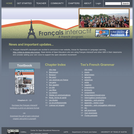
Français interactif is a unique, award-winning 1st-year French curriculum used by learners all over the world. Students explore French language and culture by following the lives of real students who have participated in the UT Summer Program in Lyon, France. The online curriculum includes over 320 videos, vocabulary and phonetics audio, online grammar reference with self-correcting exercises and audio dialogues, verb conjugation and practice tools, internet activities, and a textbook of classroom exercises. Franais interactif was awarded the 2009 CALICO Esperanto Access to Language Education Award and the National Endowment for the Humanities EDSITEment Best of Humanities on the Web award (2005)
No restrictions on your remixing, redistributing, or making derivative works. Give credit to the author, as required.
Your remixing, redistributing, or making derivatives works comes with some restrictions, including how it is shared.
Your redistributing comes with some restrictions. Do not remix or make derivative works.
Most restrictive license type. Prohibits most uses, sharing, and any changes.
Copyrighted materials, available under Fair Use and the TEACH Act for US-based educators, or other custom arrangements. Go to the resource provider to see their individual restrictions.