A math task on Sub Claim C: Concrete Referents. Students are using …
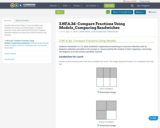
A math task on Sub Claim C: Concrete Referents. Students are using a provided image to compare fractions of the same sized whole and then compare. Students explain how they know which fraction is the greatest.
This resource provides students with the opportunity to base arithmetic explanations/reasoning on …
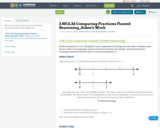
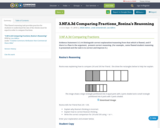
This resource provides students with the opportunity to base arithmetic explanations/reasoning on concrete referents such as diagrams, connecting diagrams to a written method. Students will express a fraction with a denominator 10 as an equivalent fraction with a denominator of 100 and use that information to solve a problem.
This short video and interactive assessment activity is designed to teach fifth …
This short video and interactive assessment activity is designed to teach fifth graders about adding and subtracting fractions with different denominators.
No restrictions on your remixing, redistributing, or making derivative works. Give credit to the author, as required.
Your remixing, redistributing, or making derivatives works comes with some restrictions, including how it is shared.
Your redistributing comes with some restrictions. Do not remix or make derivative works.
Most restrictive license type. Prohibits most uses, sharing, and any changes.
Copyrighted materials, available under Fair Use and the TEACH Act for US-based educators, or other custom arrangements. Go to the resource provider to see their individual restrictions.