You must be logged in to perform this action.
Read the Fine Print

-
(Complete Item Description)
- Abstract:
This lesson introduces students to the concept of air pressure. Students will explore how air pressure creates force on an object. They will study the relationship between air pressure and the velocity of moving air.
- Subject:
- Mathematics and Statistics, Science and Technology
- Grade Level:
- Primary
- Collection:
-
TeachEngineering
Remix and Share

-
(Complete Item Description)
- Abstract:
This course aims to connect the principles, concepts, and laws/postulates of classical and statistical thermodynamics to applications that require quantitative knowledge of thermodynamic properties from a macroscopic to a molecular level. It covers their basic postulates of classical thermodynamics and their application to transient open and closed systems, criteria of stability and equilibria, as well as constitutive property models of pure materials and mixtures emphasizing molecular-level effects using the formalism of statistical mechanics. Phase and chemical equilibria of multicomponent systems are covered. Applications are emphasized through extensive problem work relating to practical cases.
- Subject:
- Science and Technology
- Grade Level:
- Post-secondary
- Collection:
-
MIT OpenCourseWare
Remix and Share

-
(Complete Item Description)
- Abstract:
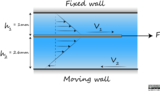
This subject provides an introduction to fluid mechanics. Students are introduced to and become familiar with all relevant physical properties and fundamental laws governing the behavior of fluids and learn how to solve a variety of problems of interest to civil and environmental engineers. While there is a chance to put skills from Calculus and Differential Equations to use in this subject, the emphasis is on physical understanding of why a fluid behaves the way it does. The aim is to make the students think as a fluid. In addition to relating a working knowledge of fluid mechanics, the subject prepares students for higher-level subjects in fluid dynamics.
- Subject:
- Science and Technology
- Grade Level:
- Post-secondary
- Collection:
-
MIT OpenCourseWare
Read the Fine Print

-
(Complete Item Description)
- Abstract:
In this interactive activity adapted from Texas A&M University, a block of melting ice simulates ice shelves and ice sheets and their differing effects on global sea level.
- Subject:
- Science and Technology
- Grade Level:
- Primary, Secondary
- Collection:
-
Teachers' Domain
No Strings Attached

-
Remix and Share

-
(Complete Item Description)
- Abstract:
The People's Physics Book v3 is intended to be used as one small part of a multifaceted strategy to teach physics conceptually and mathematically
- Subject:
- Science and Technology
- Grade Level:
- Secondary
- Collection:
-
CK-12 FlexBook
Read the Fine Print

-
(Complete Item Description)
- Abstract:
NBC's Lester Holt looks at the physically demanding pre-season ritual of NFL training camp. Douglas Casa, head of the Korey Stringer Institute at the University of Connecticut, and athletic trainers from the Pittsburgh Steelers explain what NFL players must do to stay hydrated and replenish the essential nutrients needed to maintain good health during rigorous practices. "Science of NFL Football" is a 10-part video series funded by the National Science Foundation and produced in partnership with the National Football League.
- Subject:
- Mathematics and Statistics, Science and Technology
- Grade Level:
- Secondary
- Collection:
-
NBC Learn
Read the Fine Print

-
(Complete Item Description)
- Abstract:
This course deals with the transfer of work, energy, and material via gases and liquids. These fluids may undergo changes in temperature, pressure, density, and chemical composition during the transfer process and may act on or be acted on by external systems. Engineers must fully understand these processes in order to analyze, troubleshoot, or improve existing processes and/or innovate and design new ones. Upon successful completion of this course, the student will be able to: Interpret and use scientific notation and engineering units for the description of fluid flow and energy transfer; Interpret measurements of thermodynamic quantities for description of fluid flow and energy transfer; Use concepts of continuum fluid dynamics to interpret physical situations; Determine the interrelationship of variables in pumping and piping operations; Analyze heat-exchanger performance and understand design considerations; Apply thermodynamics to the analysis of energy conversion and cooling/heating situations; Communicate technical information in written and graphical form. (Mechanical Engineering 303)
- Subject:
- Science and Technology
- Grade Level:
- Post-secondary
- Collection:
-
Saylor Foundation
Read the Fine Print

-
(Complete Item Description)
- Abstract:
The airplanes unit begins with a lesson on how airplanes create lift, which involves a discussion of air pressure and how wings use Bernoulli's Principle to change air pressure. Following the lessons on lift, students explore the other three forces acting on airplanes thrust, weight and drag. Following these lessons, students learn how airplanes are controlled and use paper airplanes to demonstrate these principles. The final lessons addresses societal and technological impacts airplanes have had on our world. Students learn about different kinds of airplanes and then design and build their own balsa wood airplanes based on what they have learned.
- Subject:
- Mathematics and Statistics, Science and Technology
- Grade Level:
- Primary
- Collection:
-
TeachEngineering