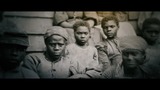
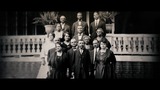
Learn how enslaved African Americans in Richmond, Virginia, established what a historian …
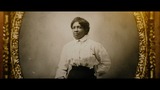
Learn how enslaved African Americans in Richmond, Virginia, established what a historian in this clip calls “quasi-free communities, where they etched out lives for themselves, that paved the way forward.” This resource is part of the How the Monuments Came Down collection, created by Virginia Public Media.
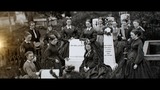
Discover the differing approaches to memorialization among African Americans and white southerners, …
Discover the differing approaches to memorialization among African Americans and white southerners, in Richmond, Virginia, in the years immediately after the Civil War. This resource is part of the How the Monuments Came Down collection.
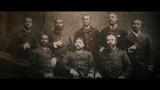
Discover how African American political organizing in Richmond, Virginia, in the first …
Discover how African American political organizing in Richmond, Virginia, in the first decades after the Civil War, secured a measure of power amid ongoing fights against injustice.
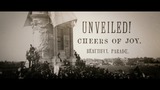
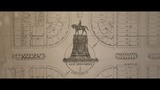
Discover how white southerners in Richmond, Virginia, honored General Robert E. Lee …
Discover how white southerners in Richmond, Virginia, honored General Robert E. Lee through a monument of his likeness unveiled in the former Confederate capital in 1890.
Discover John Mitchell, Jr. and Maggie L Walker, two African American leaders …
Discover John Mitchell, Jr. and Maggie L Walker, two African American leaders in Richmond, Virginia, whom a historian in this clip refers to as “the vanguard” of Black resistance to white supremacy there.
Learn why white city leaders in Richmond, Virginia, in the early 20th …
Learn why white city leaders in Richmond, Virginia, in the early 20th century, embraced the nationwide “City Beautiful” movement through the construction of Monument Avenue, a grand boulevard lined with statues to Confederates.
Learn why blackface minstrelsy in the early 20th century sought to “parody …
Learn why blackface minstrelsy in the early 20th century sought to “parody and caricature Black ambition and achievement,” as explained by historians in this clip. Note to Teachers: The video clip, Caricatures of African Americans, includes depictions of blackface; in an effort to provide authentic and transparent resources about the historical experiences of Black Americans, these moments were not censored.
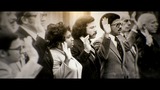
Learn why the first majority-Black city council in Richmond, Virginia, in the …
Learn why the first majority-Black city council in Richmond, Virginia, in the late 1970s, avoided discussion of the city’s Confederate monuments while attending to urgent crises of housing and education.
Learn about tennis champion Arthur Ashe, whose death spurred residents of his …
Learn about tennis champion Arthur Ashe, whose death spurred residents of his hometown of Richmond, Virginia, to honor him with a statue along a grand boulevard that had previously only featured statues of Confederates
Learn how activists in Richmond, Virginia, are working to honor the lives …
Learn how activists in Richmond, Virginia, are working to honor the lives of free and enslaved African Americans, in a city where the most prominent monuments had long celebrated Confederates.
See how descendants, community groups, and a National Park Service site worked …
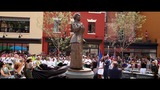
See how descendants, community groups, and a National Park Service site worked together to establish a monument to Maggie L. Walker, an African American leader from Richmond, Virginia.
Learn how a mayoral commission attempted to reckon with Confederate monuments in …
Learn how a mayoral commission attempted to reckon with Confederate monuments in Richmond, Virginia—and how political scandal and electoral change helped reshape the city’s statuary landscape. Note to Teachers:Some of these video clips include depictions of blackface; in an effort to provide authentic and transparent resources about the historical experiences of Black Americans, these moments were not censored. Sensitive: This resource contains material that may be sensitive for some students. Teachers should exercise discretion in evaluating whether this resource is suitable for their class.
Discover why protests in Richmond, Virginia, following the murder of George Floyd …
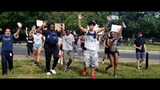
Discover why protests in Richmond, Virginia, following the murder of George Floyd in Minneapolis, centered on Monument Avenue—a grand boulevard then-lined with statues of Confederates.
See the removal of Confederate monuments in Richmond, Virginia—first, through direct action …
See the removal of Confederate monuments in Richmond, Virginia—first, through direct action by protestors, and then by city-ordered cranes—amid summer 2020 protests against systemic racism following the murder of George Floyd in Minneapolis.
Learn about Marcus-David Peters, a teacher in Richmond, Virginia, who was killed …
Learn about Marcus-David Peters, a teacher in Richmond, Virginia, who was killed by police while having a mental health crisis, and why activists there see his death as one of many examples of how white supremacy endures in the city even as Confederate statues have been removed.
How the Monuments Came Down explores the complex history of Richmond, Virginia …
How the Monuments Came Down explores the complex history of Richmond, Virginia through the lens of Confederate monuments, supported by an extensive visual record never before presented in a single work.Through personal stories from descendants and history-makers, the film uncovers how Confederate monuments came to shape Richmond’s landscape and why protestors demanded they come down.How the Monuments Came Down is a production of Field Studio, in association with VPM.
This activity is an indoor/outdoor activity that incorporates both literacy and scientific …
This activity is an indoor/outdoor activity that incorporates both literacy and scientific observation to make an ABC book based on Antler, Bear, Canoe by Betsy Bowen.
This is outdoor activity involving students in gathering information on what an …
This is outdoor activity involving students in gathering information on what an American Red Squirrel Eats and its interdependence with the coniferous forest.
No restrictions on your remixing, redistributing, or making derivative works. Give credit to the author, as required.
Your remixing, redistributing, or making derivatives works comes with some restrictions, including how it is shared.
Your redistributing comes with some restrictions. Do not remix or make derivative works.
Most restrictive license type. Prohibits most uses, sharing, and any changes.
Copyrighted materials, available under Fair Use and the TEACH Act for US-based educators, or other custom arrangements. Go to the resource provider to see their individual restrictions.